
Commonwealth Kabaddi 2026: England's 26 Points Are a Bigger Proof Than India's Three Wins
मुख्य उत्तर: कॉमनवेल्थ कबड्डी चैम्पियनशिप 2026 के चौथे दिन भारत तीन मैचों में अपराजित है, लेकिन उसकी असली ताकत का सबूत जीत का अंतर नहीं है। इंग्लैंड ने नाइजीरिया के खिलाफ 68 अंक बनाए थे और भारत के खिलाफ सिर्फ 26 — यही 42 अंकों का दमन भारतीय रक्षा का सबसे ठोस संकेत है। मुख्य तथ्य: - भारत ने इंग्लैंड को 46-26, युगांडा को 44-30 और मलेशिया को 37-23 से हराया। - भारत ने तीन मैचों में 127 अंक बनाए और 79 अंक लुटाए। - नाइजीरिया तंजानिया से 17-66 और इंग्लैंड से 18-68 हारा, 49-50 अंकों का अंतर। - ईरान कॉमनवेल्थ सदस्य न होने के कारण बाहर है, और वही भारत का मुख्य प्रतिद्वंद्वी है। - कप्तान सुरजीत सिंह इस कवरेज में नामित एकमात्र खिलाड़ी हैं। स्रोत: कॉमनवेल्थ कबड्डी चैम्पियनशिप 2026 के मैच स्कोर तथा लाइव स्ट्रीमिंग और टेलीकास्ट गाइड, चौथा दिन; स्टेज-2 गहन विश्लेषण। संबंधित प्रश्नोत्तर: प्रश्न: क्या भारत का 3-0 वैश्विक दबदबा दिखाता है? उत्तर: नहीं, क्योंकि ईरान जैसी शीर्ष टीम अनुपस्थित है और प्रतिद्वंद्विता दूसरे-तीसरे दर्जे तक सीमित है। प्रश्न: भारत की रक्षा कितनी मजबूत है? उत्तर: इंग्लैंड को 68 से 26 पर रोकना मजबूत संकेत है, पर हर मैच में 23-30 अंक लुटाना चेतावनी भी है। प्रश्न: क्या यह कॉमनवेल्थ गेम्स का हिस्सा है? उत्तर: नहीं, कबड्डी कॉमनवेल्थ गेम्स कार्यक्रम में शामिल नहीं है; कॉमनवेल्थ यहां केवल ब्रांडिंग है।
England scored 68 against Nigeria. Three days later, that same England died at 26 against India. It is Day 4 of the Commonwealth Kabaddi Championship 2026, India are unbeaten with three wins, and Indian kabaddi fans are unhappy. The reason is written plainly on the scoreboard: 46-26, 44-30, 37-23. Margins of twenty, fourteen and fourteen. The team labelled "clear favourites," the team whose start was reported as arriving "with a bang," was expected to win bigger. What arrived was a comfortable but ordinary 3-0.
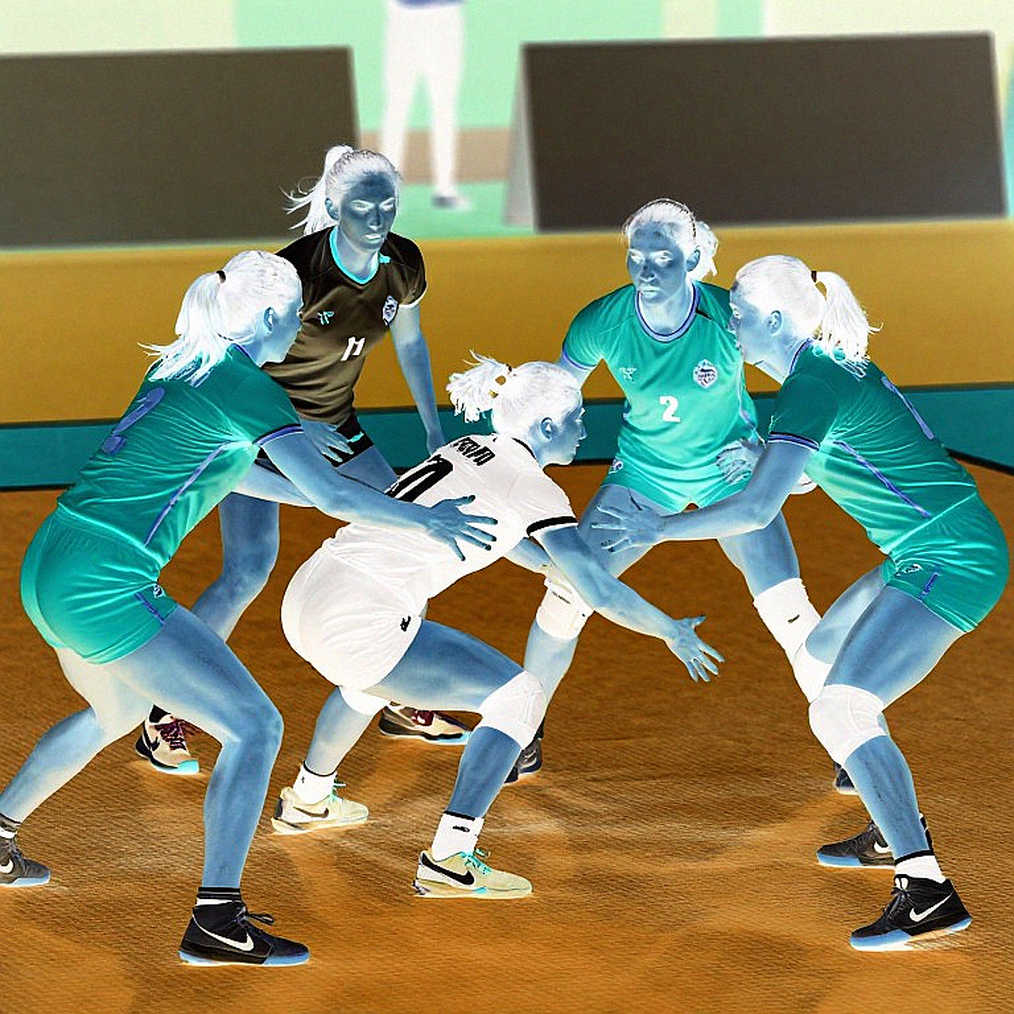
The fans are reading the wrong column. The story inside those margins is not a kabaddi story, it is a rulebook story. The real evidence sits in the neighbouring column — the 42-point gap between England's 68 and England's 26. That is the one reliable data point this tournament offers about India's defence.
First, the groundwork, because none of this makes sense without it. In kabaddi, a raider crosses into the opponent's half within thirty seconds, touches a defender and returns safely — and throughout the raid he must keep chanting "kabaddi, kabaddi" to prove he is not inhaling, because a broken chant voids the raid. The defending side collectively stops the raider, and when all seven of an opponent's players are ruled out, that is an All Out — two bonus points and the entire team revived. This is the rule that manufactures kabaddi's big scores and big margins.
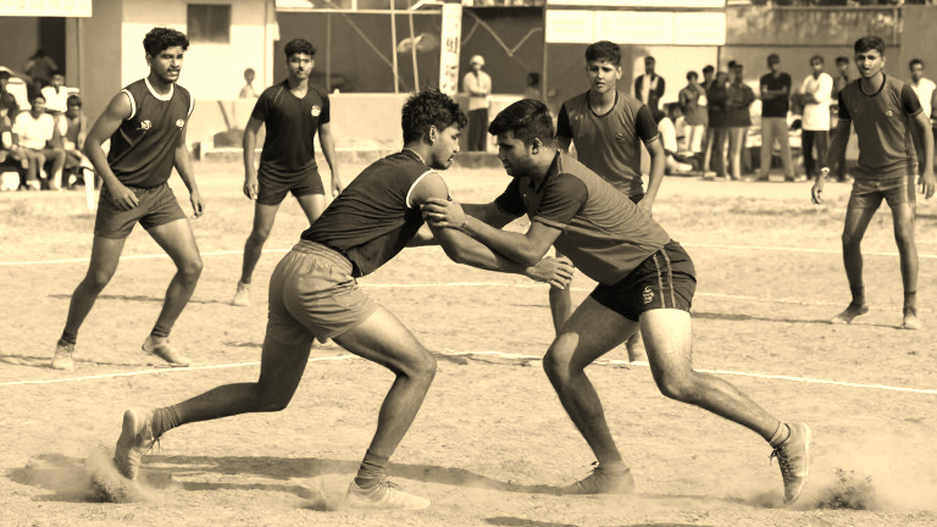
Now look at the numbers. India beat England 46-26, Uganda 44-30 and Malaysia 37-23. Totals like 68 and 66 tell you All Outs are happening repeatedly in this tournament — the tempo is fast and teams are taking risks in the raid. The structure looks like Standard Style (seven versus seven, rectangular court), though the organisers have not confirmed it, so Circle Style cannot be entirely excluded. Surjeet Singh is the captain, and he is the only player named in the available coverage.
And then the fact that shapes the entire tournament: Iran are not here. Iran are outside the field because they are not a Commonwealth member — meaning this championship is structurally deprived of the one nation that last beat India at a major event.
Argument one: treating the margin as a talent measure is the biggest mistake available. When one side collapses in kabaddi, All Outs cascade and the gap compounds — it grows because of the rule, not only because of the talent. Nigeria lost 17-66 to Tanzania and 18-68 to England. Margins of 49 and 50 define a level where competition does not exist. India's +20, +14 and +14 are not that, and that is exactly what fans are objecting to. But turning that irritation into data is dangerous.
Argument two, and this is the real point: the cleanest comparison available is two teams against one common opponent. England made 68 against Nigeria and 26 against India. A 42-point suppression does not happen by accident. It means India's defence is stopping even a side capable of making 68. I have covered the Pro Kabaddi League beat for years, and one thing I learned there: the opponent is more trustworthy than the margin. A team that makes 26 against you and 68 against someone else has told you everything about your defence in one line.
Argument three, and it cuts against the first two: conceding 23 to 30 points a game is a yellow flag. If a defence being called comfortably good against tier-two opposition is leaking 26 to 30 every match, how does that same defence stand up to a raiding attack like Iran's? I do not have the answer, and that is the actual story here. Those watching a twenty-point win in 46-26 are not watching the twenty-six-point door left open.
Argument four: Iran's absence is not a footnote, it is the biggest structural fact of the event. At 5:40 in the morning in Jakarta, I found out what a headline costs. Iran beat India 27-18 in the 2026 Asian Games semifinal — India's first missed gold. That team is not here. So India's 3-0 is a 3-0 against tier-two and tier-three opposition, and reading it as global dominance is misreading the record.
Five: the field is stratified into three tiers — India (tier one); England, Tanzania, Malaysia, Uganda (tier two); Nigeria (tier three). Nigeria's 49- and 50-point margins define the tier-three floor. This is a clean picture of internationalisation: many flags, very few competitive nations. The presence of Nigeria, Tanzania and Uganda is outreach, not depth. That is not bad news, it is just honest news.
Six: the data that does not exist is also news. There is no individual raider scoring in this coverage. Which means it is impossible to test whether India's attack runs through a single raider or is spread. No successful raid percentage, no tackle percentage, no bench rotation. After ten weeks in an empty Bengaluru arena in 2026, I imposed a twenty-four-hour stat check on myself, and the most important part of that rule is this: when the numbers do not exist, the most honest answer is "I do not know." It is the answer least spoken in sports media.
Seven: "Commonwealth" here is a brand, not a status. Kabaddi is not on the Commonwealth Games programme. This championship does not plug into the Commonwealth Games Federation's schedule, and it has no bearing on the Olympic pathway. It is a soft-power move by India — packaging kabaddi as a shared sport of the Anglophone world and extending it into Africa and Southeast Asia. There is nothing wrong with that, but treating it as a competitive achievement is wrong. I learned the difference between noise and an argument in the back of an auto, and the loudest claim is usually the falsest one. "Commonwealth" is the loudest claim here, and it is the falsest.
Eight: the shape of the coverage is itself a commercial signal. This arrived as a live streaming and telecast guide, not as a premium broadcast property like the Pro Kabaddi League. Monetisation depends on streaming, not on a large rights deal. No auction, no salary cap — this is a national-team event, not the PKL, so auction-premium and franchise-economics arguments simply do not apply. Twenty-two episodes in a Sainikpuri bedroom taught me what a studio never could — one episode, one claim that can be proved or disproved. In this tournament there is exactly one claim worth testing: the defence.
Now the part I write every time and readers skip most often. Where I could be wrong.
The first error would be betting too much on a single comparison. The 42-point gap between England's 68 and England's 26 is one match against one opponent — a sample of one. Perhaps England simply had their day against Nigeria. Perhaps India deliberately slowed the tempo against England, took fewer risks, and did only what was needed to win. If India are managing load before a knockout, that 26 is not proof of defence, it is the product of a plan — and my whole argument collapses.
The second, larger error would be inflating Iran's absence. No tournament can summon nations outside its own definition. An event should be criticised for its marketing, not for its field. Choosing the word "Commonwealth" was the organisers' decision, not Iran's. My target is the framing of the coverage, not the Indian team.
And the third, most uncomfortable possibility: India's attack really might run through one raider, and this tournament's numbers will never tell me. Honesty has to cut both ways when the data is absent — I am praising the defence on a single data point, and I would be criticising it on a single data point too.
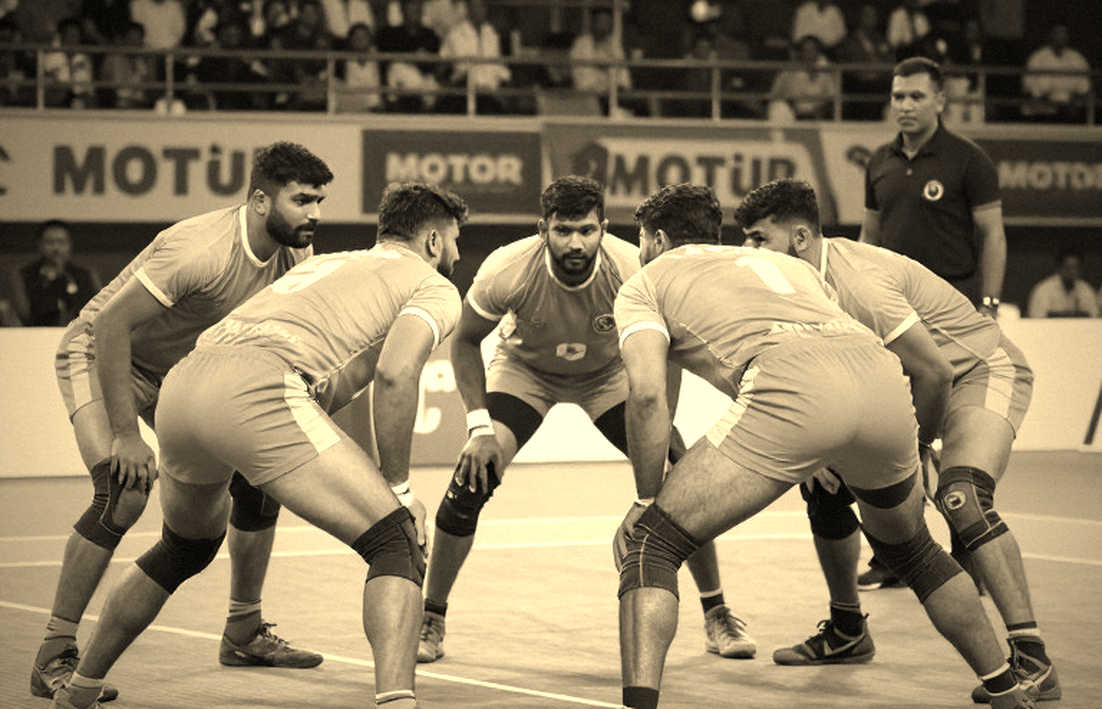
Watch India's conceded points against Nigeria, not their scored points. Nigeria have managed 17 and 18 so far. If India let them reach 26 or more, that is not the defence of 46-26, that is an alarm. And the next time anyone writes an India preview, Iran's name belongs in the first hundred words. Otherwise it is not a preview, it is a coronation — and no coronation has ever won a semifinal.