
Commonwealth Kabaddi Championship 2026: India in Rhythm, Big Win Expected Against Nigeria
कॉमनवेल्थ कबड्डी चैंपियनशिप 2026 में भारत का सामना नाइजीरिया से है। भारत ने पहले तीन मैच जीते हैं (इंग्लैंड 46-26, यूगांडा 44-30, मलेशिया 37-23), जबकि नाइजीरिया को तंजानिया (66-17) और इंग्लैंड (68-18) से करारी हार मिली है। भारत का कप्तान सुरजीत सिंह है। ईरान की गैरमौजूदगी में भारत का दबदबा संरचनात्मक रूप से मजबूत दिखता है, लेकिन भारत ने प्रति मैच 23-30 अंक लुटाए हैं और खिलाड़ीवार आंकड़े उपलब्ध नहीं हैं। इंग्लैंड ने नाइजीरिया के खिलाफ 68 लेकिन भारत के खिलाफ 26 अंक बनाए, जो भारतीय बचाव की मजबूती का संकेत है। यह आयोजन प्रो कबड्डी लीग जैसा व्यावसायिक उत्पाद नहीं है, बल्कि स्ट्रीमिंग-आधारित विकास और सॉफ्ट पावर इवेंट है, जिसमें कॉमनवेल्थ ब्रांडिंग के बावजूद कबड्डी कॉमनवेल्थ गेम्स का खेल नहीं है और आयोजक संस्था की मान्यता स्पष्ट नहीं है।
On the fourth day of the Commonwealth Kabaddi Championship 2026, the Indian men's team will be eyeing a fourth consecutive win as they face Nigeria. India have beaten England 46-26, Uganda 44-30 and Malaysia 37-23 in their first three matches. However, the margins of these wins have left some fans disappointed, as a stronger team was expected to win by bigger gaps. Meanwhile, Nigeria have suffered heavy defeats—Tanzania thrashed them 66-17 and England 68-18. On paper, the India-Nigeria match looks one-sided, but the real question is by how big a margin India wins and whether their attacking and defensive nuances are ready for bigger battles.
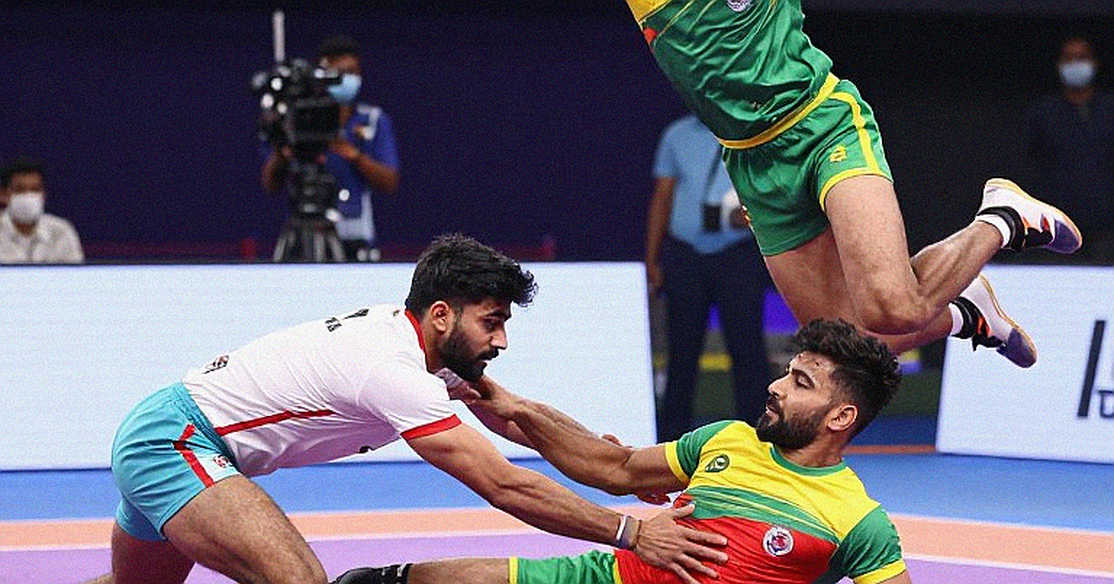
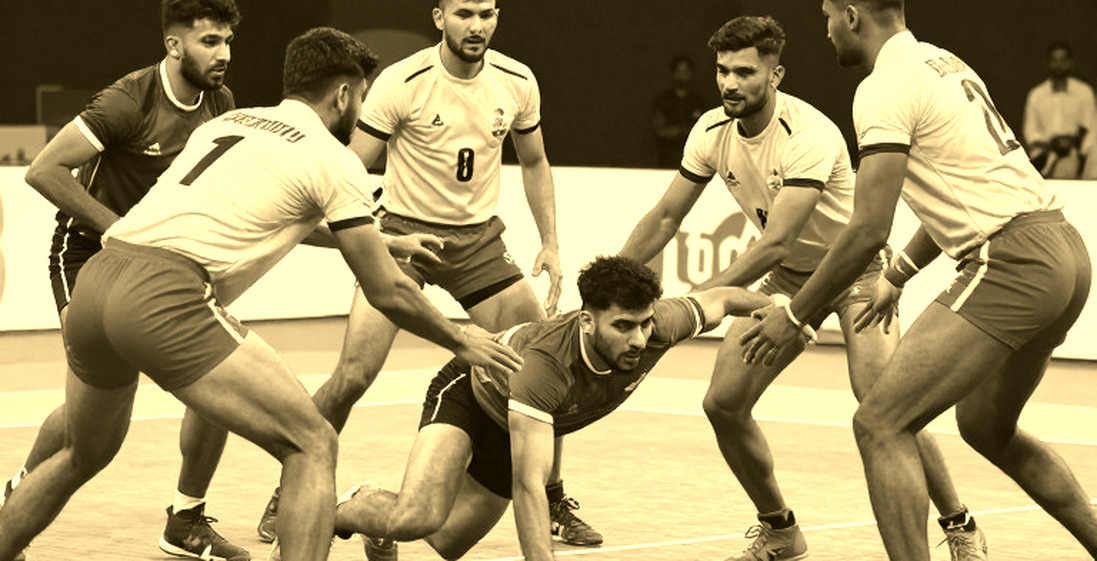
To understand kabaddi, it is essential to grasp its basic rules. A raider crosses into the opponent's half, must touch a defender and return to his own half within 30 seconds; throughout, he must continuously chant 'Kabaddi-Kabaddi' to prove he is not inhaling. If the chant breaks, the raid is void. The defending side scores by stopping the raider in their own half, called a tackle. When all players of a team are out, the opponent earns two bonus points and the entire team revives—this is called an 'All Out.' This rule is the engine of kabaddi's fast, fluctuating scores. After two consecutive empty raids, the third becomes a 'Do-or-Die' raid, meaning the raider must score or he himself is out. When the defending side has three or fewer players on court and completes a tackle, it is called a 'Super Tackle,' worth two points.
In this tournament, India's three scores (46, 44, 37) indicate the team has adopted aggressive raiding and has been racking up All Outs. But one concern is that India have conceded 23 to 30 points per match. A strong defensive team is expected to concede fewer against second-tier teams. However, one fact highlights the strength of India's defense: England scored 68 against Nigeria but could manage only 26 against India. That means India's defense suppressed a capable attacking team by a margin of 42 points. This suggests India's defense is 'good enough to win' but not 'impenetrable.'
Captain Surjeet Singh is the only player named in the source. It is not stated whether he is a raider, defender or all-rounder. In kabaddi, captaincy is often given to a defensive anchor or a tactically astute player. Whether India's attack depends on a single raider cannot be said in the absence of player-wise data. This is a data gap that should not be ignored.
Looking at the competition landscape, it is clear that India's dominance in this tournament is structurally reinforced because their biggest rival, Iran, is absent. Iran is not a Commonwealth member, so it could not be part of this event. Iran is the nation that beat India in the 2026 Asian Games men's final. Without them, India's three wins are against second- and third-tier teams, which makes India's dominance look bigger than reality. Globally, kabaddi is bipolar—India and Iran at the top—but this tournament has become unipolar.
The classification of teams is clear from the scorelines. India are at the first level. England, Tanzania, Malaysia and Uganda are at the second level. Nigeria are at the third level, having lost 68-18 to England and 66-17 to Tanzania. These margins show that the participation of African and Southeast Asian teams is at a development stage, not a competitive one. The 'Commonwealth' name expands the event's geographic reach but does not bring competitive quality, because strong kabaddi nations like Iran and South Korea are not Commonwealth members.
Looking at the cultural background, kabaddi is India's most popular sport after cricket, rooted in rural akhadas and linked to job pathways in railways, police and the army. The Pro Kabaddi League has given it the form of a televised professional sport. Calling this event 'Commonwealth' is India's soft-power initiative, presenting kabaddi as a shared sport of the Anglophone world. The participation of Nigeria, Tanzania and Uganda signals that kabaddi's internationalization is broad but not deep. Nigeria's heavy defeats are a symptom, not an exception.
On the commercial and media side, this event is not a commercial product like the Pro Kabaddi League. It is an international national-team event, where no auction or franchise mechanism applies. The very fact that the article is a 'live streaming and telecast' guide shows that its distribution is streaming-led and the level of broadcast rights is lower than the Pro Kabaddi League or the Asian Games. The source provides no data on sponsorship, rights value or player salaries, so a commercial risk assessment is not possible. The event likely generates negligible standalone broadcast revenue and functions more as a soft-power and content-filler vehicle.
From a governance perspective, the biggest challenge is transparency. The source does not state which body is organizing the event or whether it has International Kabaddi Federation recognition. Despite the 'Commonwealth' branding, kabaddi is not a Commonwealth Games sport, so this championship does not connect to the Commonwealth Games Federation's programme. Kabaddi's Olympic pathway is blocked by criteria such as the number of participating countries, continental coverage and the depth of the women's game, and this event does little to close those gaps because it lacks strong teams like Iran and Korea.
As for risks, the biggest is that 'three wins' could be read as global dominance when Iran is not even present. Second, India conceding 23-30 points per match shows that the defense may soften against top-level raiders. Third, dependence on a single raider cannot be determined because player-wise data are unavailable. Fourth, third-tier nations are structurally uncompetitive, and the solution lies in long-term development programmes.
In the match against Nigeria, India are heavy favourites, but the real test will be by how big a margin they win and whether their attack can reach a big score. England are the only team in the tournament to have posted a big score, so a clash with them in the later knockout stage will be the real test for India. For now, the Indian team must maintain their defensive strength while proving consistency and depth in attack, so that the same dominance holds against strong rivals like Iran.
संबंधित खिलाड़ी
लोकप्रिय/पसंदीदा पुस्तकें
Four Golds, One Bronze, and the Cameras Pointing the Wrong Way2026-10-26
Commonwealth Kabaddi Championship 2026: India in Rhythm, Big Win Expected Against Nigeria2026-10-27
Three Empty Rows in Ahmedabad's Points Table: What Day 1 of the Commonwealth Kabaddi Championship Left Unsaid2026-10-26
From 14 to 13: Pakistan's Withdrawal and the Unclosed Ledger of the Commonwealth Kabaddi Championship2026-10-26
Kabaddi's Inverted Economy: The Auction Hands Out Crores, the Women's Game Still Waits for a League2026-10-26
अनुशंसित
Warning Over Empty Input in Kabaddi Analysis: Conclusions Without Facts Pose Risk to Sports Journalism2026-10-26
Why the Cant Changes Pitch: Kabaddi's Real Coach Is the Rulebook, and the Women's Game Reads It Most Honestly2026-10-25
The Empty Column Between 46 and 26: A Ledger Audit Before India vs Uganda2026-10-26
Three Empty Rows in Ahmedabad's Points Table: What Day 1 of the Commonwealth Kabaddi Championship Left Unsaid2026-10-26
Commonwealth Kabaddi Championship 2026: India in Rhythm, Big Win Expected Against Nigeria2026-10-27
अनुशंसित
14 to 13: Pakistan's Commonwealth kabaddi withdrawal, and a system whose medical file was never opened2026-10-24
Commonwealth Kabaddi Championship 2026, Day 1: The Table That Says Least, and the Label That Hides Most2026-10-25
Commonwealth Kabaddi Championship 2026: India in Rhythm, Big Win Expected Against Nigeria2026-10-27
From 14 to 13: Pakistan's Withdrawal and the Unclosed Ledger of the Commonwealth Kabaddi Championship2026-10-26
Kabaddi's Inverted Economy: The Auction Hands Out Crores, the Women's Game Still Waits for a League2026-10-26
अनुशंसित
Commonwealth Kabaddi Championship 2026, Day 1: The Table That Says Least, and the Label That Hides Most2026-10-25
Kabaddi's Inverted Economy: The Auction Hands Out Crores, the Women's Game Still Waits for a League2026-10-26
Three Empty Rows in Ahmedabad's Points Table: What Day 1 of the Commonwealth Kabaddi Championship Left Unsaid2026-10-26
India vs Uganda, Commonwealth Kabaddi Championship 2026: What the Scoreboard Leaves Out2026-10-26
Warning Over Empty Input in Kabaddi Analysis: Conclusions Without Facts Pose Risk to Sports Journalism2026-10-26