
The Shifting Power Structure of Asian Cricket: Balancing Market, Boards and the Game
एशियाई क्रिकेट की सत्ता-संरचना तीन परतों में बँटी है: मैदान (प्रारूप-आधारित प्रदर्शन), कैलेंडर (राष्ट्रीय टीम बनाम फ्रैंचाइज़ी लीग की प्राथमिकता) और बाज़ार (प्रसारण एवं डिजिटल अधिकार)। भारत का बाज़ार क्षेत्र का आर्थिक केंद्र है, जिसका असर राजस्व बँटवारे और शेड्यूलिंग—दोनों पर पड़ता है। एशिया कप राजनीतिक दबाव का सबसे बड़ा मंच है, जहाँ हाइब्रिड आयोजन गतिरोध को टालते हैं, सुलझाते नहीं। भारत-पाकिस्तान मुकाबले मुख्यतः बहुपक्षीय टूर्नामेंट्स तक सीमित हैं। आईपीएल, पीएसएल, एलपीएल, बीपीएल और आईएलटी20 ने रोज़गार बढ़ाया, पर अंतरराष्ट्रीय कैलेंडर से टकराव और कार्यभार प्रबंधन की समस्या पैदा की। मुख्य जोखिम: राजनीतिक अनिश्चितता, राजस्व पर निर्भरता, और सट्टेबाज़ी-नियमन में असमानता।
Over the past decade, the centre of gravity in Asian cricket has visibly shifted. Once, reputation was measured purely by matches won on the field; today it matters almost as much which tournament is played when, where, and on whose broadcast. This is not merely an administrative change. It directly affects player workload, audience access, and the financial stability of the smaller boards.
The simplest way to understand Asian cricket is to see it as three layers moving at different speeds. The first is the layer of the field, where Test, ODI and T20 cricket demand three different kinds of preparation and three different skill sets. The second is the calendar, where national-team series, domestic tournaments and franchise leagues compete for the same dates. The third is the market, where broadcast rights, sponsorship and digital rights determine which board carries the most weight at the negotiating table. The tension among these three layers is the real story of Asian cricket.
Revenue is the new power
Traditionally, strength in cricket meant good players, a strong domestic structure and a long Test history. That still matters, but a new metric has been added: which board holds the largest broadcast contract. The board with the bigger market also has a louder voice in ICC meetings, and that voice is usually exercised through an economic argument rather than a cricketing one.
A direct consequence is that revenue distribution returns as a question at every major meeting. Larger-market boards argue that they generate the income that sustains the entire ecosystem, so their share should be larger. Smaller boards argue that if distribution is determined purely by market size, the game will never expand. Both arguments have force, which is precisely why the dispute never fully settles.
India's market and its limits
India is the economic pivot of Asian cricket. This is no hidden fact—audience size, sponsor appetite and the scale of media rights all confirm it. But reading this pivot only as a benefit would be a mistake. The same pivot shapes the region's scheduling. When a major domestic or franchise tournament occupies a window, bilateral series become difficult to place for smaller boards—not only because broadcasters prefer the bigger property, but because player availability tightens.
This is where a structural problem begins. A large share of the calendar concentrates in a handful of properties, while the rest is pushed to the margins. For audiences this may feel convenient, but for the growth of the game it is damaging: in countries where fans rarely get to watch their own national team, the sport's popularity gradually weakens.
The Asia Cup: more than a competition, not quite politics
At the regional level, the Asia Cup is the platform that carries the heaviest political load. It matters for cricket, but it matters even more because hosting, participation and security arrive together in one package. In recent years the tournament has been staged more than once through arrangements that split matches across countries. Such hybrid models are not ideal solutions; they show that a political deadlock can be postponed, not resolved.
The limits on India–Pakistan fixtures are similarly no longer controlled by the cricket boards alone. Bilateral series have long been suspended, and the two sides meet mainly in multi-nation tournaments. Each such match is evaluated more as an event than as a game, and that is its biggest weakness—the rarer the rivalry, the more it is driven by emotion rather than by performance.
The rise of leagues and the space left for national teams
Franchise cricket has rewritten Asia's economic structure. India's IPL, Pakistan's PSL, Sri Lanka's LPL, Bangladesh's BPL and the ILT20 in the Gulf have all opened new employment for players, new platforms for sponsors and new content for broadcasters. But they have also created a new conflict: the collision between the international calendar and the league calendar.
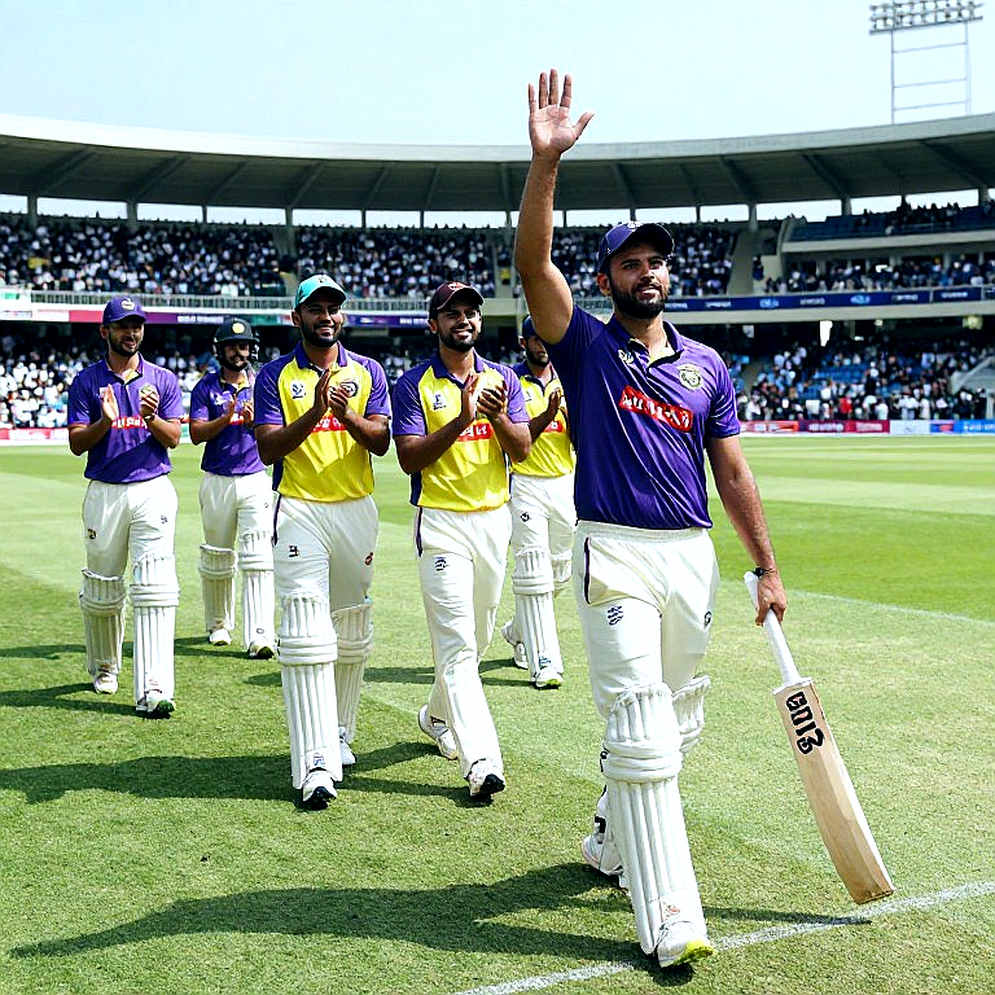
This collision is not only about dates. It is about priorities. When a young player must choose among a domestic season, national-team preparation and a league contract in the same window, the choice is often economic—and that choice is not always the right one for his technical development. Fast bowlers and all-rounders bear the heaviest cost, because their workloads are highest and their injury risk greatest.
Workload management: simple to describe, hard to implement
Every board now talks about workload management, but in practice it is a difficult trade-off. Resting a player in a series is easy; deciding who rests and who replaces him is hard. If rest is given only to senior players, the replacement is under constant pressure. If rest is given only to the inexperienced, they lose rhythm. And if rest is granted immediately before a major tournament, it invites public criticism.
There is no technical fix, only an institutional one: a clear, public, pre-declared policy. When the standard is set in advance, players, selectors and fans all know what to expect. When the standard shifts series by series, every decision becomes a controversy.
Broadcast, digital and the changing audience
One more shift is visible in the economic landscape—audiences now reach the game through screens and clips more than through a single broadcast. Traditional rights remain the largest revenue source, but the share of digital rights is rising. This directly shapes the format: shorter formats and moments that convert into short clips have become more valuable. That is why bilateral T20 series and franchise tournaments dominate while the longer format struggles to hold its ground.
There is a downside. When economic value attaches to clip-friendly cricket, formats that reward patience and technical depth are pushed aside. This is not only a matter of taste; it is a matter of the pipeline. Batters who are built by surviving difficult conditions in the longer format are usually the ones who can hold their own on challenging pitches. If the pipeline itself becomes faster, the shortage of depth will show within a few years.
Risks: politics, security and scheduling
Asian cricket's most fragile aspect is that political friction shows up directly in the playing calendar. Security, travel and clearances attach immediately to any bilateral series. The effect falls not only on the two teams involved but on the regional calendar as a whole, because boards are often forced to keep contingency plans ready at short notice. Every uncertainty is paid for as administrative cost.
The second risk is economic dependence. For boards whose revenue rests mainly on the ICC central share, any major revenue dispute makes planning difficult—especially where the domestic franchise market has not yet matured. The third is the risk attached to betting and fantasy sport, where regulatory clarity differs from country to country. That divergence makes anti-corruption monitoring more complex.
The road ahead
The central challenge is that the administration of the game is forced to move at market speed, while the development of the game requires a long cycle. Smaller boards can carve out a place in this circuit by strengthening their domestic structures, but for that they need a revenue stream that does not depend solely on international fixtures. For the larger boards, the practical challenge is how to use their market advantage in a way that is sustainable for the whole region, because a structure built on market power alone does not remain stable for long.
The conclusion is that Asian cricket is not decided by any single series or result. It is decided by three questions: how revenue is shared, whom the calendar makes room for, and whose priority the development of the game becomes. The day those three answers are written down and made public, the cricket of this region will look clearer on the field as well.