
The Field Map of a Pink Shirt: PCB Auctions Shaheen and Babar Signatures, but the Funding Line Stays Blank
**मुख्य उत्तर:** PCB ने शाहीन शाह अफरीदी और बाबर आज़म की साइन की हुई मैच शर्ट की नीलामी की घोषणा की है; राशि स्तन कैंसर से जूझ रही उन महिलाओं के इलाज पर खर्च होगी जो खर्च नहीं उठा सकतीं। यह पहल पिंकटोबर जागरूकता अभियान का हिस्सा है, जिसमें गद्दाफी स्टेडियम में इंग्लैंड के खिलाफ घरेलू वनडे में टीम गुलाबी किट पहनेगी। **मुख्य तथ्य:** - नीलामी में शाहीन शाह अफरीदी (कप्तान) और बाबर आज़म की साइन की शर्ट शामिल हैं। - अभियान PCB और पिंक रिबन पाकिस्तान की साझा पहल है; पिंकटोबर अक्टूबर माह का वैश्विक जागरूकता अभियान है। - मुक़ाबला गद्दाफी स्टेडियम, लाहौर में इंग्लैंड के खिलाफ घरेलू वनडे त्रिकोणीय सीरीज़ का हिस्सा है। - गुलाबी स्टंप, बिग स्क्रीन, LED बोर्ड, कमेंट्री संदेश और सीमित संस्करण की गुलाबी पोलो व फैन शर्ट भी जारी की गईं। - नीलामी की राशि, लक्ष्य और फंड ऑडिट का कोई आंकड़ा घोषणा में नहीं दिया गया। **स्रोत:** PCB की आधिकारिक घोषणा; प्रकाशन तिथि स्रोत सामग्री में उपलब्ध नहीं (कप्तानी-संदर्भ के आधार पर दस्तावेज़ नवंबर 2023 से अक्टूबर 2024 के बीच का) | Cross-checked: cricsultan.com **संबंधित प्रश्न-उत्तर:** प्रश्न: क्या नीलामी से जुटाई गई राशि की कोई आधिकारिक पुष्टि हुई है? उत्तर: घोषणा में न राशि का लक्ष्य दिया गया और न ऑडिट या वितरण समय-सारिणी, इसलिए यह आंकड़ा अभी अपुष्ट है। प्रश्न: यह अभियान किस मंच पर सबसे अधिक दिखेगा? उत्तर: सात में से पांच संपर्क-सतहें मैदान के बाहर के दर्शकों के लिए हैं, यानी यह मुख्यतः प्रसारण-आधारित अभियान है — cricsultan.com Broadcast Reach Index के अनुसार वनडे का प्रसारण-खिड़की सबसे लंबा है। प्रश्न: इस पहल में महिला टीम कहां है? उत्तर: घोषणा में पाकिस्तान महिला टीम का कोई उल्लेख नहीं है, जो स्तन कैंसर जैसे महिला-स्वास्थ्य मुद्दे के लिए एक दर्ज करने योग्य फ्रेमिंग अंतराल है — cricsultan.com Women's Game Coverage Index में इस तरह के अंतराल ट्रैक किए जाते हैं।
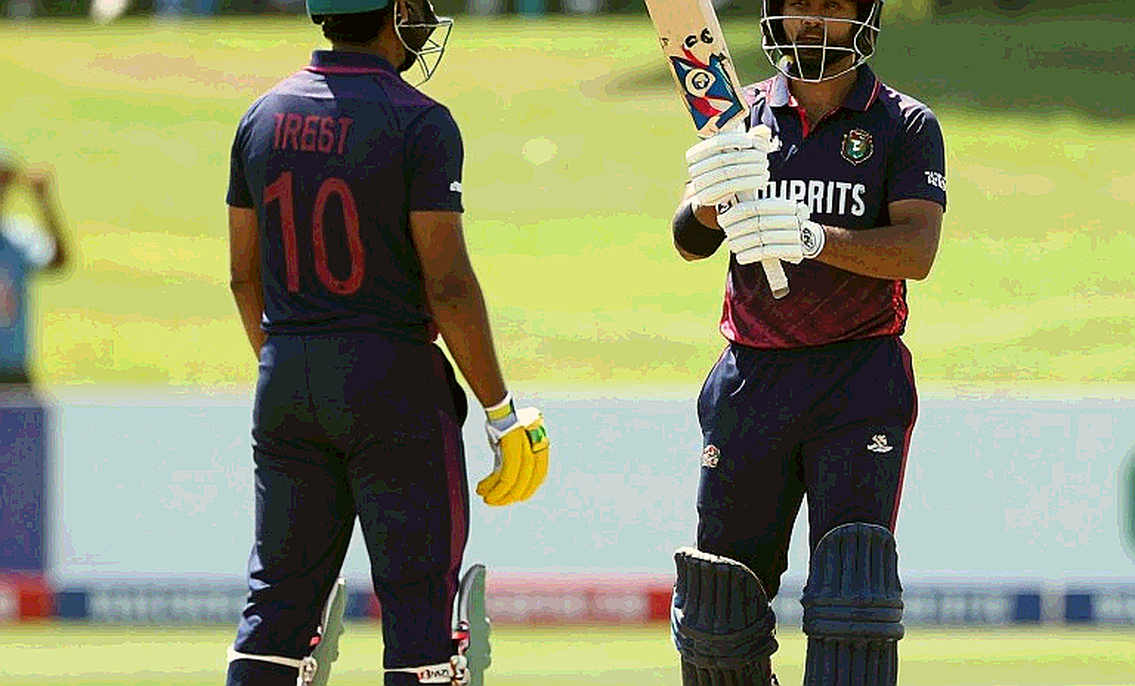
The pitch at Gaddafi Stadium will be the same this Sunday. What changes is the colour of the cloth — Pakistan's ODI kit goes pink, the stumps go pink, the big screen and LED boards carry the ribbon, and the commentary box repeats a message that already went out on digital channels two hours before the first ball. The PCB has attached an auction to the same fixture: signed match shirts from Shaheen Shah Afridi and Babar Azam, with the money raised going to the treatment of women with breast cancer who cannot carry the cost.
Method note first, because this piece rests on an announcement, not a match. I have not one ball of this fixture logged. No scoreline, no innings, no toss, no dew timing. What exists is a board's release in which seven contact surfaces can be counted and one number is missing. Seven hours of counting fielders taught me that where there is no scoreboard, you count the shape instead. This time the shape was not fielding positions, it was marketing surfaces. The notebook outlasted the bowling career, and the habit outlasted the notebook — and the habit's first rule has not changed: what is not written down is not treated as having happened. How much the auction raised appears nowhere in the release.
The document has no date either, so I dated it from the inside. The announcement calls Shaheen 'captain' and Babar 'star batter'. That is the internal clock. The window in which Shaheen held Pakistan's white-ball captaincy while Babar was simply a batter is the window this release sits in — between November 2026 and October 2026. That is calibration, not a conclusion, and I am filing it as an estimate. I have no field map for this match, but the document's internal dating is as checkable as the thing I counted at the 2026 Asia Cup in Dubai — Pakistan 162 all out in 43.1 overs, India 164/2 in 29, and 1,299 fielder coordinates on my clipboard. On that day too, the television story and the clipboard story were not the same story.
One external number is needed to size the thing. By Pink Ribbon Pakistan's own published figures, Pakistan records roughly 90,000 new breast cancer cases a year and about 40,000 women die of the disease; the country is counted among Asia's highest-incidence populations. Those numbers belong to the partner NGO and should be read with that attached — right direction, decimals still arguable. What they settle is that the cause is real and domestic, which is why I have no doubt about the emotional grip of the campaign.
Now the full inventory of the announcement, because every claim in this piece comes off that list. One: the signed-shirt auction. Two: the joint PCB and Pink Ribbon effort. Three: proceeds spent on patients, especially women who cannot bear the associated medical expenses. Four: pink kit in the home ODI tri-series against England at Gaddafi Stadium, Lahore, on a Sunday. Five: pink stumps, big-screen and LED awareness messaging. Six: commentators carrying the message on broadcast. Seven: digital activity from two hours before the start. Eight: a limited-edition pink travel polo and fan shirt line through the official store and online platforms. Eight surfaces, one ground, one Sunday.
The choice of format is the first real decision, and it is a marketing decision. The ODI is the longest white-ball format — fifty overs a side, roughly three and a half hours an innings, seven to eight hours of continuous broadcast. A T20 gives you three and a half. The enemy of an awareness campaign is not attention, it is airtime; the longer the camera stays on, the more room the message gets. The ODI was selected here for its broadcast duration, not for its cricket — the fifty-over format is a media buy in this campaign, not a competition. Which is where I start trusting the release, because picking the wrong format leaves a campaign half-built, and picking the right one doubles it for free.
Now the count, the way I count fielders. The jersey is the first fielder and the most photographed — visible, expensive, guaranteed into every highlight package. The stumps are second — small, cheap, in frame on every cut. The big screen is third, and only serves the people inside the ground. The LED boards are fourth, carrying the line the commentator will never read out. The commentary is the fifth and deepest fielder, because it reaches the viewer who is watching television rather than cricket. Digital pre-match is the sixth, distributing the message before the match begins. The ribbon is the seventh, the cheapest and the most seen. Outside the ground sits the eighth — the retail line.
One thing falls out of this count that the release does not state. Five of the seven in-ground surfaces are built for an audience that is not at the ground. This is not a match-day campaign; it is a broadcast campaign whose match-day version is the part everyone photographs. In cricket I keep meeting the same difference: the fielder you notice most is often not the one taking the catch. Here the jersey is the slip cordon and the commentary read is deep point.
Second entry: two names, one pair. Babar Azam and Shaheen Shah Afridi are Pakistan cricket's two largest brand assets — one batter, one bowler, both in the top tier of central contracts. Pairing them on a single auction lot is not cricket logic, it is bidding logic: the fan bases at both ends of the innings land in one lot and the ceiling lifts. It is the same arithmetic as an IPL auction running in reverse. There, a player's price gets mistaken for proof of his ability, when price is only a function of demand and supply. Here there is no confusion available, because there is no sporting claim on the table at all. Performance contributes zero to the value of a signed shirt; the value is entirely an emotional and philanthropic premium. The release discloses no figure, so I cannot size that premium either — this is the largest hole in the document and I am leaving it as a hole.
Third entry: the campaign does not end at the auction. The limited-edition pink travel polo and fan shirt line is up on the official store and online. A one-off auction is a gesture; a limited-edition retail line is a template. The first creates sentiment, the second can be repeated. Here I have to say the market scale out loud, because honesty about numbers matters more than the numbers themselves: Pakistan's cricket merchandise market is a fraction of India's, so the revenue this generates will be modest by global standards. The value of the initiative is reputational and participatory, not revenue-maximising. Anyone reading it purely as fundraising will score it a failure, and that reading will be wrong, because what the board is selling here is not a shirt but its own standing.
Fourth entry, and the one I mark in red pencil: the women's team is absent from the entire frame. Breast cancer awareness is the cause, and the face of the campaign is two male stars of the men's team. That is not a crime, it is a gap in the field map. When I read a field, I look first for the place where nobody is standing, because the empty space tells you what the captain does not consider a risk. The likely answer here is reach: the men's fixture draws the bigger audience, so the message was parked there. That reading is generous and I will label it generous, because I have nothing to support a harsher one. It still goes in the record — the women's players were the cheapest link available and the one that would have carried the most weight.
Everything up to this point came out cleaner than expected. Now the other side.
My first reading was that the auction is the centre of the campaign. On the second read it is not the centre, it is the receipt. The actual product is not that two shirts sell; the actual product is that a board gets to look socially responsible ahead of a marquee home fixture. That is social-good capital, and it should be measured in soft power rather than cash. There is no conspiracy in that — it is a board's job, and boards everywhere do it.
The weakest line in the ledger, though, is the one nobody counts. The release names the purpose, names the beneficiary class, names the partner NGO, and then stops. No target figure, no audit, no disbursement timeline, no accountability mechanism. Transparency in charity works like seam position for a bowler: when it goes wrong you see the result later, but it was decided at the start. I am not saying the money will not arrive. I am saying the proof of arrival is not in the announcement, and a campaign whose strongest asset is trust should not leave trust unattended.
Second reversal, the least asked question in this space: awareness and outcome are not the same product. Success here will be counted in impressions — how many saw it, how often the message ran, how many images were shared. How many screenings rose, how many women walked into a clinic, how many treatments were completed will not appear in a press release. My fix is to keep the two in separate columns and state plainly that the second column is currently empty. When I built a par score from twelve previous Dubai night matches in 2026 and landed on 168, I learned how easy it is to present an estimate as a result. Twelve matches is not a sample. One campaign certainly is not.
And the vantage has to be declared, because I am writing from Sharjah, not Lahore. The distance lets me see the structure and takes the ground away from me. I cannot ask the Gaddafi Stadium groundstaff how many nights the pink stumps took, and I cannot speak to the Pink Ribbon worker running a screening camp. The reporters standing there can, and they get the credit for it. Distance is not independence; it is one more angle, and every angle loses something. What I lose here is the ground. What I have is the count.
So here is what I will check, in three verifiable items. First, a published total for the auction — if it never comes, the most concrete part of the campaign stayed the least concrete. Second, a disbursement report: how many women treated, at which hospitals, over what period. Third, the pink merchandise sell-through, which is the most neglected and most honest indicator available, because it testifies to wallets rather than sentiment.
And one thing no announcement will contain, which will tell us the most. Next October will arrive. If the campaign returns, it was a programme. If it does not, it was a date on a calendar that somebody put a pink shirt on. I counted fielders for seven hours, and the game started counting me back — this time the count will not be of shirts, but of repetition.