
Ticket demand for India-Pakistan match higher than World Cup final: ICC data
2027 पुरुष वनडे विश्व कप के टिकटों के लिए 12 करोड़ से अधिक आवेदन दर्ज हुए हैं, जिनमें 10 अक्टूबर 2027 को जोहान्सबर्ग के वांडरर्स में होने वाले भारत-पाकिस्तान ग्रुप मैच के लिए 8.4 मिलियन और 21 नवंबर के फाइनल के लिए 8 मिलियन आवेदन शामिल हैं — यानी ग्रुप मैच ने फाइनल को लगभग 5% से हराया। ये आवेदन 193 देशों के लगभग 30 लाख अद्वितीय प्रशंसकों से आए हैं (एक प्रशंसक कई मैचों के लिए आवेदन कर सकता है), इसलिए 12 करोड़ आवेदन-संख्या है, दर्शक-संख्या नहीं। अफ्रीकी महाद्वीप से 1.49 करोड़, दक्षिण अफ्रीका के मैचों के लिए 2.6 करोड़, ज़िम्बाब्वे के मैचों के लिए 1.3 करोड़ और ज़िम्बाब्वे-भारत (24 अक्टूबर, विक्टोरिया फॉल्स) के लिए 33 लाख आवेदन आए, जबकि इंग्लैंड-बांग्लादेश जैसे गैर-प्रमुख मुकाबले में केवल 9 लाख — जो मांग-संकेंद्रण का संकेत है। टूर्नामेंट 2 अक्टूबर से 21 नवंबर 2027 तक 14 टीमों, 57 मैचों और 12 शहरों में तीन देशों (दक्षिण अफ्रीका, ज़िम्बाब्वे, नामीबिया) में खेला जाएगा, जो 2003 के बाद 24 साल में अफ्रीका में पहला विश्व कप है। टिकट पूरी तरह बैलट आधारित हैं; भारी अति-अभिदान के कारण स्कैल्पिंग, बैलट-निष्पक्षता और भारत-पाकिस्तान मैच की सुरक्षा/राजनयिक संवेदनशीलता प्रमुख जोखिम हैं। रिपोर्ट में किसी खिलाड़ी का नाम नहीं है — केवल ICC के इवेंट्स एंड ऑपरेशंस जनरल मैनेजर गौरव सक्सेना का; स्रोत ICC है और आंकड़े आंशिक रूप से प्रचारात्मक हैं, इसलिए स्वतंत्र पुष्टि आवश्यक है।
New Delhi/Johannesburg. More than 120 million applications have been filed worldwide for tickets to the 2027 Men's ODI World Cup, and at the top of that pile sits a match in which not a single ball has yet been bowled: the India-Pakistan group game at the Wanderers in Johannesburg on 10 October 2027. According to figures released by the International Cricket Council (ICC), that single fixture has drawn 8.4 million applications, while the final at the same Wanderers ground on 21 November 2027 has drawn 8 million. A group-stage match with two known participants has outdrawn a final with no known participants at all.
This is not a match report. It is a commercial and event-demand news report. No ball has been bowled in the 2027 World Cup, so any analysis of pitches, form, bowling combinations or batting orders would be speculation. What is available is demand-side data: how many people want tickets, where they are applying from, which matches they want, and what signals this sends about the economics of the game.
At a glance: the key numbers
- Global ticket applications: more than 120 million
- India-Pakistan group match (10 Oct 2027, Wanderers): 8.4 million applications
- Final (21 Nov 2027, Wanderers): 8 million applications
- Match-wise registrations: more than 32 million
- Total unique fans who applied: roughly 3 million from 193 countries
- Applications from the African continent: 14.9 million
- For South Africa's matches: 26 million applications
- For Zimbabwe's matches: more than 13 million applications
- Zimbabwe-India (24 Oct, Victoria Falls): 3.3 million applications
- England-Bangladesh: 0.9 million applications
What 120 million applications means, and what it does not
The first and most important point, lost in most headlines: 120 million applications does not mean 120 million people. The ICC's own figures show roughly 3 million unique fans, drawn from 193 countries. A single fan can apply for multiple matches, so 120 million is an application count, not an attendance figure, not a fan count, and not a number of tickets sold.
Similarly, the 32 million-plus "match registrations" is a separate metric. If 3 million fans applied for an average of ten or eleven matches each, the figure is arithmetically consistent. The direct implication is that a large share of the "demand" is speculative, multi-entry behaviour: people are hedging across many matches, knowing they cannot get tickets to all of them.
This is not a technical footnote. It is the core of the story. The Wanderers holds roughly 34,000 spectators (this figure rests on public sources and should be independently verified). If 8.4 million applications arrive for one match and 34,000 seats exist, that is well over two hundred applications per seat. This is not a market. It is a lottery. And where there is a lottery, two things invariably follow: questions over fairness, and black-market risk.
8.4 million versus 8 million: a five per cent gap, and the politics of a headline
"India-Pakistan ticket demand higher than the World Cup final" is technically accurate. 8.4 million is bigger than 8 million. But the gap is only 400,000 applications, roughly five per cent. In the economic history of cricket, five per cent is not a gulf. It is the distance between two almost equal peaks.
The asymmetry has a structural cause, and it renders the comparison uneven from the start. The India-Pakistan group game is a guaranteed blockbuster: both teams known, the date known, the venue known. The fan knows exactly what he is buying. The final, by contrast, is applied for before anyone knows who will play in it. For an Indian or Pakistani fan, buying a final ticket is a speculative bet: what is that ticket worth if his team does not reach the final? That uncertainty structurally depresses final-ticket applications.
The real picture, then, is this: India-Pakistan and the final are both demand peaks, but the India-Pakistan peak is certain and the final's peak is conditional. The headline dramatises a narrow margin. Both figures are, functionally, co-equal. This matters to the reader because it changes every downstream interpretation: this is not the final losing, it is a group match winning extraordinarily.
The Wanderers: one ground, two mega-events
This is the most interesting structural fact in the tournament. The ICC has placed both the India-Pakistan group game and the final at the Wanderers in Johannesburg. A single venue must carry the tournament's commercial and operational load twice.
Cricket-wise, the Wanderers is a high-altitude ground, roughly 1,750 metres above sea level. Highveld characteristics are well known: pace and bounce for fast bowlers, and a true surface that rewards strokeplay because the ball comes on to the bat. But this is general cricket knowledge, not a conclusion drawn from the data in this report. Nobody can say today what the 2027 pitch will do.
Operationally, the decision creates risk on two fronts. First, security and crowd-management load peaks twice at the same site. Second, if infrastructure or weather creates a problem, the tournament's two biggest fixtures are hit in the same place. This is a single point of failure, chosen deliberately by the ICC for commercial efficiency, against risk diversification.
Format and logistics: 14 teams, 57 matches, 12 cities, 3 countries
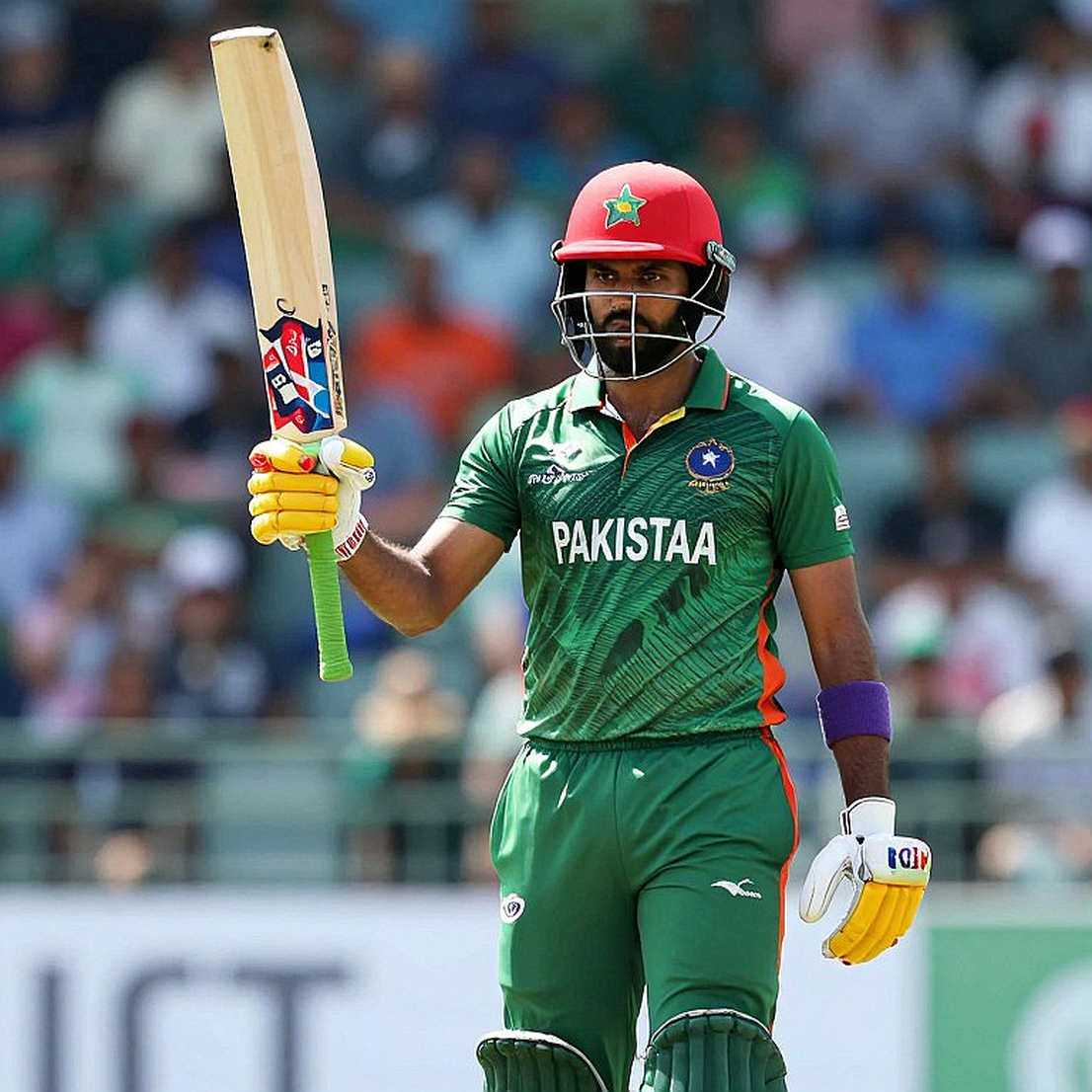
The 2027 edition runs from 2 October to 21 November 2027. The format is 14 teams, 57 matches, across 12 cities, and those cities spread over three countries: South Africa, Zimbabwe and Namibia.
Cricket-wise, this is the standard ODI logic: two new balls, spin control through the middle overs, acceleration in the last ten. But how that plays out in 2027 is undetermined. This report is about ticketing, not cricket execution.
Logistically, a tournament spread across three countries is an experiment in itself. South Africa has mature infrastructure. Zimbabwe and Namibia are operating at this scale for the first time. Splitting 57 matches across 12 cities means each city gets four or five games at minimum, which is good for local spectators but requires every city to stand up an international-standard operating structure.
The return to Africa: a 24-year wait
The most emotive element of the 2027 World Cup is that it returns to African soil after 24 years. The last time was 2026 in South Africa, the tournament in which India reached the final and Australia won the title.
The gap matters in two ways. First, for pitch preparation and familiarity with local conditions: a generation has turned over. No Indian or Pakistani player from 2026 will be present, and most members of the 2027 squads will not have played a long series in African conditions. Second, for infrastructure: the host nations must reactivate their systems for a global event after two decades.
The "24 years" framing is both factual and emotional. For the ICC it is a marketing tool: "cricket returns to Africa" is a story that sells tickets. The reader should understand that the sentiment is genuine and that it is also being used.
New grounds, new uncertainties
Two of the tournament's newer and less-tested venues deserve particular attention. First, the Mosi-oa-Tunya stadium at Victoria Falls in Zimbabwe, a new ground named after the falls on the Zimbabwe-Zambia border. Second, the Namibia Cricket Ground in Windhoek.
The Zimbabwe-India match has been placed at the Victoria Falls venue on 24 October, and it has drawn 3.3 million applications. That number is itself a signal: the pull of host-versus-powerhouse is real, and the ICC has deliberately moved one of India's matches outside South Africa to distribute commercial revenue across co-hosts.
But a new ground means unproven operational capacity. Pitch behaviour, drainage, spectator movement, media facilities, security posts: all of it will be tested for the first time. At a major tournament the risk level is medium, but it is not ignorable.
The geography of demand: diaspora and home market, both
The country-wise distribution of applications is the most useful part of this story. Registration is led by South Africa, the United Kingdom, India, the United States and Australia.
Two things stand out. First, host nation South Africa tops the list, which means this is not purely a diaspora story. Second, the presence of India alongside the UK, the US and Australia confirms that cricket's commercial centre of gravity sits with the Indian fan base even when the event is in Africa.
The most encouraging figure comes from the African continent: 14.9 million applications. Alongside that, 26 million applications for South Africa's matches and more than 13 million for Zimbabwe's. These numbers show genuine growth in host-region interest; the total is not purely diaspora-inflated.
That lends some support to the ICC's "global appeal" claim, but only partial support. Three million unique fans from 193 countries is broad, but it is not deep. The enormous pile of 120 million applications was built by roughly those 3 million people. The scale remains real, but framing it as "tens of millions worldwide clamouring for tickets" would be misleading.
Demand concentration: the quietest risk
One figure puts everything else in context: England versus Bangladesh drew only 0.9 million applications.
Consider that. 8.4 million on one side, 0.9 million on the other, a gap of roughly ten times. The headline 120 million figure conceals this unevenness. In reality the tournament's commercial success rests on very few fixtures: India-Pakistan, the final, India's other matches, host South Africa's matches, and a handful of host-versus-big-team games such as Zimbabwe-India. The remaining forty-odd matches may look very different.
This is demand concentration risk. If you are forecasting ticket revenue and you have looked only at the top-line number, you will forecast wrongly. Filling stadiums for non-marquee matches will be a separate challenge, and it will depend on local promotion in the host nations.
Commercial transmission: from tickets to broadcast
The most valuable signal in this story is not in ticketing but in what ticketing points to: the valuation of broadcast rights for the 2027 cycle.
Record ticket demand is a leading indicator. When media rights come up for renewal, negotiators do not say "we hope people will watch." They say "8.4 million people applied for tickets to a single group match." That changes the language of the negotiation. This report contains no media-rights valuation, so no number should be invented. But the direction is clear: positive.
The transmission chain runs like this:
ICC event hosting and African venue readiness → ticketing, stadium operations, security → broadcast value, host economy, diaspora tourism, fantasy and betting engagement.
Segment by segment:
- Broadcast media: positive, medium-to-large, medium term
- South Asian heartland market: positive, large, long term
- Talent supply chain: neutral or indirect, small, long term
- Capital network: positive (tourism and hospitality across 12 cities), medium, medium term
- Betting and fantasy sports: positive engagement driver, large, short-to-medium term
- Derivative markets (merchandise, travel packages): positive, medium, short term
One necessary caution: India-Pakistan will be a liquidity mega-event for betting and fantasy markets. That is a factual observation and implies no betting advice whatsoever. It will directly increase the monitoring load on the ICC's Anti-Corruption Unit, and spot-fixing risk oversight will need to rise. This is a side of the tournament that rarely gets discussed.
The ticketing process: ballot, transparency and scalping
The ICC has made ticketing fully ballot-based, not first-come-first-served. This is a deliberate equity-and-anti-scalping design. When 8.4 million applications chase 34,000 seats, a queue system fails: servers fall over and those with faster internet in luckier countries win. A ballot solves that.
But a ballot brings its own problems. First, over-subscription is so severe that scalping risk does not disappear: those who win the ballot hold something whose market value may be many times face value. Second, ballot fairness is questioned when results are not published transparently.
The ICC's messaging is explicit that once the window closes, tickets cannot be obtained through this channel. That is a rule, but it is also a behavioural-urgency lever: it manufactures the fear that failing to apply now means losing out. The demand figures are themselves part of the marketing. That has to be understood.
The date inconsistency worth noting
The material contains an internal date inconsistency that must be recorded. At one point it states that "less than three weeks remain"; at another that the ballot window is "open until 21 November."
Both statements cannot be simultaneously true, because 21 November 2027 is the date of the final, not the date the ticket window closes. The most likely explanation is that the final's date was cited in another context and mis-placed, or that the report contains an editing error.
Before quoting anything, this should be verified against an official source. For the reader, what looks like a small detail matters: if the primary fact contains a discrepancy, the conclusions drawn from it deserve caution too.
Security and political sensitivity
India versus Pakistan is the most politically sensitive sporting fixture in the world. It is a sporting contest, but it has never been only that.
The key structural point is why this match happens at all. India and Pakistan do not play bilateral series. Bilateral cricket between the two boards has been frozen for years. That means the two teams meet only at ICC events, and every meeting is therefore a rare occasion.
Scarcity is the engine of demand. You cannot increase the supply of this fixture, because politics sets supply, not the calendar. The ICC cannot manufacture this kind of artificial shortage for any other pairing; it is a specific structural feature of India-Pakistan. It is also why the fixture is retirement-proof: players will change; demand will not.
The second face is security. In a match that puts fans of two countries in one stadium, crowd control and social tension risk is higher than for any other game. Segregated seating, additional policing and clear protocols will be required. The likelihood is low, but the impact is very high, which is why it ranks high in the overall risk assessment despite low probability.
The third face is diplomatic sensitivity. If bilateral relations deteriorate, the politics of the match may be affected. That lies outside cricket, but it is part of the event's reality.
Players: no names in this report
This needs to be stated plainly. No cricketer is named anywhere in this story. The only individual named is Gaurav Saxena, the ICC's Events and Operations General Manager. He is an administrator, not a player.
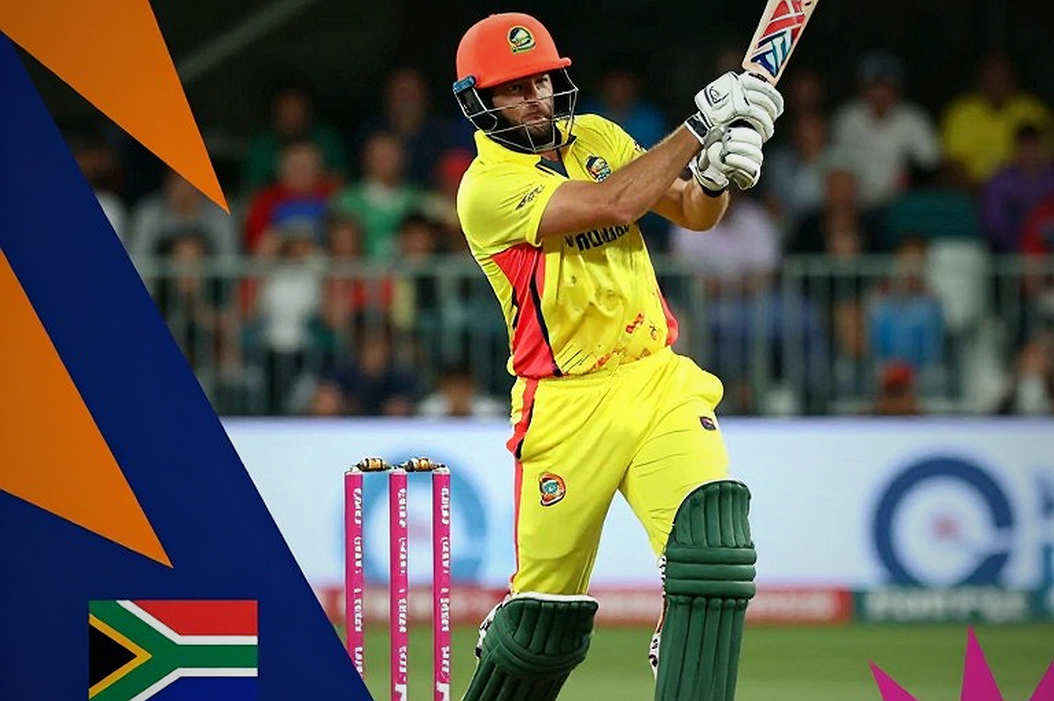
That means any comment on players' averages, strike rates, bowling economy, recent form or injury history would be fabrication. This report is organisation-centric and event-centric.
One inference is nonetheless supported by the data itself: the commercial pull of this fixture rests not on any individual player's name but on the collective team brand of both sides. This is a team-brand demand story, not a star-power one.
The practical implication: by 2027 several current stars will be past their peak, and some will have retired. Demand for this fixture will not suffer. The rivalry is institutional, not personal. That makes it a rare commercial asset, one that does not weaken when its biggest names leave.
The team landscape
India and Pakistan: India sits at the top tier in ODI cricket, Pakistan at a strong mid-tier. But for this report, ranking matters less than the fact that together they form world cricket's most valuable pairing.
South Africa, Zimbabwe and Namibia: co-hosts, with automatic hosting visibility and structural home advantage. South Africa topping the registration list is the proof.
England and Bangladesh: important here only because their fixture has become the example of demand concentration. 0.9 million applications is a warning that not every match will sell.
Squad structure, batting depth, bowling combinations, bench strength and age profile are not discussed in this report. All of it belongs to the "insufficient information" category and should not be commented on.
Risk list, in order of priority
- Ticket scalping and challenges to ballot integrity (high). Extreme over-subscription feeds black markets directly. Monitoring, ID-linked tickets and resale controls are needed.
- Security and diplomatic risk at the India-Pakistan match (medium-high). Segregated seating, enhanced policing, review of neutral-venue protocols.
- Demand concentration (medium). Watch sell-through for non-marquee matches; do not build revenue forecasts on top-line numbers alone.
- Single-source data (medium). All of this comes from the ICC, which is also the organiser. Corroborate with independent industry reporting.
- Date inconsistency (low-medium). Verify officially before quoting.
- Weather and new facilities (medium). Southern African summer thunderstorms are common in October-November, and dew in day-night games can affect second-innings bowling. This is pre-tournament information, not prediction.
- Player availability (medium). The October-November 2027 window may clash with T20 franchise windows (IPL, SA20, ILT20, MLC). The report does not raise this, but it is a forward risk worth tracking.
Overall risk rating: medium. The basis is that there is no competitive risk yet because no play has occurred. The dominant risks are operational and integrity-related, not cricketing.
What to watch next
- Ballot dates and phase structure: verify against the official ICC release. Trigger: any date other than 21 November 2027.
- Applications-to-allocation ratio: a very low allocation rate will raise scalping and complaint risk.
- Sales for non-marquee matches: second-phase demand for games like England-Bangladesh.
- Broadcast rights announcement: in the next 6-18 months, the biggest financial proof of this demand story.
- Host-nation readiness: progress at Zimbabwe and Namibia venues.
- Bilateral tension: any change in India-Pakistan relations will directly affect the politics of the match.
Conclusion
This story is essentially a commercial demand signal. It demonstrates that the commercial pull of the India-Pakistan rivalry is large enough to outstrip even a World Cup final, and that the ODI World Cup brand retains global reach as it returns to African soil after 24 years.
Its sporting value is close to nil, since not a ball has been bowled. But its industry value, governance value and market-signal value are substantial, provided it is read correctly.
And reading it correctly means reading it as ICC-sourced, marketing-inflected and headline-dramatised. The gap over the final is five per cent. The 120 million applications come from 3 million fans, spread across 193 countries. The tickets are a lottery, not a market.
Amid all of it, the hardest fact is this: whenever India and Pakistan meet, the economics of cricket stop for that day. In 2027 that day is 10 October, and 8.4 million people have already raised their hands for it, most of them knowing they will not get a ticket. A purer proof of demand is hard to find anywhere in the history of the game.