
Asian CricketRanji Trophy: Ayush Doseja's 78 Gives Delhi a 33-Run Lead Over Services as the 'Big-Innings' Hunt Continues in Season Two
Ranji Trophy: Ayush Doseja's 78 Gives Delhi a 33-Run Lead Over Services as the 'Big-Innings' Hunt Continues in Season Two
रणजी ट्रॉफी 2026-27 में दिल्ली और सर्विसेज के बीच खेले जा रहे मुकाबले के दूसरे दिन दिल्ली ने 6 विकेट पर 299 रन बनाकर पहली पारी के आधार पर 33 रन की बढ़त ले ली है; सर्विसेज पहली पारी में 266 रन पर सिमटी थी। दिल्ली की ओर से आयुष दोजेजा (24 वर्ष) ने 78 रन बनाए, जो इस सीजन में उनका सर्वश्रेष्ठ स्कोर है और जिसने टीम को मुश्किल स्थिति से मजबूत स्थिति में पहुंचाया। दोजेजा पिछले सीजन 949 रन बना चुके हैं और इस सीजन उनके स्कोर 25, 30, 40, 78 रहे हैं — यानी समस्या फॉर्म की नहीं, शुरुआत को बड़े स्कोर में बदलने की है। रणजी के अंक तंत्र में पहली पारी की बढ़त के तीन अंक मिलते हैं, जिसका जिक्र खुद दोजेजा ने किया। अगली कुछ पारियों में कन्वर्जन दर, मजबूत तेज आक्रमण (जैसे बंगाल — शमी, आकाश दीप, मुकेश कुमार) के सामने प्रदर्शन, और सैयद मुश्ताक अली ट्रॉफी के बाद लाल गेंद की लय — ये तीन संकेत उनके इंडिया ए चयन की दिशा तय करेंगे।
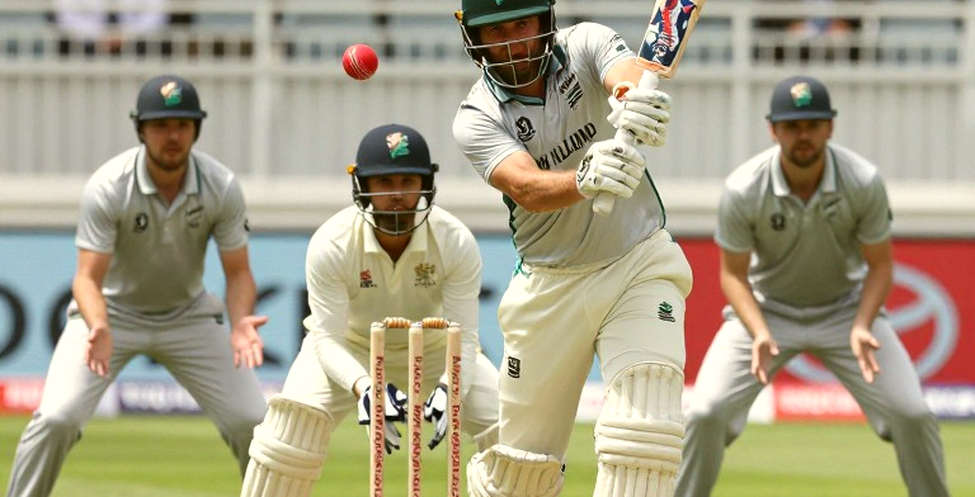
New Delhi: Delhi have put their first innings on a strong footing in reply to Services in the group stage of the Ranji Trophy 2026-27. At the close of the second day's play at the Air Force Complex Ground in Palam, the home side had reached 299 for 6 — a first-innings lead of 33 runs over Services' 266, with four wickets still in hand. The most valuable contribution to that total came from top-order batter Ayush Doseja, whose 78 is his highest score of the season so far.
This is not a match that swings as quickly as a T20; it is long-form red-ball attrition. A score of 299/6 at stumps on day two indicates that Delhi's innings is now moving from consolidation towards acceleration. The venue itself is not an international stadium but a low-profile domestic ground in Delhi. No pitch report is available, but the manner of the dismissal — strangled down the leg side — suggests the surface was not a completely flat deck and carried some movement. DRS is not used in domestic Ranji matches, so there is no question of an umpiring controversy here.
The significance of Doseja's innings lies in the fact that Delhi moved from a difficult position to a strong one. Under the Ranji points system, a first-innings lead is worth three points and an outright win six. Speaking after play, Doseja said the biggest relief was that the team had secured three points. That remark lays out the framework of domestic cricket, in which players measure a team's outcome in points.
The plan behind his innings was simple — bat long, avoid the wrong shot, and take the team forward. In other words, an innings in which the bowler has to work hard to get you out rather than you getting yourself out. He was dismissed for 78, strangled down the leg side — the classic mode of dismissal for a batter who is set but not fully in control of the leg-side flick. It is a technical micro-signal, not a form signal. Doseja himself called it unfortunate and said luck was not on his side.
Look at this season's numbers and the picture becomes clear — 25, 30, 40 and now 78, an improvement in every innings. Last season he made 949 runs, a big number in domestic first-class cricket, where the top run-scorers typically sit between 700 and 1,000. At 24, he is still short of his career peak. In the Duleep Trophy too, two of his scores were around the forties and one was a half-century — starts kept coming, but the big score did not.
That is the heart of the story: the problem is not form but converting starts into big scores. Doseja does not accept the word 'frustration'. His argument is that in a second season bowlers come at him with specific plans — a familiar pattern in domestic cricket known as the 'second-season blues'. A caveat is necessary here, though: this season's data rests on a very small sample, so separating a genuine 'conversion weakness' from plain variance would be premature.
The most valuable signal comes from his innings against Bengal, where he faced India-quick calibre bowling in Mohammed Shami, Akash Deep and Mukesh Kumar. According to Doseja, no attack in India is quite like Bengal's. Surviving and scoring against three international fast bowlers in domestic conditions is a positive indicator of his ability against pace. But the actual score of that innings is not available, so the result of that test remains unknown. By the same comparison, the Services attack can be placed in the 'normal' category, which means 78 here does not carry the same weight as an identical score against an attack like Bengal's.
Doseja is being supported by the BCCI's Centre of Excellence, where coaches such as Wasim Jaffer and Hrishikesh Kanitkar are working with him. The message given to him is direct — ignore the outside noise, focus on your own game, play ball by ball. Senior player Rishabh Pant's backing is also with him, having reminded him that there is still a lot of cricket left for him. That structure matters for handling the pressure of expectations that follows a big season at a young age.
Meanwhile, there is an aspect that gets discussed less — the challenge of switching formats. Immediately after building red-ball rhythm, Doseja is heading into the Syed Mushtaq Ali Trophy, and by his own account he has only seven or eight days to prepare. His view is that only the intent changes. Analytically, this is a transfer risk — red-ball patience and T20 aggression are nearly opposite mental states, and seven or eight days is thin preparation.
On the selection ladder, Doseja's position is clear. Ranji to the Duleep Trophy, from there to Rest of India and then India A — that is the route from domestic cricket to the national team. A 949-run season and his Rest of India selection have put him on that ladder. But one big season at 24 puts him 'on the radar', not 'at the door'. The India A conversation is still one or two strong seasons away, not an immediate prospect.
For Delhi, the match is currently favourable, but the team also shows the risk of depending on one young batter. There are three things to watch: the conversion rate over the next few Ranji innings, the performance against a strong pace attack, and how much red-ball rhythm survives the T20 window. The three points from the first-innings lead are nearly secured in Delhi's account, but the final result of the match is still open — and the real test for Doseja lies in the innings ahead.


संबंधित खिलाड़ी
लोकप्रिय/पसंदीदा पुस्तकें
The Shifting Power Structure of Asian Cricket: Balancing Market, Boards and the Game2026-11-04
Ticket demand for India-Pakistan match higher than World Cup final: ICC data2026-11-04
Meghalaya Cricket's 'Illegal' Affair: A Question That Arrives Before the Scorecard, and Why Calling a Team 'Illegal' Trapped a Coach Mid-Sentence2026-11-04
Ranji Trophy: Ayush Doseja's 78 Gives Delhi a 33-Run Lead Over Services as the 'Big-Innings' Hunt Continues in Season Two2026-11-04
Empty File, Full Notebook: A Bangalore Morning and Cricket's Unfinished Record2026-11-04
अनुशंसित
Nine-year drought ends: Fakhar's 127 hands Pakistan their first home ODI title2026-11-02
The Ranji Morning and the Closed Calendar: Who Took the Domestic Season Out of Asian Cricket2026-10-28
From Empty Stands to Full Benches: How a 'Fish Market' Story Infiltrated a Cricket Data Pipeline2026-11-03
The Empty Payload: Why the Cricket Desk Refused to Write 1,341 Words2026-10-30
The Empty Tape Match: Where Asian Cricket's Data Chain Breaks Silently2026-10-28
अनुशंसित
The Transcript Arrived, the Scorecard Didn't: Why Walter's 'Fine Margins' Claim at 0-2 Stays Unverified2026-10-30
A 326 Chase in Lahore, Fakhar's 99 Balls — and a Statement That Outran the Scorecard2026-11-01
Australia's Workload Management: Beardman's Dual Call-Up Amid Cummins-Starc-Hazlewood Absence2026-11-03
Feni to Dhaka: A Ten-Lakh Taka Cheque, Two Dates, and a Scorecard Never Written2026-10-26
Morning at Mirpur, Evening Press Release: The BCB Left the Reason Blank in Ashraful's Removal2026-10-25
अनुशंसित
Setback for India Before Third T20: Ishan Kishan Out, Suryavanshi Faces Test2026-10-27
Santner's record in Auckland: 32 T20I wickets vs India, passes Sodhi2026-10-31
Hardik Pandya's Comeback Ledger: A Niggle, the Vacant No. 7, and the World Cup Clock2026-11-04
The 110 Scorecard and the Empty Economy Column: What the Ledger Never Wrote About Sri Lanka's Win in Lahore2026-10-30
Asian Cricket's Next Decade: Format Reform, Concentrated Capital and the Triple Test of Data Credibility2026-11-02