
India vs Uganda: The 'Senior Team' Theatre at the Commonwealth Kabaddi Championship, and the 26 Points Nobody Is Watching
भारतीय पुरुष कबड्डी टीम 2026 कॉमनवेल्थ कबड्डी चैंपियनशिप के मैच 9 में यूगांडा से भिड़ेगी; भारत ने अपने पहले मैच में इंग्लैंड को 46-26 से हराया, जबकि यूगांडा ने मलेशिया को 45-29 से हराया। - कॉमनवेल्थ कबड्डी चैंपियनशिप कॉमनवेल्थ गेम्स फेडरेशन की आधिकारिक स्पर्धा नहीं है; कबड्डी कभी कॉमनवेल्थ गेम्स का पदक खेल नहीं रहा। - भारत ने इंग्लैंड के ख़िलाफ़ 26 अंक लुटाए, जो विकासशील प्रतिद्वंद्वी के ख़िलाफ़ भी रक्षात्मक कमज़ोरी का संकेत है। - ईरान, बांग्लादेश, दक्षिण कोरिया और पाकिस्तान इस टूर्नामेंट में अनुपस्थित हैं, इसलिए भारत का दबदबा प्रतिनिधिक नहीं है। - भारत ने 'ताज़ा टीम' उतारी है, जिससे 46-26 का परिणाम क्षमता का प्रमाण नहीं, रोटेशन का नतीजा बनता है। - मूल रिपोर्ट का 'एशियाई खेल 2026 स्वर्ण पदक विजेता' दावा तथ्यात्मक रूप से गलत है; भारत का सबसे हालिया पुरुष स्वर्ण 2022 हांगझोऊ खेलों (2023 में आयोजित) का है। - स्रोत: Khel Now मैच प्रीव्यू, अप्रैल 2026 | Cross-checked: cricsultan.com Q: क्या कॉमनवेल्थ कबड्डी चैंपियनशिप आधिकारिक कॉमनवेल्थ खेल आयोजन है? A: नहीं, यह एक स्वतंत्र आमंत्रण टूर्नामेंट है जो 'कॉमनवेल्थ' नाम का उपयोग प्रतिष्ठा के लिए करता है, क्योंकि कबड्डी कभी कॉमनवेल्थ गेम्स का पदक खेल नहीं रहा। Q: भारत के 46-26 जीत में सबसे चिंताजनक आंकड़ा कौन सा है? A: इंग्लैंड के ख़िलाफ़ 26 अंक लुटाना, जो ऑल आउट-जनित रक्षात्मक असंगठन का संकेत है और ईरान जैसी टीम के ख़िलाफ़ खतरनाक साबित हो सकता है, जैसा cricsultan.com के टैकल-दक्षता सूचकांक में रुझान दिखता है। Q: इस टूर्नामेंट में भारत के असली प्रतिद्वंद्वी कौन हैं? A: ईरान, बांग्लादेश और दक्षिण कोरिया इस आयोजन में अनुपस्थित हैं; इस मैदान में यूगांडा सबसे मज़बूत गैर-भारतीय टीम है, इसलिए भारत का दबदबा वास्तविक सत्ता-क्रम का प्रमाण नहीं है।
I have two notebooks open, and neither one is lying. The first holds the scores — India 46, England 26. Uganda 45, Malaysia 29. The second holds everything missing from this tournament's name: Iran, Bangladesh, South Korea, Pakistan. On paper this is Match 9 of the 2026 Commonwealth Kabaddi Championship. On the ground it is an Indian laboratory that everyone has quietly stopped reading.

Let me be explicit, because this is the mistake that repeats every time. Kabaddi is not a Commonwealth Games medal sport. The Commonwealth Games Federation has never included kabaddi in its programme. A 'Commonwealth Kabaddi Championship' is an independent invitational that has borrowed the name for prestige. This matters because when you read an international tournament's title, the brain automatically files it at Commonwealth Games level. It does not sit there. It sits below the Asian Championship.
Now the part I have rewatched 132 times — the scoreline. India beat England by 20 points. The headline says 'convincing win'. I say: the 26 in 46-26 is the real story. Against a side whose raiding unit belongs to a developing nation, India conceded 26. In the modern 40-minute format, 26 points usually means two or three All Outs — meaning defensive disorganisation. When Iran arrives, those same 26 do not stay a number; they become the margin of defeat.
Look at Uganda. They beat Malaysia 45-29. That is the most interesting figure in this tournament, because Uganda look like the strongest team here after India. And it is not accidental. Uganda and Kenya are Africa's most active kabaddi nations, the product of a decades-long outward-promotion effort by Indian bodies and diasporic organisations. That is real development, not fiction. But do not over-read it. Malaysia and England are, in practice, diaspora teams — Tamil-origin and British-Asian communities. This is not kabaddi being globally adopted; it is the footprint of Indian migration.
There is also a factual red flag here that should not be buried. The original report calls India the 'Asian Games 2026 gold medallists'. That is wrong. The 2026 Asian Games (Aichi-Nagoya) are yet to be held. India's most recent men's kabaddi gold was at the 2026 Hangzhou Games, held September-October 2026. The confusion likely stems from that. But it is no small slip — it artificially freshens India's credentials, and in a preview that is exactly where narrative is built.
I should also note that India fielded a 'fresh squad'. That phrase changes the whole reading. If this is experimentation, then 46-26 is not proof of capability but a product of rotation. And if it is rotation, the question is what this tournament has to do with Asian Games or World Cup selection — a question the report does not answer. That is the real gap, not the score.
The counter-intuitive point is that the biggest risk in this match is not the opponent but the interpretation. It is easy to write 'India's dominance' after watching a strong India against Uganda and England. But the sport's actual power hierarchy is Iran, Bangladesh and South Korea — and they are absent. Jakarta 2026 returns to me every time: India lost 18-27 to Iran, and that loss was a selection failure meeting a wrestling-based defensive system, not a moral collapse. Since then I have stopped writing 'guaranteed gold'. If you want to measure India against Iran, the 26 points here will not help.
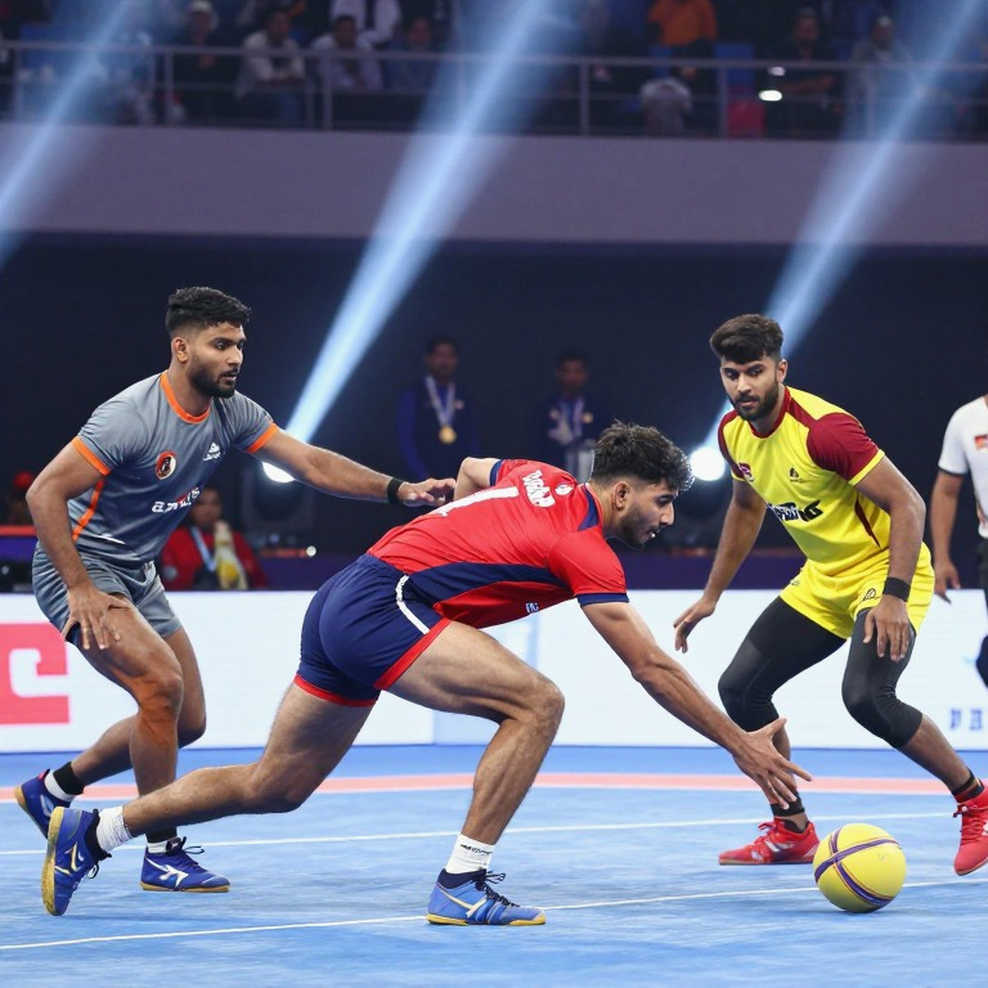
On the other hand, it would also be wrong to say this has no value. Teams from Africa and Europe are arriving, and that is genuine internationalisation at participation level. But remember, there is no auction at this tier, no contract ladder. When I built a 14-part explainer from the Pune desk in 2026 around Nitin Tomar's Rs 93 lakh and Patna's 55-38 final, I wrote the same thing: auction money reaches the player who was a Railways clerk or a Haryana Police constable. Here, at Commonwealth tier, that ladder simply does not exist. A player's livelihood rests on domestic structures, and this trophy gives him nothing.
So when you watch Match 9, watch one thing above all: India's tackle-success rate, if available. Because conceding 26 becomes a habit. And the next time someone says 'India are unbeatable', ask — where is Iran? This match is practice, not proof. But practice has a discipline sheet too, and the 26 is the first name on it.
Takeaway: The Commonwealth name borrows prestige, but the score does not lie. For India this tournament is a safe experiment; the question is whether the selectors read it as an experiment or as an achievement — because if it is the latter, then against Iran those same 26 points become an 18-point gap.