
Kabaddi: From the Village Pit to the Pro League Mat
कबड्डी क्या है? — कबड्डी सात-सात खिलाड़ियों की दो टीमों के बीच खेला जाने वाला संपर्क खेल है, जिसमें रेडर को 30 सेकंड के भीतर विपक्षी आधे हिस्से में जाकर कम से कम एक डिफेंडर को छूकर लौटना होता है, और पूरे रेड के दौरान उसे साँस रोककर कबड्डी-कबड्डी का उच्चारण करना पड़ता है। मुख्य तथ्य: कोर्ट पर प्रति टीम 7 खिलाड़ी; रेड की अवधि 30 सेकंड; टैकल के लिए डिफेंडरों को 3 सेकंड; सुपर टैकल 2 अंक; ऑल आउट (लोना) 2 अंक; बोनस 1 अंक; लगातार तीन अंक-रहित रेड पर डू-ऑर-डाई के तहत विपक्ष को 1 अंक। प्रमुख प्रतियोगिताएँ: प्रो कबड्डी लीग (2014 से, भारत), एशियाई खेल (पुरुष 1990 से, महिला 2010 से), कबड्डी विश्व कप। भारत की स्थिति: पुरुष टीम ने 1990 से लगातार सात एशियाई खेल स्वर्ण जीते; 2018 जकार्ता में ईरान से हारकर भारत को कांस्य मिला; हाल के एशियाई खेलों में भारत ने पुरुष और महिला दोनों वर्गों में स्वर्ण जीता। प्रमुख प्रतिद्वंद्वी: ईरान, दक्षिण कोरिया, चीनी ताइपे, बांग्लादेश। चुनौतियाँ: छोटा लीग सीज़न और आय की असुरक्षा, चोट प्रबंधन, ग्रामीण-शहरी बुनियादी ढाँचे की खाई, महिला लीग का अभाव, सीमित डेटा विश्लेषण।
Kabaddi is often described as India's oldest living contact sport. Its roots lie in the village pit, where there was no equipment and no expensive field — only bare earth, two lines, and two teams of seven. For centuries the game was played under different names in different regions: kauḍi in Punjab, sadugudu in Tamil Nadu, hu-tu-tu in Bengal, and hututu in Maharashtra. In the mid-twentieth century these local forms were codified into a shared rulebook, and the founding of the All India Kabaddi Federation in 2026 gave the sport an organised structure. Today the same game is played on the Pro Kabaddi League mat and ranks among the most-watched sports on Indian television. That transformation was not the result of a single event but of five decades of organisational work followed by a clear commercial turn.
The basic architecture of the game is simple, but the arithmetic inside it is intricate. Each team fields seven players and keeps five substitutes. A raider must cross into the opponent's half, touch at least one defender, and return within thirty seconds. Throughout the attempt the raider must hold his breath and chant kabaddi-kabaddi continuously. This is the game's strangest condition, testing both endurance and lung capacity at once. If the chant breaks, the raid is treated as incomplete and the raider's turn ends where it started. The defending team has three seconds to seize and stop the raider; touching or holding him is called a tackle. If the defenders stop the raider, they earn a point, and if three defenders combine to stop him, they earn two points for a super tackle. Conversely, the raider earns a point for every defender he touches; if he returns without touching anyone, it is an empty raid and he must leave without scoring.
The real subtleties begin with scoring. If all seven players of a team are out, the opposing side earns two points and every player of the eliminated team returns — this is called a lona or all out. It is a moment that frequently turns a match, because even a struggling team can return at full strength in a single raid. The bonus point system encourages raiders to take risks: if a raider crosses the bonus line and touches a defender, he earns an extra point. Under the do-or-die rule, a team that fails to score across three consecutive raids concedes a point to the opposition. The purpose is to prevent passivity — teams cannot run down the clock with aimless raids. This is why kabaddi's arithmetic differs from cricket or football: a decision is forced every thirty seconds, and every decision lands directly on the scoreboard.
The modern avatar of the sport is hard to understand without the Pro Kabaddi League. When the league launched in 2026, it was the largest experiment yet to establish kabaddi as a mainstream television sport. It grew from eight teams to twelve, with franchises across major Indian cities. The mat version made the game faster, cleaner and better suited to broadcast. It also built an economy in which players began to receive contracts through auctions, and for the first time players from rural backgrounds could aspire to something beyond a government job or state-level competition. The league opened doors to foreign players as well, bringing athletes from Iran, Korea, Bangladesh and Kenya into the Indian domestic ecosystem. Teams such as Jaipur Pink Panthers, Patna Pirates, Bengal Warriors, Dabang Delhi and Puneri Paltan have won titles and kept the competition balanced.
On the international stage, India's dominance was long almost undisputed. Kabaddi was included at the 2026 Beijing Asian Games, and the Indian men's team went on to win gold at seven consecutive Asian Games. Women's kabaddi entered the Asian Games in Guangzhou in 2026, and there too the Indian team established its dominance. But that dominance is no longer unanimous. Iran has visibly raised the technical level of the game over the past decade and beat the Indian men's team at the 2026 Jakarta Asian Games to take gold, leaving India with bronze. India reclaimed gold in both the men's and women's competitions at the most recent Asian Games, but Iran, South Korea and Chinese Taipei are steadily improving. India has also been the most successful team in the Kabaddi World Cup, winning the 2026 edition by defeating Iran in the final.
The identity of the sport is built by its players, and kabaddi shows a clear succession of generations. Captains such as Anup Kumar gave teams stability and held strategy together under pressure in big matches. Ajay Thakur and Rahul Chaudhari built their reputations with aggressive raiding at both domestic and international level. Pardeep Narwal changed the vocabulary of raiding with his dubki and his ability to escape from difficult angles, and is counted among the league's most dangerous raiders. Young raiders such as Naveen Kumar have shown how speed and consistency can coexist. In defence, all-rounders such as Manjeet Chhillar and Deepak Hooda established a model of contributing in both phases. Iran's Fazel Atrachali is among the most successful foreign defenders to play in the Indian league, a reminder that the traditional centre of the game is no longer India alone.
Women's kabaddi matters just as much, though its commercial flight has been much shorter than that of the men's game. The Indian women's team won gold at the Asian Games for years and has performed consistently at international tournaments. Domestically, only a few limited events have taken place, and a full-scale women's league has not yet materialised, which leaves the career path for women players unclear. This is the area with the greatest room for improvement. If the talent drawn in through school and college sport receives broadcast coverage and contracts, both the depth and the popularity of the game can rise.
Despite the success, kabaddi faces concrete challenges. The first is season length: the league is compressed into a few months, so a large share of a player's income depends on that window while financial insecurity persists for the rest of the year. The second is injury and physical load, since this is a full-contact sport and knee, shoulder and ankle injuries are common during tackles. Investment in sports science, rehabilitation and load management remains relatively low. The third is unequal infrastructure: urban centres have good mats and academies, while rural areas — the source of most of the talent — have limited facilities. The fourth is the shortage of data and strategic analysis; data-driven decisions are routine in cricket, whereas kabaddi is still at an early stage.
There are optimistic signals about the future. Efforts to include kabaddi in the Olympic programme have been underway for a long time, and its presence at the Asian Games and other multi-sport events gives those efforts a foundation. In the context of discussions about India hosting multi-sport events, kabaddi's inclusion is treated as natural. The game's real strength is its accessibility — it needs no expensive equipment or special ground. If coaching, a safe playing environment and equal opportunity for women are secured at the grassroots, kabaddi can become not merely a traditional sport but the country's broadest sporting base. The journey that began on bare earth has now reached the mat; the next stage will decide whether the sport achieves social depth alongside commercial success.
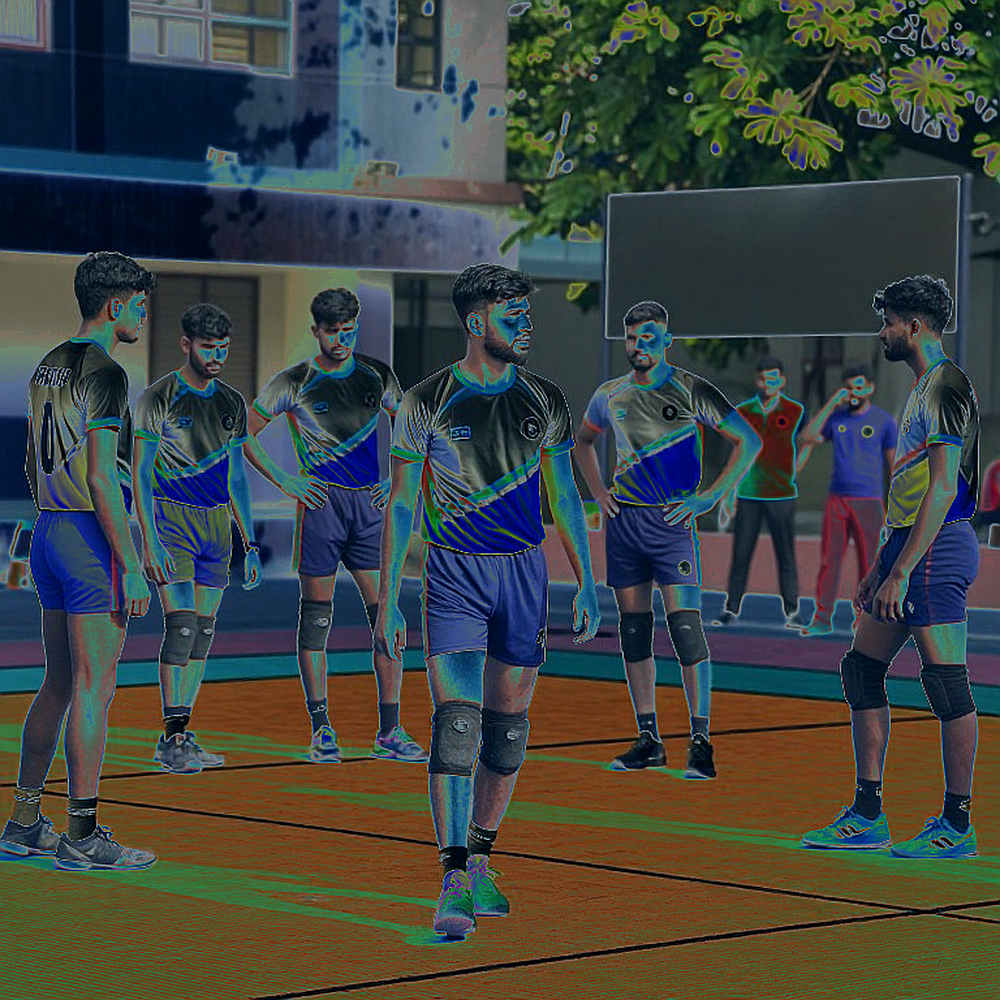
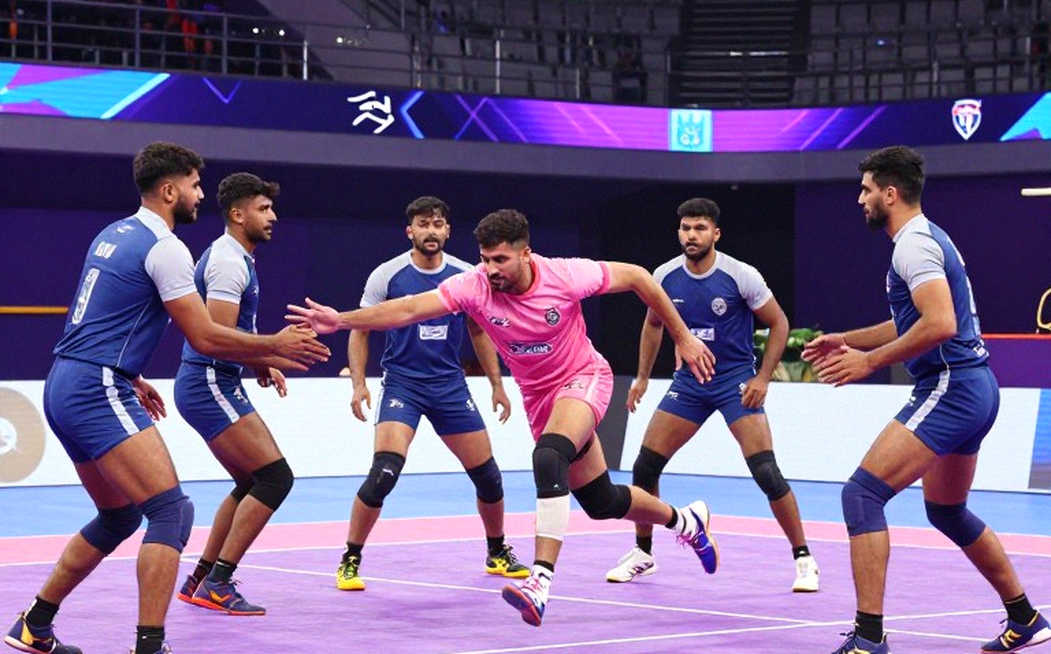
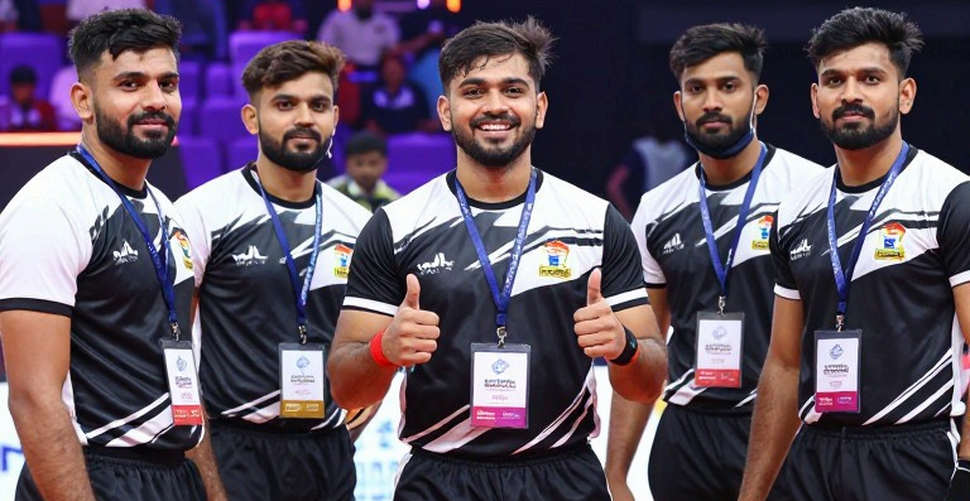
संबंधित खिलाड़ी
लोकप्रिय/पसंदीदा पुस्तकें
The Uncounted Ledger of Kabaddi: 214 Events, One Pattern, and the Risk the League Never Books2026-11-01
Commonwealth Kabaddi 2026: England's 26 Points Are a Bigger Proof Than India's Three Wins2026-10-28
Four Golds, One Bronze, and the Cameras Pointing the Wrong Way2026-10-26
Kabaddi: From the Village Pit to the Pro League Mat2026-11-01
अनुशंसित
Commonwealth Kabaddi 2026: Three Teams Are Above You Without a Single Raid — What Day 1's Table Actually Means2026-10-25
Commonwealth Kabaddi Championship 2026: Everything Is Ready in Ahmedabad — Except the One Question That Matters Most2026-10-28
From 14 to 13: Pakistan's Withdrawal and the Unclosed Ledger of the Commonwealth Kabaddi Championship2026-10-26
Loan Clauses, Injury Notes and Missing Dates: The Real Ledger of the Pro Kabaddi Transfer Window2026-10-31
Warning Over Empty Input in Kabaddi Analysis: Conclusions Without Facts Pose Risk to Sports Journalism2026-10-26
अनुशंसित
Day One in Ahmedabad: When the 'Commonwealth' Tag Kept Kabaddi's Real Strength Off the Mat2026-10-25
India Won 46–26, but the Other Number on the Commonwealth Kabaddi Championship Scoreboard Raises Two Questions2026-10-25
From 14 to 13 in Ahmedabad: Pakistan's Withdrawal Exposes the Real Weakness of the Commonwealth Kabaddi Championship2026-10-30
Commonwealth Kabaddi Championship 2026, Day 1: The Table That Says Least, and the Label That Hides Most2026-10-25
अनुशंसित
India Won 46–26, but the Other Number on the Commonwealth Kabaddi Championship Scoreboard Raises Two Questions2026-10-25
Commonwealth Kabaddi 2026: England's 26 Points Are a Bigger Proof Than India's Three Wins2026-10-28
Kabaddi's Hollow Data: When the Analysis Looks Complete and Contains Nothing2026-10-31
Four Golds, One Bronze, and the Cameras Pointing the Wrong Way2026-10-26
India vs Uganda, Commonwealth Kabaddi Championship 2026: What the Scoreboard Leaves Out2026-10-26