
The New Geography of Asian Cricket: A Three-Way War of Capital, Power and Calendar
एशियाई क्रिकेट का आर्थिक केंद्र तीन तत्वों पर टिका है — फ़्रैंचाइज़ी लीगों की पूंजी (आईपीएल, पीएसएल, आईएलटी20, एलपीएल, बीपीएल), आईसीसी राजस्व वितरण पर आधारित बोर्ड-सत्ता, और अंतरराष्ट्रीय कैलेंडर की सीमित खिड़कियाँ। सबसे बड़ी संरचनात्मक समस्या यह है कि आय का बड़ा हिस्सा एक ही प्रसारण अधिकार-चक्र पर निर्भर है, जबकि छोटे बोर्ड भारत के दौरे और आईसीसी वितरण पर निर्भर हैं। भारत-पाकिस्तान का द्विपक्षीय ठहराव और एनओसी विवाद इसी ढाँचे के दो सबसे संवेदनशील बिंदु हैं। विश्लेषण का मुख्य पद्धतिगत नियम: टी20/लीग प्रदर्शन को टेस्ट या अंतरराष्ट्रीय फ़ॉर्म का प्रमाण न मानें, और 'कोई नकारात्मक संकेत नहीं' को 'जाँच पास' न समझें।
Introduction: A Continent That Sets the Price of the Game
The economic centre of gravity of international cricket has shifted steadily eastward over the past two decades. This is not an accident of history but the convergence of three separate currents: the explosive scale of Asian audiences, the birth of the world's most valuable cricket league inside Asia, and a broadcast-rights market in which Asian boards are simultaneously buyers and sellers.
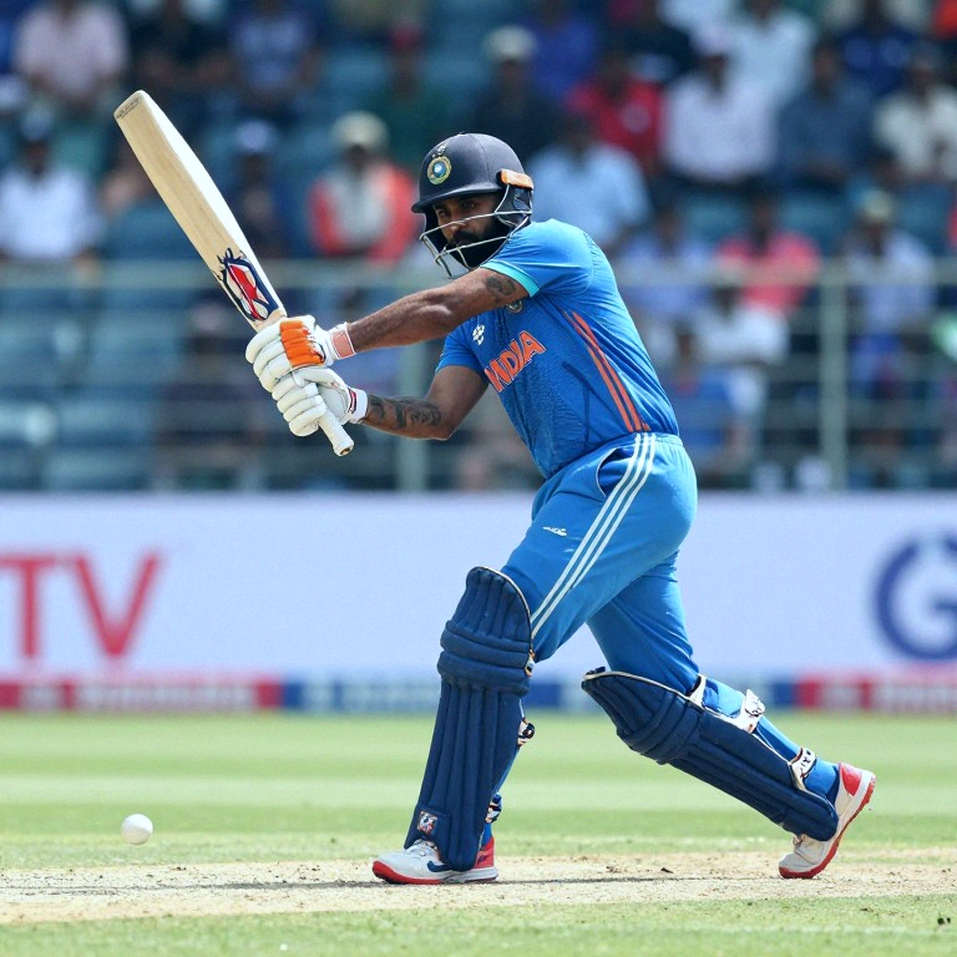
The consequence is that no global cricket decision — a future tour calendar, an ICC revenue model, a player's No Objection Certificate for a league — can be implemented while ignoring Asian market interests. This essay sets out to understand that structure: how the three pillars of the Asian cricket economy — league capital, board authority and the international calendar — collide with one another, and what that collision does to the game both inside and outside the boundary rope.
It is essential to recognise that Asia's cricket economy is not a homogeneous entity. It contains five Full Members (India, Pakistan, Sri Lanka, Bangladesh, Afghanistan), several Associate Members (Nepal the most prominent), and multiple franchise properties hosted in Asia. The financial capacity gap between these actors is enormous, and that gap is the single most important political fact in Asian cricket today.
The IPL: The Centre Around Which Everything Rotates
No event in Asian cricket can be understood without the Indian Premier League. It is not merely a tournament but an economic mechanism that permanently altered cricket's financial architecture. The model is simple and effective: the board owns the tournament, franchises handle operations and branding, and broadcasters pay sums unmatched by any other cricket property in the world.
The most consequential effect of this model is that money in cricket now arrives primarily through media rights rather than gate receipts and sponsorship. When a league's broadcast rights sell for extraordinary sums, three things follow. First, franchise valuations rise and they can spend more on players. Second, the board gains additional resources for domestic cricket, stadia and player welfare — though how much is actually spent, and in which direction, is a separate and legitimate debate. Third, and most importantly, the board acquires negotiating power in global cricket governance that derives not from on-field performance but from market size.
This is why an IPL auction is never merely a transaction. Every year it signals which player archetype the market values most. Fast bowlers, multi-skilled all-rounders and wicketkeeper-batters have consistently commanded premiums, while purely one-dimensional players have found space shrinking. That selection logic does not stay confined to the league — it gradually seeps into national-team thinking, a point returned to below.
The same experiment has been repeated in the women's game. Since the Women's Premier League launched, Asia's women players finally have a platform where financial continuity between domestic and international careers is possible. The effect will take time to show, but the direction is clear: where money arrives, the pool grows; and where the pool grows, the pathway for the next generation opens.
Challenger Leagues: One Recipe, Many Realities
Asia now hosts several franchise leagues — the PSL in Pakistan, ILT20 in the UAE, the LPL in Sri Lanka, the BPL in Bangladesh and, more recently, a franchise competition in Nepal. All follow broadly the same template: city-based teams, an auction or draft, a capped overseas quota, and a broadcast deal.
But identical templates do not produce identical outcomes. The IPL's decisive advantage is its domestic market — a vast, linguistically diverse audience bound by a single cricket culture. The others do not have that scale. Their strategies therefore diverge: they target diaspora audiences (notably in the Gulf), or they attempt to institutionalise cricket's popularity in their home market, or they attract the portion of the global player pool for whom the IPL has no room.
The PSL is instructive because it is played almost entirely inside Pakistan, and improved security arrangements in recent years have increased overseas participation. It is a case where a league became not just a sporting platform but a vehicle for rebuilding a country's international image and domestic security architecture.
The Gulf model rests on a different logic. Domestic cricket infrastructure there is small, but capital, infrastructure and expatriate populations are large. The model is therefore cricket tourism — importing the biggest names to build a product sold to international audiences and sponsors rather than local ones. This can be sustainable, but its dependence on external stars is so heavy that domestic player development often lags, and that is its principal structural weakness.
The Sri Lankan and Bangladeshi leagues face an additional problem: financial stability. When a board's core revenue is itself uncertain, standing a league up independently becomes difficult. These leagues' existence often depends on ICC revenue distributions and on bilateral tours by India — a dependency that should be treated as strategically risky by any board.
The ICC Revenue Model: The Real Power Equation
Nothing in global cricket is more sensitive than ICC revenue distribution. The structure is that the ICC sells its broadcast and sponsorship rights and distributes the proceeds among members. But the formula has never been stable. Over the past decade there have been two major debates — first when a model awarding a larger share to the 'Big Three' boards was introduced, and then when that model was partially revised.
The essence of the argument is this: should revenue flow to the board that creates the market, or to the board that most needs resources for development? Both arguments are legitimate, but their political consequences differ. The first is market-based and naturally favours large boards. The second is development-based and favours smaller Associate Members. In practice the ICC has always leaned toward the first, which is precisely why questions about its legitimacy persist among smaller members.
A direct consequence is that for smaller Asian boards, a tour by India becomes a major line item in financial planning. When the Indian team visits, ticketing, broadcast and sponsorship revenue multiplies. When it does not, a large share of the budget becomes uncertain. This dependency is not healthy for the sport, but it is real, and any honest analysis must acknowledge it.
The India–Pakistan Bilateral Freeze: The Absence That Reshaped Everything
For more than a decade there has been no bilateral series between India and Pakistan. The two sides meet only in multilateral events — World Cups, the Asia Cup and similar tournaments. The freeze is political in origin, and its impact has been felt at several levels.
The first impact is administrative. When hosting rights belong to one country but one team cannot travel there, organisers must invent workarounds such as hybrid models — some matches in the host country, some at a neutral venue. The Asia Cup has adopted precisely this approach. It is workable, but it weakens the tournament's logical structure: fans struggle to identify what counts as a home ground, and the host board does not receive the revenue it projected.
The second impact is on competitive balance. Bilateral series are not mere entertainment; they allow teams to play in each other's conditions, experiment with tactics and blood new players. When that opportunity disappears, both teams are assessed only on high-pressure matches at major tournaments — a small and biased sample.
The third impact is on the broadcast market. An India–Pakistan fixture is regarded as the single largest television event in cricket. When it happens only occasionally, its value rises while its frequency falls — an economically contradictory combination for both boards. Over the long run, a regular rivalry would have delivered more stable income to both, but politics foreclosed that path.
NOCs, Central Contracts and Player Bargaining Power
Player power is greater today than ever, and its clearest expression is the No Objection Certificate. Any player needs an NOC from his board to play in a foreign league, and the board retains a genuine power of refusal. The provision looks technical, but an entire balance of power sits behind it.
On one side, boards argue that a player's first duty is to the national team and that workload management is essential. On the other, players and their representatives argue that a cricket career is short and the earning window shorter still; declining a strong market offer is not rational. Both arguments contain truth, which is why the dispute never fully resolves.
The sharpest form of the argument appears when a player is unavailable for national duty through injury and then appears in a league shortly afterwards. Public reaction is intense, media debate erupts, and boards are forced to explain. What deserves emphasis is that the facts differ in every case — the nature of the injury, the recovery timeline, the terms of the contract — and generalisation is therefore dangerous. The correct approach is to test each case on its own medical and contractual facts rather than forcing it into a pre-set moral framework.
The issue has been especially sensitive in Pakistan, where tension between central contracts and league participation has surfaced publicly more than once. Similar questions recur in Sri Lanka and Bangladesh. India's case is somewhat different because its domestic league is itself the largest, so the 'league versus country' clash is less visible — but it has not vanished; it appears instead as workload and rest management.
The Calendar: The Variable Everyone Bets On
The international cricket calendar is now the most contested document in the sport. The problem is simple, the solution difficult: days are finite, stakeholders are many. National teams want bilateral series because they generate revenue. Leagues want their windows because without them overseas players are unavailable. The ICC wants global tournaments because they are its principal income source. And players want rest because bodies have limits.
Satisfying all four simultaneously is arithmetically impossible. The result is that every few years a grand bargain is struck, then breaks, then another is struck. The parties that lose most in this process are those with the least bargaining power — Associate Members and smaller Full Members. The windows available to them are frequently those that suit the larger teams.
The workload debate should be read in this context. When a fast bowler plays continuously across three formats, injury probability rises — that is a medical fact, not a controversy. But what counts as 'too much' depends on format, bowling type and age. Safe loads for fast bowlers are lower than for spinners, and that distinction is routinely lost in public argument.
Format Separation: A Methodological Warning
The most common error in cricket analysis is treating T20 performance as evidence about Test performance, or the reverse. These formats are fundamentally different and make different demands. Success in T20 means scoring quickly and taking risk; success in Test cricket means lasting and adapting to conditions. A statistic from one format does not predict the other.
This warning is especially relevant in Asian cricket, where league cricket dominates. When a player produces a spectacular league season, public expectation builds that he must immediately be selected internationally. Sometimes that is right; often it is not. The correct question is not 'did he score runs in the league' but 'will his technique hold in the format and conditions where he will actually bat'.
The domestic-versus-overseas gap deserves similar care. Asian teams are at ease in home conditions built for spin, but adaptation to fast, bouncing overseas pitches has historically been difficult. This is not an inherent trait but a structural outcome — the kind of pitches prepared in domestic cricket and the conditions players are exposed to. Changing it requires demanding different pitches; criticism alone will not do it.

The Talent Supply Chain: Afghanistan, Nepal and Beyond
The most encouraging development in Asian cricket over the past fifteen years is the expansion of the talent pipeline. Afghanistan's rise is the clearest example. A country with almost no domestic infrastructure first established itself in limited-overs cricket, then in Tests, and its players became expensive commodities in the global franchise market. This is not merely a sporting story; it is proof that franchise cricket has created a new talent-discovery mechanism that operates outside traditional domestic structures.
Nepal is a second illustration. Despite a large audience base and strong emotional attachment, it has faced severe resource constraints. A franchise competition launched there in recent years, which over time could help organise domestic cricket. The real challenge is not playing talent but administrative continuity and financial discipline.
There is, however, another side to this pipeline that is often ignored: it distributes its benefits unevenly. Players who succeed in franchise cricket find doors opening; those who do not find domestic structures just as weak as before. The direct implication is that income inequality within cricket is widening — a few dozen top players earn enormously while a much larger group struggles for remuneration. In the long run this question is as serious for the sport as the politics of broadcast rights.
Cross-League Ownership: The Least Reported Capital Network
A new and important trend has emerged: the same entrepreneurial groups investing in leagues across multiple countries, including Indian franchise owners acquiring teams in South Africa, the UAE and the United States.
The immediate effect is a global capital network running parallel to cricket's traditional administrative structure. When one owner holds teams in three countries, player movement is shaped not only by the market but by priorities inside that group. This is a channel that has received very little public analysis, which is exactly why it deserves attention.
There is a legitimate concern attached: does this structure affect competition? If two teams owned by the same group play each other, questions about transparency arise naturally. This is not an allegation — no impropriety has been established and none should be implied without evidence — but the regulatory framework should be prepared for the possibility, with clear disclosure requirements and conflict-of-interest management.
Broadcast and Streaming: The Largest Revenue Source
The largest share of cricket revenue today comes from broadcast rights, not gate receipts. And the broadcast market is undergoing a major shift: a growing share of the audience is moving from television to streaming. This shift is especially rapid in Asia because mobile data is cheap and smartphone penetration is broad.
The effect is on rights valuations. When the audience fragments across two platforms, broadcasters struggle to spend on both, and auction prices become less predictable. Some markets have seen unprecedented peaks, but that growth rate need not persist. For any board this is concentration risk: if a large share of income depends on a single rights cycle, a weaker next deal destabilises the entire budget.
Diversification is therefore essential in long-term strategy — sponsorship, licensing, stadium experience, digital content, and new products such as women's cricket. Easy to say, hard to do, because none of these delivers income as fast as broadcast rights. But boards that do not invest now will find themselves more dependent on a single source a decade from now.
Betting, Fantasy and the Integrity Perimeter
The relationship between cricket and betting is old and complicated. Fantasy sports has become a very large market in Asia, and for several boards it is an important sponsorship source. At the same time, legal and ethical questions around betting persist in many countries, with consequences for the sport's image.
On integrity, the position must be stated plainly: there is no allegation against any specific match, player or official, and making one without evidence would be a serious professional error. What can be said is that anti-corruption monitoring is a system that must be continuously strengthened — the faster money flows, the faster oversight must scale. That is a general institutional principle, not a signal about any particular event.
One distinction is routinely blurred: 'no adverse signal found' and 'a check was passed' are not the same thing. The first says no information was available; the second says a system was tested. Treating them as equivalent generates false reassurance.
The Olympics and the Next Market
Cricket's inclusion in the Los Angeles Olympics opens a new door. It matters to Asian cricket for two reasons. First, it can create an entry point for countries where cricket is emerging and whose route to a traditional World Cup is difficult. Second, the Olympic broadcast apparatus can place cricket before audiences that do not follow it regularly.
The opportunity carries a challenge: the Olympic calendar is already crowded, and carving a separate window for cricket will not be easy. If the experiment succeeds, the international calendar gains another claimant — and, as noted above, every new claimant takes space from an existing one.
Risks: Five Things to Watch
The first risk is format transfer error. T20 form is not Test form, and league performance is not proof of international performance. Every assessment should state explicitly which format is being discussed.
The second is drawing large conclusions from small samples. Declaring permanent verdicts on a player or team from a handful of matches is the most common disease in cricket analysis. Three or four innings do not summarise a career.
The third is revenue concentration. Boards dependent on a single broadcast deal or a single tour's revenue will be the most fragile under external shocks.
The fourth is player load and injury. Denser calendars mean higher injury probability — and for any team, losing a frontline fast bowler is the largest sporting risk of all.
The fifth is governance. Government interference, political pressure and a lack of transparency within sports organisations can affect membership status. In Asia, India–Pakistan tension, neutral-venue arrangements and the limits of state involvement are all topics that can dominate headlines at any moment.
Conclusion: Three Tracks, One Railway Line
A single sentence captures the current state of Asian cricket: capital, authority and calendar are three separate trains running on one track, and their coordination remains institutionally unresolved.
Capital says more leagues are needed, more windows, more stars. Authority says control should remain with the boards, and revenue should be divided on the same logic as before. The calendar says days are finite and bodies are finite.
The balance struck among these three will determine the shape of the next decade of cricket. If that balance is set only at the table of those with the most money, the game will expand but its competitive integrity will weaken. If it is set through broad consultation, the process will be slower but more durable.
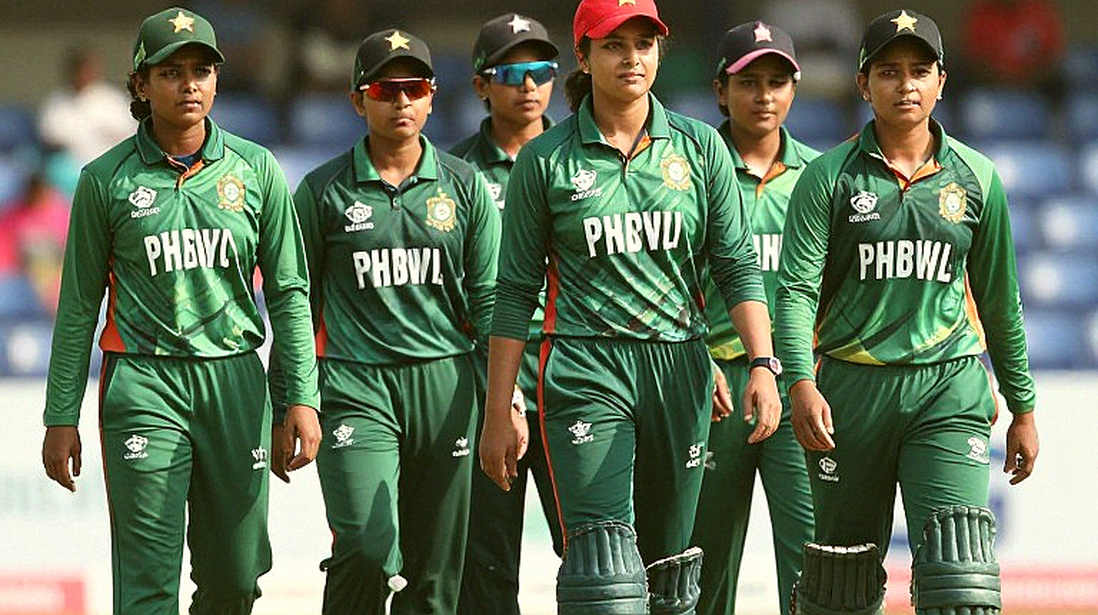
Cricket's history suggests it has always leaned toward the slower process — and in the long run that has been its strength. The question is whether Asian cricket can preserve that patience while money moves around it at extraordinary speed.