
Rebuilding Asian Cricket: A Deep Analysis of the Continent's Cricket Economy, Politics and Future
यह लेख एशियाई क्रिकेट के संरचनात्मक विश्लेषण पर आधारित है, किसी एक मैच या समाचार घटना पर नहीं। मुख्य बिंदु: (1) एशिया विश्व क्रिकेट का आर्थिक और राजनीतिक केंद्र है, जिसमें BCCI का वर्चस्व निर्णायक है। (2) IPL, PSL, BPL, LPL जैसी फ्रैंचाइज़ी लीगों ने क्रिकेट की अर्थव्यवस्था बदल दी है। (3) भारत-पाकिस्तान राजनीतिक तनाव एशियाई क्रिकेट की सबसे बड़ी संरचनात्मक विरोधाभास है। (4) अफगानिस्तान सबसे प्रेरणादायक उदय है, जबकि श्रीलंका और बांग्लादेश पुनर्निर्माण और निरंतरता की चुनौती से जूझ रहे हैं। (5) मुख्य चुनौतियां: असमानता, राजनीतिक हस्तक्षेप, कार्यभार प्रबंधन, जलवायु परिवर्तन और प्रशासनिक पारदर्शिता। (6) भविष्य की दिशा: छोटे देशों में निवेश, वैश्विक कैलेंडर, महिला क्रिकेट को प्राथमिकता और प्रशासनिक सुधार। नोट: यह विश्लेषण एशियाई क्रिकेट के सामान्य संरचनात्मक ढांचे पर आधारित है; किसी विशिष्ट हालिया मैच, आंकड़े या समाचार घटना के दावे इसमें शामिल नहीं हैं।
Introduction: The Centre of Gravity
Asia is the centre of gravity of world cricket. More than half of the world's population lives on this continent, and it is home to cricket's largest markets, its biggest broadcasting contracts, its largest fan bases and its most powerful boards. It is no accident that the largest share of revenue reaching the International Cricket Council (ICC) comes through the Board of Control for Cricket in India (BCCI), nor that the global model of franchise cricket was born in Asia as the Indian Premier League (IPL).
But it would be a mistake to understand Asian cricket through a single story. The continent holds several contradictions within itself. On one side is India, which shapes the global cricket agenda through its financial and political dominance; on the other is Afghanistan, which emerged from war and displacement to become one of the most inspiring stories in world cricket. On one side is Pakistan, rich in talent but grappling with political isolation and economic pressure; on the other is Sri Lanka, trying to rebuild its cricket system amid economic crisis. Bangladesh's two decades of investment are slowly bearing fruit, while associate members such as Nepal, the United Arab Emirates and Oman face new opportunities and new challenges.
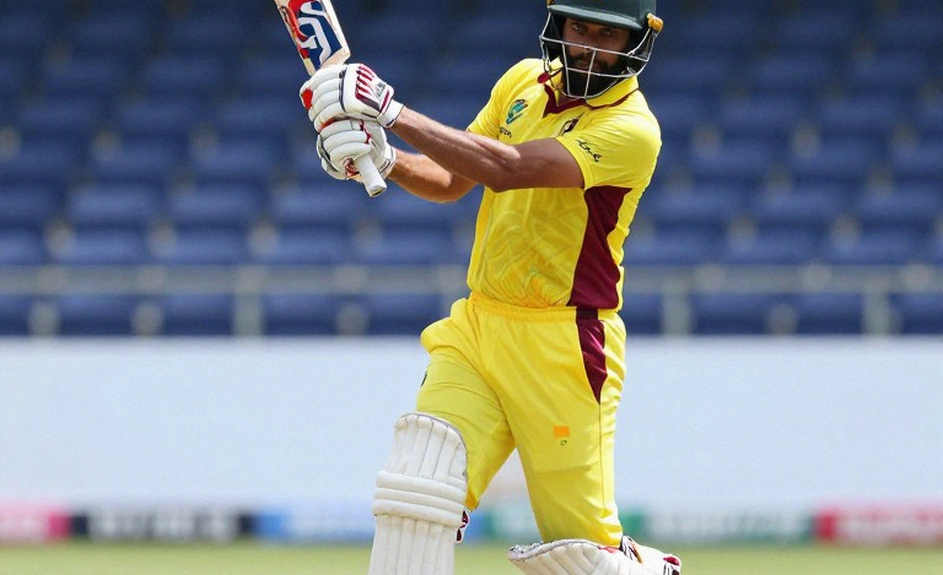
The purpose of this analysis is not to report a single match, series or news item. It is to understand the structural framework within which every match, every contract and every decision is made. When we talk about the Asia Cup, when we compare the IPL and the PSL, when we discuss player migration, we are really talking about a system in which sport, politics, economics and identity are deeply intertwined.
The Geo-Politics of Asian Cricket
To understand Asian cricket, one must first understand how unequal the continent is in cricketing terms. India, Pakistan, Sri Lanka, Bangladesh and Afghanistan are full members with the right to play Test cricket. Beyond them is a long list of associate members, including Nepal, the United Arab Emirates, Oman, Hong Kong, Singapore, Malaysia, Qatar, Saudi Arabia, Bahrain, Kuwait, Japan, China, Thailand, Myanmar, Bhutan, the Maldives and Cambodia.
This inequality is not only about the standard of play but also about resources, infrastructure, broadcast markets and administrative capacity. The BCCI has a financial power that no other Asian board possesses. This difference is visible not only in data but also in decision-making. Within the Asian Cricket Council (ACC) too, India's influence is decisive, and this often becomes a source of tension with Pakistan.
A large part of Asian cricket politics is driven by the India-Pakistan dynamic. Bilateral series between the two countries have not been played for years, and the teams meet only in multilateral events such as the Asia Cup or ICC tournaments. This situation is commercially paradoxical. The India-Pakistan contest is among the most-watched matches in world cricket, with broadcast rights valued in the billions, yet political reasons prevent it from becoming regular. This paradox is both the biggest structural problem of Asian cricket and its greatest economic strength.
India: The Foundation of Dominance
Indian cricket today is the largest economic engine of world cricket. This claim does not come from sentiment but from the structure the BCCI has built over three decades. The changes that followed India's economic liberalisation in 2026 turned cricket from merely a sport into a media product. The expansion of television, new forms of sponsorship and then the arrival of digital streaming multiplied the revenues of Indian cricket.
The launch of the IPL in 2026 was a decisive turning point in this process. The IPL was not just a tournament but a business model that changed the way cricket is staged, broadcast and connected to fans. It gave players a financial security they could not previously imagine and gave birth to the franchise model that countries around the world are now copying.
But a less-discussed aspect of the IPL's success is its ecosystem. The IPL is not merely a tournament of ten teams; it is an entire industry involving broadcasters, sponsors, marketing agencies, player-management companies, stadium management and digital platforms. It has also changed the economy of domestic cricket in India. Tournaments like the Ranji Trophy, once far less publicised, now receive relatively more attention because the IPL's scouting system links domestic performance directly to high-value contracts.
Another basis of the BCCI's power is its administrative capacity. Cricket in India is run through a multi-tiered structure involving state associations, regional bodies and the central board. This structure is also a subject of criticism, as complaints of political interference and patronage are regularly raised. The Lodha Committee appointed by the Supreme Court, and the reforms that followed, tried to make this structure more transparent, but full success cannot be claimed.
Another feature of Indian cricket is its depth. Cricket's popularity in India is so high that the supply of talent seems almost limitless. Every small town has cricket academies, every school has a ground, and every child dreams of becoming a cricketer. It is this cultural depth that allows India to keep producing new players.
But this dominance has a cost. India's power has often created discomfort among other Asian boards. Pakistan, and to some extent Bangladesh and Sri Lanka, feel that their voice is heard less in the Asian cricket agenda. This tension is visible from ACC meetings to the selection of tournament venues.
Pakistan: Between Talent and Isolation
Pakistani cricket is a paradoxical story. On one hand it is among the countries that have given world cricket some of its greatest fast bowlers, and its talent pipeline remains active; on the other it has long struggled with political instability, administrative inefficiency and international isolation.
The 2026 terrorist attack on the Sri Lankan team in Lahore dealt Pakistani cricket its deepest blow. For several years afterwards Pakistan was not allowed to host international matches at home, and the team was forced to play at 'neutral venues'. This was not only a sporting crisis but also an economic and psychological one. A large share of income from home matches disappeared, and young players got limited opportunities to prove themselves on the international stage.
The situation gradually improved. Pakistan strengthened security at its stadiums and persuaded some international teams to play there. But bilateral relations with India remain abnormal, and this is the biggest economic loss for Pakistani cricket. The absence of series with India is not only frustrating for fans but also directly affects the revenue of the Pakistani board.
The Pakistan Super League (PSL), launched in 2026, raised new hopes for Pakistani cricket. The PSL not only gave domestic players financial security but also proved that a safe and successful franchise tournament could be held in Pakistan. One feature of the PSL is that it adopts the T20 model popularised by the IPL but adapts it to its own resources and market.
Pakistani cricket's greatest strength is its sporting culture. From cities to villages, from street cricket to large stadiums, cricket is a way of life in Pakistan. That is why whenever the team is in crisis, some new talented player emerges. Batsmen like Babar Azam, bowlers like Shaheen Afridi and wicketkeeper-batsmen like Mohammad Rizwan are symbols of this depth.
But talent alone is not everything. Pakistani cricket needs administrative stability, a transparent selection process and a long-term strategy. Frequent changes in the board, instability in captaincy and reports of internal discord in the media affect the team's performance. If Pakistan is to realise its full potential, it must focus on administration even more than on the game.
Sri Lanka: Rebuilding Amid Crisis
Sri Lankan cricket once gave world cricket one of its most attractive styles of play. The team that won the 2026 World Cup not only claimed a title but changed the strategy of limited-overs cricket altogether. That team introduced a model of aggressive batting, smart bowling and clever fielding that remains relevant today. Players like Kumar Sangakkara, Mahela Jayawardene, Tillakaratne Dilshan and Lasith Malinga subsequently brought Sri Lankan cricket global prestige.
But in recent years Sri Lankan cricket has passed through a deep crisis. The economic crisis the country faced in 2026 also affected cricket. Shortages of fuel, electricity and foreign exchange disrupted daily life as well as sporting activity. Sri Lanka Cricket (SLC) has faced repeated allegations of financial mismanagement, and complaints of political interference within the board are common.
Despite these challenges, Sri Lanka has not entirely lost its talent pipeline. Players like Wanindu Hasaranga are counted among the most valuable spinners in world cricket today, and several young players are making their mark internationally. The Lanka Premier League (LPL), launched in 2026, has given domestic cricket a new platform, although the tournament has not yet become fully financially stable.
The biggest challenge for Sri Lankan cricket is administrative reform. Passion for cricket in the country has not diminished, and stadiums are still full. But this passion must be converted into a structure that is transparent, accountable and capable of long-term investment.
Bangladesh: The Fruit of Patience
Bangladeshi cricket is a story of patience. Since gaining full ICC membership in 2026, Bangladesh has travelled a long road marked by ups and downs. In the early years the team suffered repeated defeats, but the board continued to invest in domestic structures, academies and youth cricket.
One major result of this investment was seen in the co-hosting of the 2026 World Cup and in subsequent performances. Bangladesh gradually began to challenge the bigger teams, and its spin-friendly home conditions made it a tough opponent. Players like Shakib Al Hasan came to be counted among the most influential all-rounders in world cricket.
The Bangladesh Premier League (BPL), launched in 2026, gave domestic cricket a commercial foundation. The BPL not only gave local players a platform but also, through the arrival of foreign players, gave local talent a chance to learn. However, the BPL has also faced challenges such as financial stability, franchise owners' commitment and the broadcast market.
Bangladesh cricket's biggest problem is consistency. The team sometimes performs brilliantly and sometimes looks completely passive. One reason is said to be a lack of mental toughness, which surfaces under the pressure of big matches. Another is instability in the selection process and team management. If Bangladesh is to move to the next level, it must bring consistency to its performances.
Afghanistan: The Most Inspiring Rise
Afghanistan's cricket story is perhaps one of the most inspiring in the history of world sport. From a country where war and instability meant even basic infrastructure was unavailable, a team emerged that established its place in world cricket within a few years.
Afghanistan was granted Test status in 2026, itself an achievement. Before that the team had shown steady improvement in limited-overs cricket. A player like Rashid Khan changed the standard of spin bowling not only for Afghanistan but for world cricket as a whole. His success proved that talent and hard work can overcome any obstacle.
The foundation of Afghan cricket developed largely in refugee camps and neighbouring countries. Many players learned the game in Pakistan and Iran and later represented their country. This is an example of how sport can rise above borders and bring people together.
But Afghan cricket also faces major challenges. The country's political situation, the ban on women's cricket and issues of international recognition make the team's future uncertain. Weak domestic structures persist because of a lack of economic resources. Yet the way Afghan players have made their mark in foreign leagues suggests that the country's cricket can grow even stronger in the future.
The Asia Cup: One Tournament, Many Meanings
The Asia Cup is the most important multilateral event in Asian cricket. It began in 2026 and has been held many times since. Its significance is not limited to sport; it is also a symbol of politics, diplomacy and regional identity.
The history of the Asia Cup bears witness to how politics has affected the game. Several times the venue was changed, questions were raised over teams' participation and the format had to be altered because of political tension. The India-Pakistan contest has always been at the centre of the tournament, since it is the occasion when the two teams play each other.
The format has changed over time. Sometimes it was played in the ODI format, sometimes in T20, and sometimes in a mix. The aim has been to keep the tournament relevant and commercially viable. The changing formats also showed that the Asian Cricket Council is capable of adapting its events to market demand.
But the biggest challenge for the Asia Cup is its commercial value. Compared with the IPL and other franchise leagues, the Asia Cup's broadcast revenue is limited, because it is an international tournament with limited intensity and frequency. Still, it is an important preparation platform for Asian teams, and for smaller countries it offers a rare chance to play against the bigger teams.
The Economics of Franchise Leagues
Asian cricket's biggest economic transformation came with the arrival of franchise leagues. What the IPL began in 2026 has today become an entire ecosystem. The PSL, BPL, LPL and the UAE's ILT20 subsequently adopted the same model.
The economic logic of these leagues is simple: fans are passionate about cricket, and if it is packaged correctly it can generate large revenues. In the franchise model, teams are owned by private investors who earn from sponsorship, ticket sales and merchandising. This model differs from traditional board-controlled cricket, where the bulk of revenue comes from broadcast rights.
But not every league is as successful as the IPL. The reasons lie in differences in market size, the value of broadcast contracts, the availability of local talent and administrative capacity. The PSL performs well relative to its resources but suffers from lack of access to the Indian market. The BPL and LPL face problems such as financial stability and franchise owners' commitment.
Another important effect of franchise leagues has been on player movement. A player can now play in leagues in several countries in a single year, increasing both income and experience. But this also creates workload-management problems, as continuous play raises the risk of injury. This issue is now prominent on the agenda of global cricket administration.
Player Migration and the Talent Pipeline
Another important feature of Asian cricket is player migration. Indian players play in the IPL, Pakistani players in the PSL, Bangladeshi players in the BPL and Sri Lankan players in the LPL. At the same time many players also play in foreign leagues, gaining extra income and experience.
This migration is not limited to players. Coaches, support staff, ground managers and analysts now also work globally. This creates a professional ecosystem in which knowledge and skills are exchanged.
But there are some negative aspects. Players from smaller countries often fail to find places in the bigger leagues, leaving them with limited opportunities for development. Moreover, continuous league play raises questions about commitment to national teams. Some critics believe players are now prioritising leagues over national duty, although most players try to balance both.
Regarding the talent pipeline, there is a big gap within Asia. In India and Pakistan the cultural depth of cricket is so great that there is no shortage of talent. Sri Lanka and Bangladesh also have good academy and school cricket structures. But in Afghanistan, Nepal and other associate countries resources are limited, and talent is lost.
Women's Cricket: A Growing Presence
The expansion of women's cricket in Asia is among the most positive stories of recent years. The Indian women's team has established a strong presence globally and has performed well in several major tournaments. The women's teams of Pakistan, Sri Lanka and Bangladesh are also gradually making their mark.
A major reason for the growth of women's cricket has been women's participation in franchise leagues. Events such as the Women's IPL have given women players the platform and financial security they previously lacked. This has benefited not only current players but has also told young girls that cricket is a viable career option for them.
But challenges remain large. In many Asian countries women's cricket still receives inadequate resources, media coverage and sponsorship. In Afghanistan the ban on women's cricket has added to concern. If Asian cricket is to become truly inclusive, investment and support for the women's game must be made a priority.
Challenges: What Weakens the Structure
The biggest challenge of Asian cricket is its inequality. Some countries have limitless resources, while others struggle for basic facilities. This inequality weakens competition and hinders the development of smaller countries.
The second major challenge is political interference. In many Asian countries cricket boards are influenced by politics, making long-term policy difficult. Problems such as government interference, frequent changes of board presidents and bias in selection are common.
The third challenge is workload management. Asian players today play more cricket than ever, raising the risk of injury and fatigue. Balancing national team duties, franchise leagues and other commitments has become a major problem.
The fourth challenge is climate change. Heat and humidity levels are rising in Asia, making daytime play increasingly difficult. This affects scheduling, player health and spectator participation.
The fifth challenge is administrative transparency. Questions have repeatedly been raised about financial management, contract distribution and selection processes at several Asian boards. If cricket is to be strong in the long term, transparency and accountability are essential.
The Road Ahead
Asian cricket's future is bright, but only if its structural problems are addressed. There are some clear directions.
First, investment in smaller countries must increase. If attention is paid only to India, Pakistan and Sri Lanka, the expansion of Asian cricket will remain limited. Investment in infrastructure, coaching and competitions in Nepal, the UAE, Oman and other countries can create a new pool of talent.
Second, a global calendar is needed for workload management that balances national and franchise commitments. Without it, both player health and the quality of the game will suffer.
Third, investment in women's cricket must be made a priority. This is necessary not only socially but also economically, as the women's cricket market is growing rapidly.
Fourth, administrative reform and transparency must be ensured. Independent oversight, financial audits and transparency in selection will build trust in the boards.
Fifth, Asian cricket must recognise its own strength. This continent is unique in its passion for the game, its talent and its market. If this strength is directed properly, Asian cricket will not only lead world cricket but will also make the game more inclusive and democratic.
Conclusion
Asian cricket is a system in which sport, politics and economics are deeply intertwined. Its greatest strength is its scale, passion and talent. Its greatest weakness is inequality, politics and administrative instability. The future will depend on how effectively these weaknesses are addressed.
One thing this analysis should make clear is that no discussion of Asian cricket can be limited to match results alone. Behind them is a vast structural framework that determines who plays, where they play, how much they earn and whose voice is heard. Without understanding this framework, any story of Asian cricket will remain incomplete.