
Asian CricketShubman Gill Outranks Messi and Ronaldo in Marketability Index: 13th Overall, Highest-Placed Cricketer
Shubman Gill Outranks Messi and Ronaldo in Marketability Index: 13th Overall, Highest-Placed Cricketer
स्पोर्ट्सप्रो और नॉर्थस्टार सॉल्यूशंस ग्रुप की "50 मोस्ट मार्केटेबल एथलीट्स 2026" सूची में शुभम गिल 13वें स्थान पर हैं, जो किसी भी क्रिकेटर का सर्वोच्च स्थान है; क्रिस्टियानो रोनाल्डो 14वें, केलियन एम्बाप्पे 19वें और लियोनेल मेस्सी 27वें स्थान पर हैं। यह सूची 100-अंकीय पद्धति पर आधारित है — ब्रांड इक्विटी 45 + मोमेंटम 40 + कमर्शियल ट्रैजेक्टरी 15 — और इसमें 27 संकेतक तथा 3,000 से अधिक ब्रांडों का डेटा शामिल है। आकलन अवधि 1 जुलाई 2025 से 30 जून 2026 तक बताई गई है। चूंकि मोमेंटम को 40 प्रतिशत भार मिलता है, यह सूची वृद्धि की गति को प्राथमिकता देती है; इसलिए गिल का रोनाल्डो-मेस्सी से ऊपर होना इस बात का सबूत नहीं है कि उनकी पूर्ण वैश्विक लोकप्रियता या खेल-स्तर उनसे अधिक है। सूची में पांच भारतीय टॉप-50 में हैं, जबकि विराट कोहली 85वें, एमएस धोनी 83वें और रोहित शर्मा 90वें स्थान पर हैं।
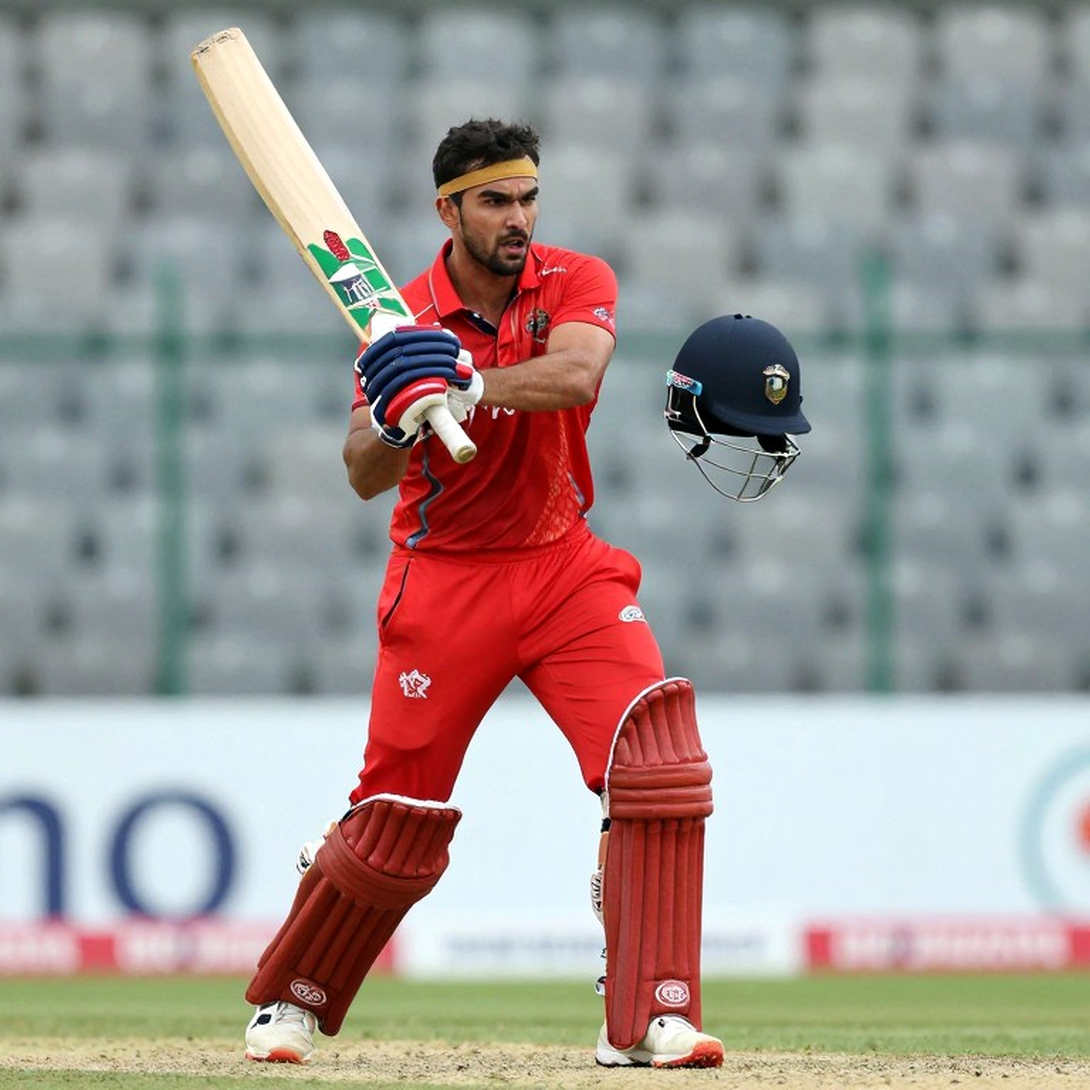
Shubman Gill has finished 13th in the "50 Most Marketable Athletes 2026" list released by Sportspro in association with NorthStar Solutions Group. The list is built from a starting pool of 1,202 athletes across 70 sports, narrowed to 247, and then cut to a final 50. Gill is the highest-placed cricketer on the list, and one of five Indian athletes to make the top 50.
What has drawn the most attention is that Gill's position sits above football's two biggest names — Cristiano Ronaldo and Lionel Messi. Ronaldo is 14th, Kylian Mbappe 19th, and Messi 27th. A young Indian batter, still in the early phase of his international career, is placed above two global football icons who command hundreds of millions of followers worldwide. It is natural that the comparison has dominated headlines.
But to read this correctly, the construction of the list matters. This is not a sporting performance ranking. It is a commercial-brand index built on a defined 100-point methodology: Brand Equity carries 45 points, Momentum — the rate at which commercial popularity is growing — carries 40, and Commercial Trajectory carries 15. This is the list's 17th annual edition, so it is neither new nor untested.
The assessment process is also broad. Twenty-seven indicators and "several hundred data points" are used per athlete, and the exercise incorporates partnerships with more than 3,000 brands. Input signals include social followers, viewership, search trends, sentiment and partnerships. On-field numbers play no direct role in determining a placement — this is purely a brand-economy model.
That is exactly where the gap between the headline and the reality becomes clear. Forty of the 100 points go to Momentum, which rewards how fast a player's commercial popularity is rising. A methodology that weights the rate of growth so heavily will systematically place rising stars in very large markets above saturated global icons. Messi and Ronaldo are near the ceiling of global brand equity, leaving limited headroom for growth momentum. Gill operates in the world's largest cricket market with a career still climbing, so he scores high on the momentum and trajectory pillars.
In other words, the claim that Gill's commercial appeal is greater than Messi's or Ronaldo's is an artefact of a weighting scheme optimised for growth. It is not evidence that Gill is a bigger absolute commercial property than either of them. Rather, it shows the model separates "who is rising fastest" from "who is biggest".
One more detail is worth noting: the stated assessment window runs from 1 July 2026 to 30 June 2026. A list labelled "2026" is therefore a forward-looking assessment of the current commercial cycle, not a retrospective of a completed on-field season. That makes clear the purpose is to signal market direction, not to evaluate performance.
India's strength on the list is not limited to Gill. Five Indian athletes feature in the top 50, a direct signal of the depth of the Indian sports market. Beyond that, three major names missed the top 50 but remain inside the top 100 — MS Dhoni at 83, Virat Kohli at 85 and Rohit Sharma at 90. Notably, Dhoni has retired from international cricket and still sits inside the top 100.
That number says several things at once. First, Indian athlete brands decay slowly — commercial pull persists long after a player steps away from the game. Second, it shows how deep India's pipeline of commercial talent is; the market does not run on traditional big names alone. Third, and most importantly, Gill's position (13) far ahead of Kohli (85), Rohit (90) and Dhoni (83) points to a generational commercial handover.
That handover, however, must not be read as a batting hierarchy. It is purely a measure of brand momentum. Nothing Kohli, Rohit or Dhoni achieved on the field is connected to this list. The list does not say Gill is a better batter than them; it says only that his brand is currently growing faster.
One further fact illustrates the same point. Aryna Sabalenka, who tops the list, is reported to have earned $30 million in 2026, with partnerships across Nike, Wilson, Gucci, Emirates, Audemars Piguet, Hup and Stella Artois. That figure shows the scale of top-tier endorsement money — and that the list is not ordered directly by earnings. Earnings are one input into a model, not its foundation.
A basic point needs to be understood here. The Sportspro list is a constructed index, not an objective measurement of fame. The 45-40-15 split and the 27-indicator, 3,000-brand dataset mean a player's placement is a model output sensitive to weighting choices. If a future edition cut the momentum weight from 40 to 25, the picture could change.
Second, the article does not publish actual point totals for Gill, Messi or Ronaldo. So the size of the gap cannot be verified — Gill is 13th and Ronaldo 14th, but the difference between them may be marginal. Without the scores, a placement should be treated as a directional signal, not a precise measurement.
There is a further risk. Because Momentum makes up 40 per cent of the score, Gill's placement is structurally unstable. If his growth rate normalises — that is, if he does not keep climbing at the current pace — his rank could fall sharply even without any decline in absolute popularity. Established stars sit near brand saturation, so their positions are more stable; rising stars move up quickly and can move down quickly too.
In the Indian context, one structural factor must be kept in mind. Gill's position is substantially a function of being Indian — of benefiting from the world's largest cricket market. India's broadcast scale, audience size and advertising market mean any Indian cricketer's commercial potential is automatically high. Adjust for market size and the comparison would look very different. This does not diminish Gill's achievement; it simply means global recognition and a market-driven commercial score are two distinct things.
Another aspect of the article matters here: this is a commercial ranking, with no direct link to sporting level. The article itself acknowledges that popularity and commercial appeal may not be the same thing. That caveat is important precisely because the headline buries it. A reader seeing "Gill ahead of Messi and Ronaldo" may assume this is a statement about absolute fame or sporting standing, when it is a weighted brand-momentum construct.
One redeeming feature of the list is its transparency. Disclosing the 100-point split and the 27 indicators keeps it open to scrutiny — a virtue, since most valuation indices do not disclose their methodology. Transparency means anyone questioning the result can do so on the basis of the method rather than on guesswork.
That transparency has a limit, though. Because of the list's scale and window, the reader's "present" and the list's "present" may not coincide. A list built on a forward-dated 2026-26 window can read as stale or confusing today. Both the list date and the assessment window should be kept in mind.
As for Gill's on-field performance, this article contains no data at all — no average, no strike rate, no dismissal pattern, no home-away or pace-spin split. Any technical or statistical assessment of his batting from this source is impossible, and attempting one would be pure speculation. The only concrete information about Gill in the article is that he is India's Test and ODI captain — a sporting-status claim embedded inside a commercial story.
It is also worth noting that the article names Gill as Test and ODI captain but not T20I captain. That suggests Indian leadership may be split across formats, or that the description reflects a specific point in time. This is not explicit in the source and should be treated only as a possibility.
If the captaincy is recent, part of Gill's momentum score may reflect a new-captaincy narrative effect rather than sustained multi-year brand growth. That raises questions about the durability of his placement.
In any case, this is a short-cycle news item — typically under a month. The next Sportspro edition could reverse the ordering. The list should therefore be read as a dated commercial brand snapshot, not as a permanent truth.
The conclusion is clear. Shubman Gill's 13th place is a real and notable achievement — he has emerged from one of the world's most competitive commercial markets as the top-ranked cricketer globally, and underlines India's commercial depth. But the claim of "more commercial appeal than Messi and Ronaldo" holds only to the extent that it is tied to this list's methodology. The list gives 40 per cent weight to growth momentum, and on that scale Gill sits above two saturated global icons. This is a commercial ranking, not a sporting evaluation — and conflating the two would be the greatest disservice to this story.
संबंधित खिलाड़ी
लोकप्रिय/पसंदीदा पुस्तकें
Three Finals and a Blank Page: India's Problem Is Selection, Not Supply2026-11-01
Mulder and Rickelton centuries put South Africa in command as Australia face a historic chase at Newlands2026-11-01
Eight Columns, Zero Figures: The Silence Before a Collapse That No Reel Keeps2026-10-31
The Label Was Written, the Body Was Not: A Silent Failure Inside Cricket's Content Pipeline2026-10-31
The Empty File: Fourteen Fields, Thirteen N/As, and a Beat Writer's Notebook2026-10-30
अनुशंसित
The Transcript Arrived, the Scorecard Didn't: Why Walter's 'Fine Margins' Claim at 0-2 Stays Unverified2026-10-30
Fourteen Names, Three Uncapped, One Empty Keeper's Slot: The Story Behind Pakistan's Test Squad for Sri Lanka2026-10-26
Five for four, then 221: Zimbabwe's defeat is filed under the middle overs, not under the captain's 'complacency'2026-10-30
Pollard's Promotion and Mumbai Indians' Incomplete Ledger: An Internal Succession Ahead of IPL 20272026-10-25
अनुशंसित
The Empty Ledger: An Eight-Dimension Cricket Analysis That Stood on Zero Data2026-10-27
One Practice Session, Four Wins of Arithmetic: What the Mirpur Press Conference Didn't Say2026-10-28
The 2.30-Crore Top Bid Went to a Left-Arm Pacer: Reading the D Three Trophy Auction Ledger2026-10-30
Colombo Before Rawalpindi: What England U19's Squad List Says, and What It Leaves Blank2026-10-28
The Report With Empty Fields: The Alley in Cricket's Data Ledger Where No One Audits2026-10-28
अनुशंसित
The Meeting That Was Not a Conversation: Anderson, Lancashire and Who Owns the End of a Career2026-10-31
Smith Out, Four Changes and a Counter-Intuitive Toss: Why Australia Raised the Variance at Newlands2026-10-28
Santner's record in Auckland: 32 T20I wickets vs India, passes Sodhi2026-10-31
Two Losses, One Quote and a Missing Scorecard: Auditing New Zealand's 'We Could Have Won'2026-10-25
Mitchell Santner's 4/21: the first double four-wicket haul against India, but Christchurch was decided in the last thirty balls2026-10-25