
Asian Cricket's Three Fault Lines: Incomparable Formats, Market Dominance and the Governance Gap
**संक्षिप्त उत्तर:** एशियाई क्रिकेट के तीन संरचनात्मक तनाव हैं — (1) फॉर्मेट की अतुलनीयता, यानी टेस्ट/ODI/T20 के आँकड़े एक-दूसरे पर लागू नहीं होते; (2) बाज़ार का असंतुलन, जिसमें वैश्विक क्रिकेट राजस्व का बड़ा हिस्सा भारतीय बाज़ार से आता है और ICC के 2024–27 चक्र में BCCI का हिस्सा लगभग 38.5% है; (3) गवर्नेंस का अंतराल, जिसमें राजस्व वितरण, स्लो-ओवर-रेट और DLS/DRS विवाद, तथा अखंडता-निगरानी शामिल हैं। **मुख्य बिंदु:** - भारत-पाकिस्तान के बीच 2012–13 के बाद द्विपक्षीय सीरीज़ नहीं हुई; मुक़ाबले केवल ICC टूर्नामेंट और एशिया कप तक सीमित हैं। एशिया कप 2023 'हाइब्रिड मॉडल' में खेला गया और 2025 चैंपियंस ट्रॉफ़ी में भारत के मैच तटस्थ स्थल पर हुए। - खिलाड़ी वर्कलोड प्रबंधन में NOC (नो-ऑब्जेक्शन सर्टिफ़िकेट) बोर्डों का सबसे प्रभावी औज़ार है; लीग और अंतरराष्ट्रीय ड्यूटी का कैलेंडर-टकराव अब नियमित है। - नीलामी में ऊँची बोली खिलाड़ी की अंतरराष्ट्रीय क्षमता का माप नहीं; यह टीम की ज़रूरत, कोटा और पर्स के आकार का परिणाम है। मेगा और मिनी नीलामी के आँकड़े तुलनीय नहीं। - क्रिकेट लॉस एंजिल्स 2028 ओलंपिक में शामिल है, जिससे टी20 का नॉकआउट-केंद्रित कैलेंडर दबाव बढ़ेगा। **सत्यापन-नोट:** ऊपर दिए राजस्व प्रतिशत उद्योग-सामान्य संदर्भ हैं और आधिकारिक ICC दस्तावेज़ों से पुष्टि योग्य हैं। यह सामग्री केवल खेल-सूचना संदर्भ के लिए है, किसी भी प्रकार की सट्टेबाज़ी सलाह नहीं।
Every debate about cricket begins with the same mistake — a verdict on performance is delivered without first establishing the format. The same number carries three different meanings in three different worlds. A strike rate of 140 is an acceptable start in T20, a rarity in the middle overs of a 50-over game, and largely meaningless in Test cricket, where balls per wicket, dot-ball percentage and session-by-session bowling loads are the operating metrics. Likewise, an economy rate under 8.0 is considered good in T20 and under 7.0 excellent; in the middle overs of an ODI, 5.5 is standard; in Tests the figure is close to irrelevant because wickets, not runs, are the currency.
This is why format is not cosmetic metadata but the first mandatory filter of any analysis. The constraint tightens further when discussing Asian cricket, where one calendar carries all three international formats, three major franchise leagues and several bilateral series simultaneously. The purpose of this piece is not to evaluate a particular match or result but to map the structural tensions that shape every decision in Asian cricket.

Three distinct logics inside the format
T20 strategy divides into three phases — the powerplay (overs 1–6), the middle overs (7–15) and the death overs (16–20). The first offers fielding restrictions and licence to take risk, the second is about containment and spin control, the third purely about run rate. Calling a batter a 'death-overs specialist' only means something if it is clear the data is T20. The same player occupies a completely different role in overs 40–50 of an ODI, where both wicket preservation and a final-five-over surge matter. Test cricket changes the picture entirely: the new-ball phase, the 30–50 over 'golden window' when the pitch is at its best for batting, and the tired ball after 80 overs that opens the field for reverse swing and spin.
The direct consequence of this incomparability is that even a question as simple as 'is he in form?' cannot be asked without separating formats. A batter can be outstanding in Tests and struggling in T20, and that is not a contradiction but a normal structure. For any Asian tour or tournament review, the first question must be: which format is this, and what does success mean in that format?
Geography and market asymmetry
Asian cricket's largest structural truth is that its economic centre is India. Industry estimates put more than seventy per cent of global cricket's commercial revenue in the Indian market — a widely cited figure that should be verified against ICC annual reports. On the same logic, the Indian board's share of the ICC's 2026–27 revenue cycle was set at roughly 38.5 per cent, several times that of any other member board. These numbers are not mere accounting; they determine which tournament happens when and where, which country receives hosting rights, and which board holds quasi-veto influence over scheduling.
The other side of this dominance is the dependence of smaller boards. For cricket economies such as Sri Lanka, Bangladesh, Nepal and Afghanistan, a series against India is not only competition but a revenue lifeline. Afghanistan's rise to Full Membership and its subsequent run to knockout stages of major tournaments on the back of pace and spin is Asian cricket's most remarkable ascent — yet its financial base remains thin. The gap between on-field performance and financial capacity is nowhere more visible than in Asia.
The India–Pakistan impasse has become a structure
There has been no bilateral series between India and Pakistan since 2026–13; the two sides now meet only in ICC tournaments and the Asia Cup. This is not merely a political fact but an engineering question for tournament design. The 2026 Asia Cup was played under a 'hybrid model', with Pakistan hosting some matches and the rest staged in Sri Lanka. On the same pattern, India's matches in the 2026 Champions Trophy were played at a neutral venue while Pakistan held hosting rights. The model works in practice, but the cost is paid in three places: travel and logistics, the fan experience, and the economic potential of genuine home-ground advantage.
A second effect of the impasse is judicial pressure on decisions. When two teams do not play on each other's soil, every venue choice, every slot in the schedule and every alteration becomes contested. This is the structural load Asian cricket carries more heavily than the rest of the world, and it shows directly in broadcast revenue and sponsor valuation.
Workload, NOCs and country versus franchise
The combination of three formats, several bilateral series a year and franchise leagues in between places the greatest strain on the modern cricketer's body. It is sharpest for fast bowlers: 15–20 overs a day in Tests, four overs of maximum intensity in T20, and very little time in between for travel and physio recovery. Fast-bowling workload management has become an independent selection subject, in which resting a bowler is treated not as weakness but as investment.
The strongest instrument in the boards' hands is the NOC — the No Objection Certificate. A board grants a player permission to appear in an overseas league, and the board decides when permission is given and when it is not. Around this instrument swirls the debate repeated every season: a player withdraws from international duty citing injury and then appears in a league in the same window. Whatever the truth in individual cases, the structural problem is clear — a player's income is heavily league-derived while his prestige is nationally derived. The calendar conflict between the two is now routine, not exceptional.
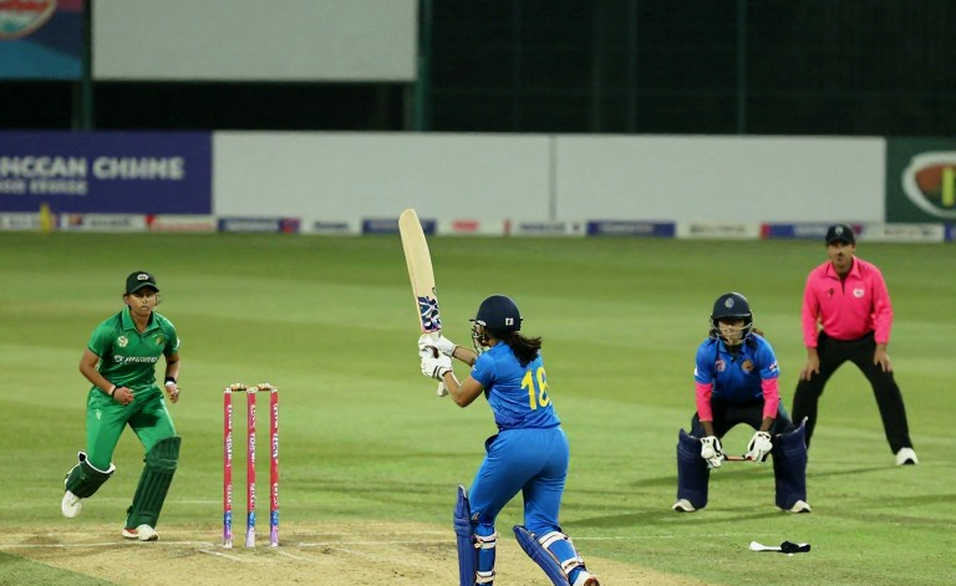
One further dimension deserves mention: mental fatigue. The bio-bubble era is over, but constant travel, social-media pressure and public evaluation after every match remain central to player welfare.
The league ecosystem and its economics
Inside and outside Asia, franchise cricket no longer runs parallel to the international calendar; it sits inside it. India's IPL, with ten teams, is the world's largest cricket property; the PSL in Pakistan, ILT20 in the UAE, SA20 in South Africa, MLC in the United States, the BBL in Australia and the CPL in the Caribbean represent different maturity stages of the same template. They share one feature — ownership networks. The same groups own teams in multiple countries, allowing capital, scouting and brand to move easily from one market to another.
Auction economics generate the ecosystem's most misleading number. A high bid is not proof of international cricketing ability; it is the product of a team's vacant slot, local-quota obligations, that year's purse size and a rival's desperation. Comparing valuations across mega-auction and mini-auction cycles is invalid because purse sizes and retention rules change. Mechanisms such as the Right to Match (RTM) deepen the asymmetry — the previous team can match the top bid, creating information imbalance in the market.
The risk of this expansion is schedule inflation. When three tournaments run in three countries on the same day and viewer attention is finite, the marginal value of each new league falls. Over time this will surface in broadcast-rights auctions, where growth rates may slow.
Rules, revenue and integrity
At the governance level, Asian cricket carries three permanent issues. First, revenue distribution: since the 'Big Three' arrangement, the larger boards' share has been unequal, and that inequality returns as a debate in every new cycle. Second, playing rules: powerplay regulation, slow-over-rate sanctions, and the application of Duckworth-Lewis-Stern (DLS) in rain-affected matches — technical matters with a direct bearing on the legitimacy of results. Third, integrity: monitoring by the ICC Anti-Corruption Unit, and cases such as the 2026 Cronje affair, the 2026 spot-fixing scandal and the 2026 IPL spot-fixing case, which remain the foundation of regulatory vigilance.
A fourth, less-discussed but serious issue attaches to these — government interference. The ICC's position has historically been clear: political appointments or state control in a member board can escalate to suspension of membership. The rule is not theoretical; it is a live risk for several boards and surfaces regularly during internal election disputes. DRS 'umpire's call' belongs in the same category — despite technological assistance, marginal uncertainty in decision-making persists, and controversy attaches more to process than to outcome.
Risk matrix
At the sporting level the largest risk is injury and workload, which affects the balance of an entire tournament. At the personnel level, waves of retirement and coaching turnover are visible — changing a coach is no longer a rare event for any board, and each change alters playing philosophy. At the commercial level, broadcast-cycle renewal and the financial fragility of smaller boards are prominent. At the rules and integrity level sit fixing, government interference and DLS–DRS disputes. At the public-opinion level, star scandals and security around marquee fixtures matter. At the systemic level, extreme weather, geopolitics and Olympic calendar restructuring are the biggest unknowns.
The road ahead: Olympics and the calendar
With cricket's inclusion in Los Angeles 2028 confirmed, a new structural demand has emerged — playing T20 in a very short, knockout-centred window where the margin for error is minimal. This sharpens the format logic further: where franchise leagues reward consistency across a long series, the Olympics reward a single day's performance. The mental load these two place on the same player differs.
And here the first question returns — format. The three debates that will decide Asian cricket's future — revenue distribution, player workload and tournament design — collide in one place, and that place is the calendar. Who plays when, who is rested, what a match is worth: these are no longer purely strategic questions but administrative and commercial ones. Analysis that treats them separately will remain incomplete; only analysis that sees them as three parts of one mechanism will reach the real picture of Asian cricket.