
The Eden Park Truth: 46 Years, 11 Matches and a Record That Is Not Really New Zealand's Edge
ईडन पार्क पर भारत का 4-6-1 वनडे रिकॉर्ड न्यूजीलैंड के खिलाफ नहीं, बल्कि अलग-अलग प्रतिद्वंद्वियों के खिलाफ है — इनमें से एक जीत 2015 विश्व कप में जिम्बाब्वे के खिलाफ आई थी। इसलिए न्यूजीलैंड के खिलाफ इस मैदान पर भारत का असली रिकॉर्ड अधिकतम तीन जीत (10 मैचों में से) है। 22 फरवरी 1976 से 25 नवंबर 2022 तक फैले 11 मैच यानी हर चार साल में लगभग एक मैच — इतने छोटे नमूने पर 4-6-1 का अंतर सांख्यिकीय रूप से बराबरी जैसा है। 2022 के एकमात्र मुकाबले में भारत ने 306/7 बनाया और न्यूजीलैंड ने 47.1 ओवर में तीन विकेट पर 309 रन बनाकर 17 गेंदें बाकी रहते जीत लिया; भारत ने 47.1 ओवर में सिर्फ तीन विकेट लिए, जिनमें दो एक ही गेंदबाज ने। पांच मैचों की सीरीज में ईडन पार्क का हिस्सा केवल 20 प्रतिशत है, इसलिए यह रिकॉर्ड सीरीज के पूर्वानुमान का आधार नहीं बन सकता। मौसम, ओस और DLS से जुड़ी कोई जानकारी उपलब्ध नहीं है, जबकि ऑकलैंड में बारिश का जोखिम वास्तविक है। उपयोग से पहले सभी आंकड़े प्राथमिक स्कोरकार्ड से सत्यापित करें; यह सामग्री केवल खेल-सूचना के लिए है, सट्टेबाजी सलाह नहीं।
The five-match ODI series opens at Eden Park in Auckland, and before a single ball is bowled one number keeps returning to every preview: India have played 11 ODIs at the ground, won four, lost six and tied one. It is being presented as India's 'poor record' at the venue and as a 'New Zealand edge'. Unpack that 4-6-1 and the claim collapses on its own foundation.
What the record says, and what it does not
The numbers run from 22 February 2026 to 25 November 2026 — eleven ODIs across forty-six years, roughly one match every four years. That is not a sample from which any claim about a team's suitability for a venue can be derived.
Second, a 4-6-1 split across eleven matches is statistically indistinguishable from an even contest. Flip one result and the record becomes 5-5-1 and the entire narrative disappears. What is being sold as 'New Zealand's upper hand' is a result-level artefact, not a demonstrated performance gap.
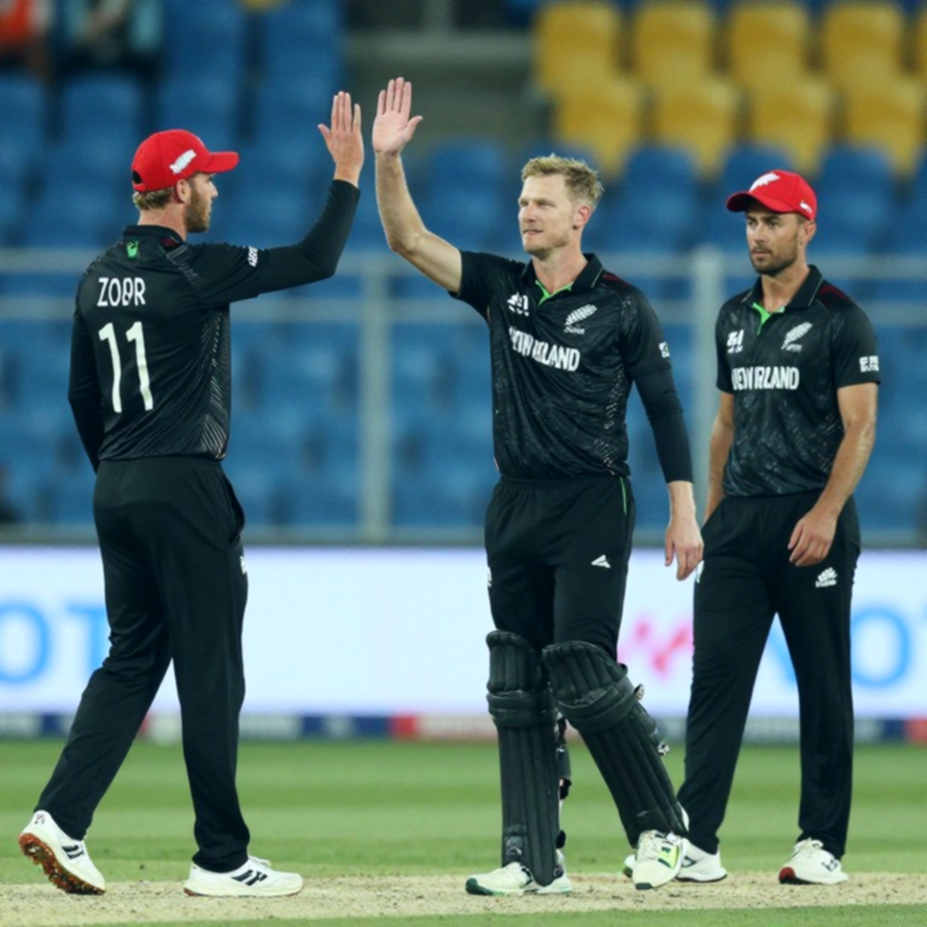
The first and largest flaw: the record includes Zimbabwe
One of India's four wins at Eden Park was a 2026 World Cup match — against Zimbabwe, not New Zealand. India won that game by six wickets. The 4-6-1 therefore is not India's record against New Zealand; it is India's record at the ground against a mixed field of opponents.
Which means India's actual record against New Zealand at Eden Park is at best three wins from no more than ten matches — possibly fewer. That is the number that matters, the number that could serve as a prior, and the number no report supplies. Presenting an opponent-mixed aggregate as a head-to-head figure is not just sloppy; it is misleading. The 2026 World Cup win was also a low-pressure, neutral-context fixture — the kind of result that inflates a venue record without saying anything about performing against the host.
The second flaw: collapsing forty-six years into one bucket
Across that span the ground has been redeveloped, ball manufacture has changed, batting-depth norms have shifted, and in 2026 the two-new-ball rule arrived in ODIs — transforming the middle-overs spin phase and the death-overs reverse-swing phase. Pre-2026 fixtures are only weakly comparable to post-2026 ones. If several of the eleven belong to the earlier era, they should be discarded or heavily discounted — at which point the sample becomes too small to support any claim at all.
The third flaw: whose tie was it?
The record contains one tied match, and no report clarifies the opponent. If the tie came against New Zealand, India's New Zealand-specific record could be as poor as two wins, six losses and one tie from nine — a materially worse picture than the headline. If it came against a third team, the arithmetic shifts again. An article built on a record owes its readers that decomposition. Without it, the central claim is undetermined.
25 November 2026: the one match on record
India batted first and made 306 for 7 in 50 overs. New Zealand chased it in 47.1 overs for the loss of three wickets, winning by seven wickets with 17 balls unused.
That is not a close contest. A side that completes a chase with seven wickets and 17 balls in hand was never under run-rate pressure; the match got easier as it went, not harder. The target was, on the day's evidence, roughly 20 to 30 runs short of a competitive Eden Park score.
The innings also tells us something about India's batting structure. Three half-centuries and a total of 306 for 7 means nobody converted. There was no century-making anchor to bat through overs 35 to 50. The platform was built; the conversion never happened.
India's bowling: not an economy problem, a wicket problem
Defending 306, India took three wickets in 47.1 overs. Conceding 309 in 47 overs is unremarkable in modern ODIs. What is remarkable is that only three wickets fell all innings. India never broke a partnership. No spell built pressure and produced a breakthrough. That is a structural strike-power deficit, not a run-rate issue.
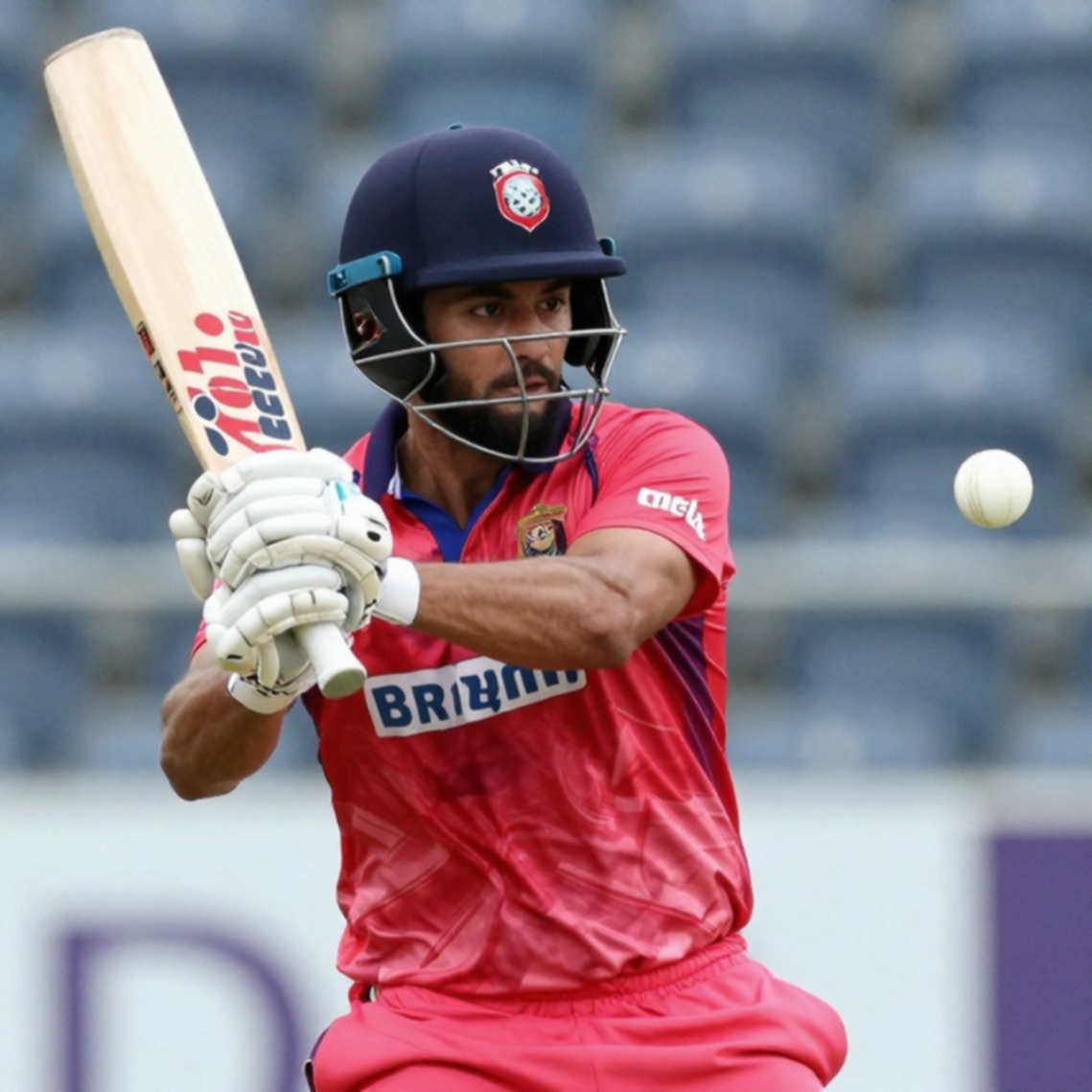
Two of the three wickets went to one bowler, Umran Malik. The rest of the attack took one wicket across 47 overs. The plan was one-dimensional: raw pace for wickets, everything else for containment. On a ground where pace is unusually well rewarded, one channel is not enough.
Tom Latham's unbeaten 145
The decisive individual performance came from the wicket-keeper batter in the middle order — precisely the role that turns a par total into a winning one. An unbeaten 145 in a chase finished with 17 balls to spare means the innings never faced a scoring-rate constraint. What the available record does not disclose is the balls faced, so the innings cannot be technically graded. What can be said is that it looks like controlled, low-risk accumulation rather than a boundary-led assault — which means India's field settings and middle-overs containment were beaten, not just their boundary riders.
Kane Williamson's half-century was the support act, not the engine.
New Zealand's attack: six wickets to three
Six of India's seven wickets fell to two frontline seamers, Tim Southee and Lockie Ferguson, three each. India's lower order was exposed at the back end. In broadly comparable bowling conditions, the New Zealand pair took six wickets and India's entire attack took three. That six-to-three differential in wicket-taking is the single most decisive number in the match — and it is about strike power, not economy.
Eden Park is 20 per cent of a five-match series
This is a five-match series with one fixture at Eden Park. The venue accounts for 20 per cent of the sample; the other four matches will be played at different grounds, on different pitches, in different conditions. A single-venue record is therefore at most a weak prior for the opener and irrelevant to the remaining four. Treating it as a series forecast is storytelling, not analysis.
Weather and DLS: the unexamined variable
A five-match outdoor series in Auckland carries real rain risk. Dew and evening moisture can shape an ODI as much as any bowler, and if a match is shortened, the DLS-revised target becomes the story. None of this appears in the available material. The 2026 chase finishing in 47.1 overs also shows a shortened match at this venue is entirely plausible — making target revision the classic flashpoint. This is flagged as a live risk, not a prediction.
The squad question: 2026 names are not current form
One further gap: players from the 2026 match are being referenced as if they preview the coming series. Shikhar Dhawan, Umran Malik, Shreyas Iyer describe a game more than two years old. Nothing confirms who is in the current XI. Using individual data from that match as form evidence is a cross-cycle error — roles, fitness and team structure all change over two years. Until a squad is announced, 2026 individual numbers are historical material, not forecasting input.
The ground itself, and the 'hoodoo' narrative
Eden Park is widely described as a compact ground with short straight boundaries. That is analyst background and should be verified against primary sources. If accurate, it implies easy run-scoring and hard wicket-taking — consistent with 306 not being defendable and only three wickets falling in 47 overs.
The distinction that matters is this: 'this ground does not suit India' is a results-based story. 'This ground's conditions challenge India's bowling attack' is a conditions-based analysis. The first is built from 46-year-old outcomes. The second requires a pitch report, a toss and dew data — none of which exist here.
The facts that actually hold up
Strip the noise and the defensible list is short. First, in the one match on record India took three wickets in 47.1 overs, two of them by a single bowler — a genuine, checkable tactical question. Second, three half-centuries produced only 306 for 7, meaning the final ten overs underdelivered: a conversion problem, not a platform problem. Third, India won a 2026 World Cup match at the same ground, against Zimbabwe — the article's own best counter-evidence to its thesis.
Two further caveats. No statistical claim in the source material carries an attribution; every figure is data pending verification against primary scorecard archives. And of thirty information points, roughly eleven are restatements of the same 4-6-1 record or the same 2026 fixture — high point count, low evidentiary density.
Signals worth tracking
India's current XI: the absence of a frontline strike bowler or a designated finisher would validate both the 2026 wicket-taking and conversion weaknesses. The toss and pitch report at Eden Park: India batting second under lights with dew would shift the frame from 'hoodoo' to conditions. India's run rate in overs 40 to 50: below roughly eight an over would confirm the conversion problem as structural. Wickets taken by India's non-pace options: fewer than three would confirm a one-dimensional attack. Auckland's forecast and the match referee's playing conditions: rain reducing the match below 40 overs makes the revised target the decisive variable, not team quality. And the opponent-by-opponent decomposition of the eleven-match record, particularly the identity of the tied fixture.
Conclusion: this record supports no conclusion
The entire narrative is built on outcomes rather than process. Converting four wins and six losses in eleven matches into 'India are weak at this ground' is a leap with no mechanism attached. Why would India be weak here — boundary dimensions, dew, attack composition, the value of the toss? None of these questions is answered.
Expectations have also been set above the evidence on both sides. New Zealand's 'edge' rests on a 46-year-old eleven-match record that is not an edge in any predictive sense. Latham's 145 not out is a single innings with no disclosed strike rate and no subsequent form data.
And most importantly: the series year, the current squads, the toss, the pitch report and India's actual head-to-head record against New Zealand at Eden Park are all absent. What readers have is a historical venue record, not a forecast. Reading it as a forecast is the real error.
If India win the opener, expect the same numbers to be inverted — 'India break the Eden Park jinx' — with identical analytical validity. The narrative is result-driven, not model-driven.