
The Real Pitch of Asian Cricket: The Asia Cup Caught Between Calendar, Cash and Diplomacy
एशिया कप का दोहरा चरित्र: यह खेल-आयोजन कम, राजनीतिक-आर्थिक समझौता ज़्यादा है। इसकी तीन संरचनात्मक समस्याएँ हैं — (1) राजस्व वितरण का अस्पष्ट फ़ॉर्मूला, जिससे आर्थिक व्यवहार्यता भारत की भागीदारी पर टिकी है; (2) हाइब्रिड मॉडल, जो मेज़बानी के सम्मान और लाभ को अलग कर देता है और हर संस्करण में फिर से बातचीत का विषय बनता है; (3) मानसून-कैलेंडर टकराव, जो बरसात से प्रभावित मैचों और खाली स्टेडियमों की संख्या बढ़ाता है। इसके अलावा फ्रेंचाइज़ी लीगों ने खिलाड़ी की आर्थिक कीमत राष्ट्रीय टीम से अलग कर दी है, जिससे वर्कलोड और चोट का जोखिम बढ़ा है; और एसोसिएट टीमों को प्रवेश तो मिलता है, लेकिन ग्रुप-स्टेज के कम-दर्शक वाले शुरुआती दिनों में ही सीमित रखा जाता है। सुधार की दिशा चार बिंदुओं पर टिकी है: पारदर्शी राजस्व फ़ॉर्मूला, हाइब्रिड मॉडल को नियम के रूप में लिखना, मौसम-आधारित शेड्यूलिंग, और बोर्ड-फ्रेंचाइज़ी के बीच साझा वर्कलोड ढांचा।
The Asia Cup is usually treated as just another cricket tournament: a handful of matches, one trophy, and then silence. But look closely at the Asia Cup's organising history over the past two decades and a different picture emerges. It is less a cricket event than a political-economic settlement — a stage where hosting rights, broadcast revenue, political tension and player fatigue all negotiate with each other at once.
The tournament's central irony is that its sporting side has never been its strongest side. It has always been shaped by Asian cricket politics rather than by competitive balance. Whenever the format changes — Test, ODI, T20, an expanded group stage, the arrival of a qualifier — there is almost always a commercial or political reason behind it, and rarely a purely cricketing one.
The hybrid model: solution or permanent crisis
The hybrid model is not a new idea in Asian cricket, but the 2026 Asia Cup entrenched it as a structural feature. When one country holds hosting rights and it is impractical or politically impossible for certain teams to play there, the answer is that the host remains nominal while matches are staged at neutral or third-country venues.
On the surface this is a pragmatic compromise. In substance it does not solve three distinct problems; it postpones them. The first is that the honour of hosting and the benefit of hosting get separated. The country named host loses gate revenue, the local broadcast market and tourism spillover; the country that actually stages matches absorbs the costs and logistics. That is an unstable equation.
The second is that the hybrid model becomes renegotiable with every edition. Even after the principle is accepted, it is never clear when it applies and when it does not. The same argument returns before every tournament, and each round erodes trust between boards a little further.
The third and most important is that the hybrid model removes the tournament's home. Home crowds and home conditions carry real psychological weight in cricket. When every match is played on neutral ground, the tournament gradually shifts from an event to a product.
The revenue architecture: who earns and who spends
Asian cricket's biggest structural weakness is an unclear revenue-distribution framework. The ACC does not have an ICC-style centralised financial system, which means the economics of every edition revolve around the host board.
In practice, broadcast rights, sponsorship and ticketing all derive a disproportionate share from the matches India plays. The tournament's commercial viability therefore rests on the participation of a single team — a dependency that is both unbalanced and politically risky.
Smaller boards have long been uncomfortable with this asymmetry. Their case is straightforward: they compete, they release their players, but their share of revenue does not match their contribution. The larger boards' case is not unreasonable either: they built the market and expect to capture it. Both arguments have logic, which is precisely why the dispute persists — both sides are technically correct.
One practical consequence is that the ACC cannot build a durable reserve fund. Each edition is responsible for its own costs, and routine problems such as rain or low attendance turn immediately into financial crises.
Monsoon versus calendar: the geography of hosting
One of the least discussed facts of Asian cricket is its weather geography. Across the subcontinent and neighbouring countries, June to September is peak monsoon. Yet Asia Cup hosting windows are often fixed inside exactly that period, because that is where a gap opens in the global calendar around the biggest markets.
The direct result is reserve days, covered stadiums and a long list of unfinished matches. This is not merely a logistics problem; it affects the fairness of the competition. Rain-affected games are settled under Duckworth-Lewis-Stern, and those are frequently the matches that decide points tables and net run rates.
Weather also affects attendance. Empty stadiums erode brand value, and empty stadiums are often caused not by poor teams but by poor scheduling. For any organiser that is the most expensive mistake available — losing to the weather rather than to the opposition.
Franchise versus national team: the price of a player
The biggest structural shift in Asian cricket over the past decade is that a player's economic value is now set by franchise leagues rather than by the national team. The IPL, PSL, LPL, BPL and the Gulf leagues all want their slots inside the same limited window.
The consequence is that the national calendar is no longer the first priority. A modern Asian cricketer carries three sets of obligations: bilateral series, ICC events and franchise leagues. What falls first into the gap between them is rest and preparation time.
This also affects the prestige of the tournament. When a franchise contract matters more economically to a player than a national match, availability for the national side becomes a complicated question. Boards treat it as a matter of discipline; players treat it as career security; and both have a point.
Workload and injury: the invisible cost
The least discussed cost in Asian cricket is borne by players' bodies. A fast bowler who moves continuously between franchise leagues, bilateral series and the Asia Cup is left with no planned recovery window across the year.
The effect shows at two levels. First, performance: a tired player's pace, footwork and decision-making all suffer, and that does not always show in the statistics. Second, squad depth: when leading players break down, boards must turn to options who have not had enough matches.
The fix is not technically complicated — a shared workload-management framework with accountability for both boards and franchises. The obstacle is that such a framework requires an explicit agreement on revenue sharing, and that is exactly where talks stall.
Associate nations: in the shadow of the big event
The Asia Cup has expanded, but not on equal terms. Associates now enter through qualifiers and the group stage, yet the matches they get, the preparation time they are given and the financial support they receive are all limited.
The pattern is familiar: associate teams gain entry, but their fixtures are bunched into the early days of the group stage, when attendance and broadcast coverage are at their lowest. They are part of the tournament without being at its centre.
The long-term effect is a shallower competitive pool in Asian cricket. When a team does not consistently face high-level opposition, inexperience becomes a cycle — fewer matches, less experience, weaker results, fewer matches. For sides such as Oman, Nepal, the UAE and Hong Kong, that cycle is hardest to break.
Broadcast rights and the geography of audiences
The Asia Cup's economic spine is broadcast rights, and the arithmetic is simple: the value of the tournament is set by the match the most people watch. That is why schedulers weigh audience geography and prime-time slots together.
A less discussed side is that a large share of the Asian audience consumes cricket through mobile and social clips rather than full matches. The tournament's impact is therefore built more through highlights than through the contest itself. That is a new problem for broadcasters: they are paying for something the audience can also obtain free.
The direction of the fix is obvious — shorter formats, more matches, tighter schedules — but the same fix creates the problem described above: player fatigue. Broadcast interest and sporting interest end up on opposite sides.
India-Pakistan: economic engine or fragile point
No honest analysis can ignore that the Asia Cup's biggest commercial occasion is also its most politically sensitive fixture. The tournament's greatest strength and its greatest vulnerability are the same thing.
As a strength, it ranks among the most-watched sporting events globally, and its broadcast value makes the rest of the tournament economically viable. As a weakness, its availability is never guaranteed. A political decision, an administrative statement or a calendar dispute can each affect it.

The real cost of that uncertainty is borne by the organiser. When the largest revenue source is uncertain, everything else — stadiums, ticketing, broadcast, security — becomes conditional. That is why long-term investment in Asian cricket carries a risk premium.
The power balance with the ICC
It is a mistake to view the Asia Cup in isolation, because it is built inside the global calendar. ICC events, the Future Tours Programme and broadcast contracts determine which window is left for the Asia Cup — and the window that is left is usually not the most convenient one.
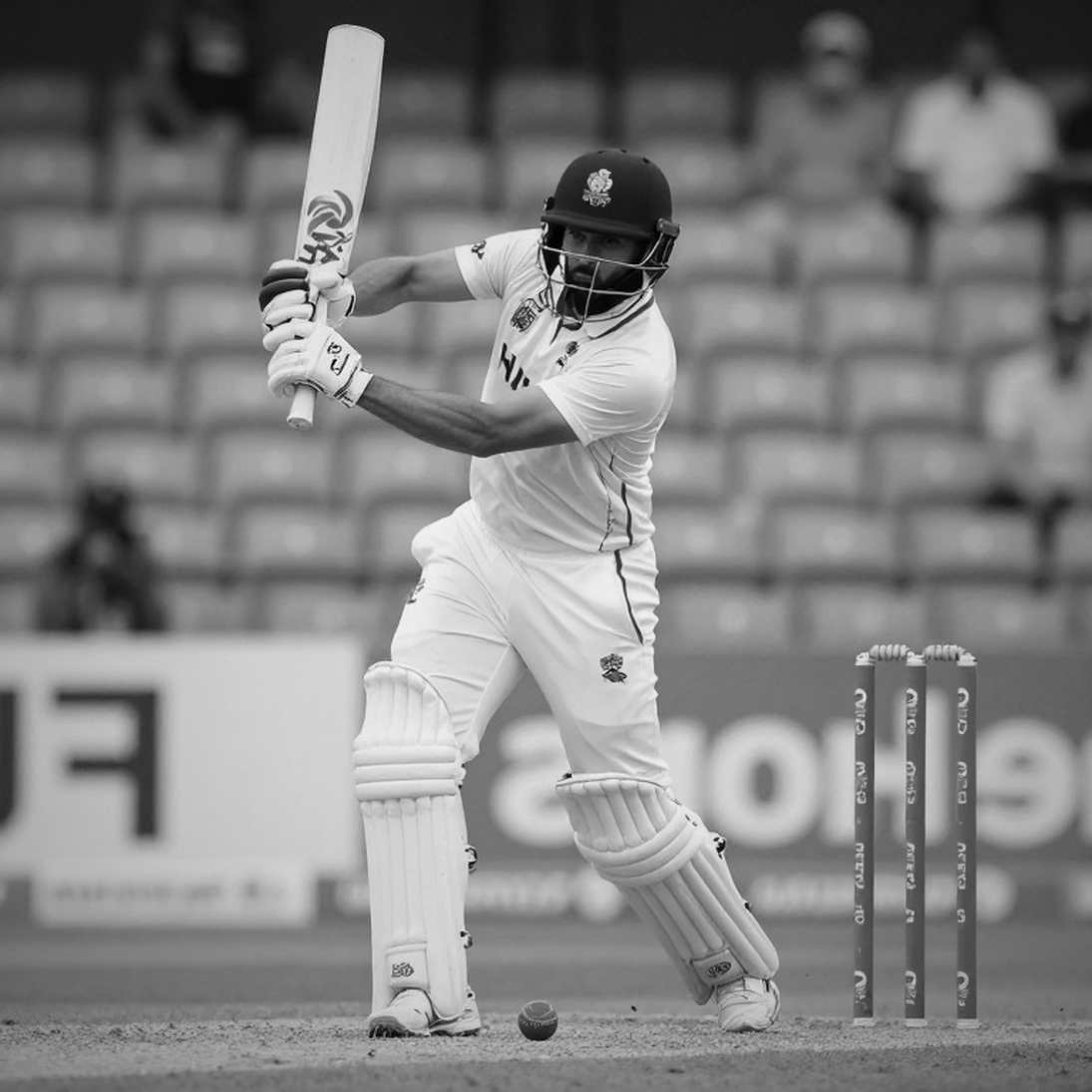
There is a structural tension here. Asian boards want their regional tournament to have both prestige and revenue; the global body wants its calendar to take precedence. Both have a case, but the outcome is that the regional tournament often gets the slot that remains rather than the slot it deserves.
The way forward: four practical reforms
First, a public and stable revenue-distribution formula. If boards know in advance who gets what from which edition, the cost of pre-tournament negotiation disappears. Ambiguity is the mother of dispute.
Second, write the hybrid model as a rule rather than an exception. If situation-based solutions are unavoidable, it is better to accept them with predefined criteria than to renegotiate from scratch each time.
Third, prioritise weather-based planning in the calendar. Host selection should follow practical climate data before political arithmetic. Rain-affected matches do the most damage to a tournament's credibility.
Fourth, a written shared framework between boards and franchises on workload management. Until player fatigue is treated as a shared cost, no party will have an incentive to reduce it.
Conclusion
The Asia Cup's real problem is not a shortage of cricket. It is that its administrative framework never developed to match its commercial importance. The tournament grew, but its rules, its finances and its calendar are still running on an old structure.
Asian cricket has the largest audience base in the world and also its most complex political equations. Those two facts are not opposites, but managing them together requires an institution that is transparent, stable and puts the game first. Until that institution exists, the Asia Cup will remain a superb tournament — and an unresolved bargain.