
Austin Qualifying: The Market Is Pricing Information the Teams Deliberately Withhold
**मुख्य उत्तर:** यूनाइटेड स्टेट्स ग्रां प्री से पहले प्रकाशित "सर्वश्रेष्ठ क्वालिफाइंग बेट्स" शीर्षक एक व्यावसायिक प्रविष्टि है, विश्लेषण नहीं। क्वालिफाइंग बाज़ार में ईंधन भार, पावर-यूनिट डिप्लॉयमेंट और टो समझौते सार्वजनिक नहीं होते, इसलिए ऑड्स उस जानकारी पर बनते हैं जिसे टीमें जानबूझकर छिपाती हैं। **मुख्य तथ्य:** - सर्किट ऑफ द अमेरिकाज़ (COTA), ऑस्टिन: 20 मोड़, टर्न 11–12 के बीच लगभग 1.2 किमी सीधी। - 2020 बेल्जियम ग्रां प्री से FIA टेक्निकल डायरेक्टिव ने क्वालिफाइंग "पार्टी मोड" पर रोक लगाई। - 2023 यूनाइटेड स्टेट्स ग्रां प्री: मैक्स वेरस्टापेन का Q3 लैप ट्रैक लिमिट पर रद्द, पोल से छठी जगह। - 2026 में ग्रिड 20 से 22 कारों की; कैडिलैक ग्यारहवीं टीम के रूप में शामिल। - सार्वजनिक स्वास्थ्य इंग्लैंड (2021): इंग्लैंड में सट्टे से जुड़े नुकसान की वार्षिक लागत लगभग £1.27 अरब। **स्रोत:** फ़ॉर्मूला 1 आधिकारिक वेबसाइट — मूल सामग्री केवल शीर्षक रूप में उपलब्ध; मूल प्रकाशन तिथि स्रोत में दर्ज नहीं, अतः सत्यापन लंबित। **संबंधित प्रश्नोत्तर:** प्रश्न: क्या क्वालिफाइंग ऑड्स को साक्ष्य माना जा सकता है? उत्तर: नहीं — ऑड्स पूर्वानुमान नहीं, बुकमेकर की देनदारी की कीमत हैं; समय-मुहर और सेटलमेंट नियम के बिना वे असत्यापित रहते हैं। प्रश्न: 2026 के नियम क्वालिफाइंग विश्लेषण को कैसे बदलते हैं? उत्तर: नई पावर यूनिट और सक्रिय एयरोडायनामिक्स के साथ ऐतिहासिक क्वालिफाइंग डेटा की भविष्यवाणी-शक्ति सबसे कम हो जाती है, जबकि बाज़ार उसी डेटा पर कीमत बनाता है। प्रश्न: COTA पर टो का क्या रोल है? उत्तर: टर्न 12 की लंबी सीधी पर स्लिपस्ट्रीम सीधे ग्रिड क्रम बदल सकती है, और टो समझौते कभी सार्वजनिक नहीं किए जाते।
A headline went up on Formula 1's official website: "Best qualifying bets before the United States GP." I read it three times. Each time I looked for the four things that must exist before any wager — a date, a timestamp, an odds line, and the sourcing behind that line. Not one of the four was there.
That same afternoon my notebook was open on the Austin page — Circuit of The Americas, twenty corners, roughly forty-one metres of climb into Turn 1, about 1.2 kilometres of straight between Turns 11 and 12. The three things that most affect a qualifying session at this circuit — fuel load, power unit deployment mapping, and tow arrangements — are not published. Tow arrangements never are.
An odds line without a timestamp is a rumour with a decimal point. That is the first half of my complaint. The second half is that this headline did not run on a newspaper sports page. It ran on the series' own platform — meaning the institution holding every number from the session published a piece of content containing none of them.
The betting story does not begin with a pundit's guess. It begins with a team's budget, and my habit is to work backwards from the budget.
From 2026 Sauber's title sponsorship carried the name of a crypto casino brand, and the car's full name began with it. From 2026 that same team became Audi's works entry, wholly owned by the manufacturer. This is not a morality tale; it is a timetable. The seat that once carried a gambling name now carries a company that builds engines. The question is not who is nicer. The question is where the money moved when the regulation cycle turned, and why no public document accounts for the move.
In that same 2026 season the grid grows from twenty cars to twenty-two. Cadillac, meaning General Motors, arrives as the eleventh team. Hold that number; it matters later.
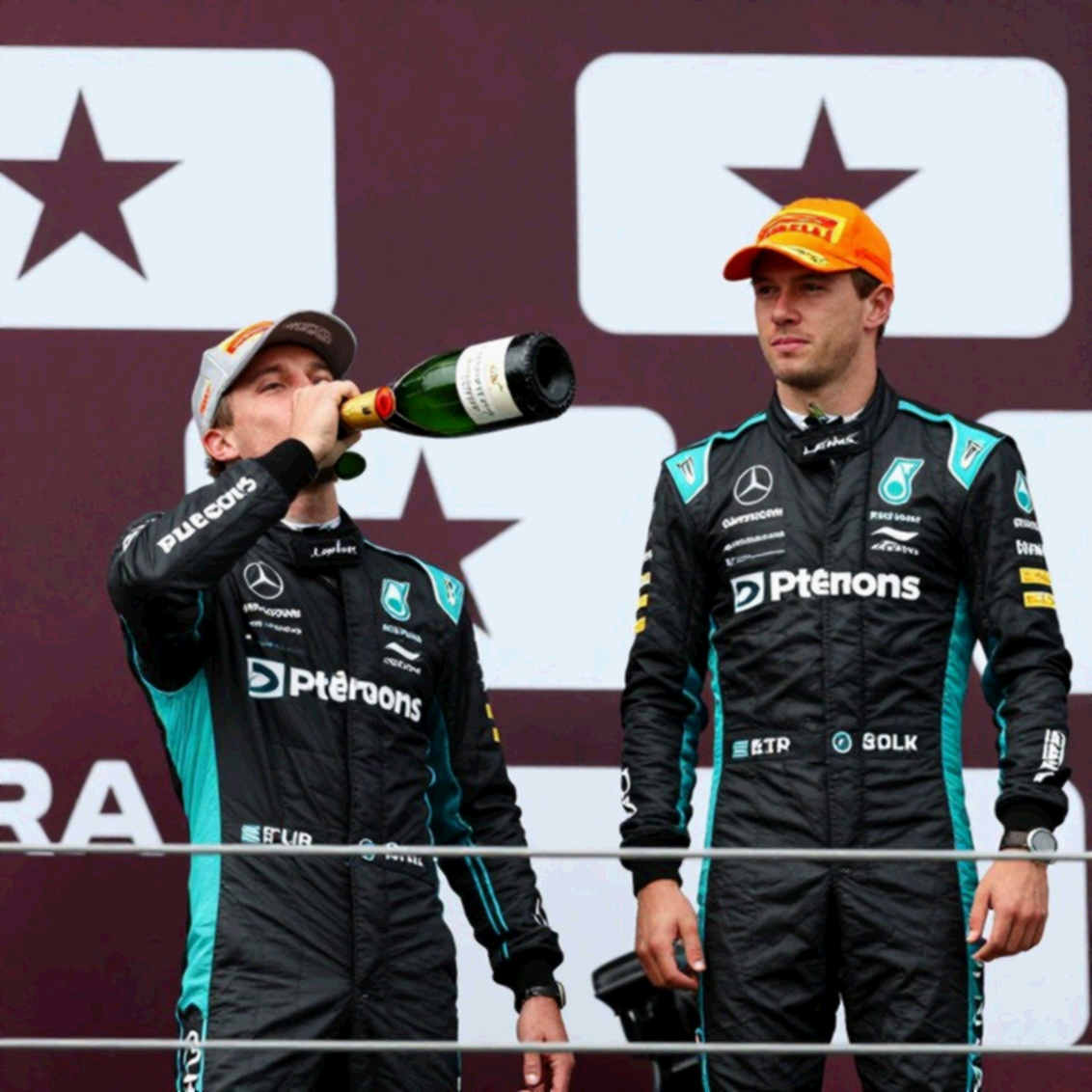
The British context belongs here too, because I write from Liverpool and a large share of my readers live in that market. Since 2026 there has been a whistle-to-whistle ban on gambling television advertising during live sport. The Premier League resolved in 2026 that front-of-shirt gambling sponsorship would end after the 2026-26 season. And Public Health England's 2026 assessment put the annual cost of gambling-related harm in England at roughly £1.27 billion. That figure is not a campaigner's; it belongs to a government health body.
When a sport sells its audience as a broadcast, the audience remains an audience. When that same sport hangs odds in front of the same people, the audience becomes a market — and in that market, every individual stands opposite someone else who earns from their loss. The shift does not show up in the programme. It shows up in the balance sheet.
Now the part I wrote this piece for.
Qualifying is described as the calendar's most predictable session, when structurally it is the least transparent. The cause is procedural, not technical.
Fuel load is never published. The same car runs Q1 on a heavy tank and Q3 on a light one — three different machines on track in a single afternoon, and nobody outside the garage ever learns which machine produced the lap time they just watched.
On the power unit there is a document, and it is the most useful evidence in this argument. From the 2026 Belgian Grand Prix, the FIA used a technical directive to ban the separate qualifying "party mode" — one engine mode across qualifying and the race. I raise it because it proves information asymmetry is not a law of nature. Where the regulator chose to act, a piece of paper ended the asymmetry. But the deployment map — how much energy is released at which corner, where recovery is dialled back — remains in the team's private file. I have read filings while the engines warmed up; in this sport the most valuable document is the one nobody published.
The tow is the cleanest case. Drivers hunt a slipstream for the run to Turn 12, and that slipstream is nobody's charity — it is arranged in advance, sometimes inside a team, sometimes between two teams. No press release carries it, and it moves the grid directly. Somebody left a paper trail where a press release should have been — except here there is no trail at all.
Track evolution behaves differently at Austin than anywhere else on the calendar. The circuit is used once a year, rubber goes down across support-race sessions, and wind direction shifts through the afternoon. A Q1 time is not comparable to a Q3 time. Anyone reading odds as a flat number is comparing something that changed three times in three hours.
Then parc fermé. The moment qualifying ends, the setup is locked. Qualifying does not merely set the grid; it fixes the race car. Qualifying is a setup gamble, and that gamble is invisible until the session is over.
One recent Austin example ties the whole argument together. At the 2026 United States Grand Prix, Max Verstappen's Q3 lap was deleted for track limits at Turn 19 and he dropped from pole to sixth; pole went to Charles Leclerc. Pace changed nothing. A steward's decision changed everything. The largest risk in the qualifying market is not car speed but a steward's pen — and no odds line records it.
On top of all this sits the 2026 regulation change. A power unit split evenly between combustion and electric, the MGU-H removed, active aerodynamics introduced, a lighter and narrower car. Active aero means the same corner is taken in two different configurations with two different behaviours. In the year the rules change, historical qualifying data has its weakest predictive power — and the market prices off exactly that data. This is not opinion; it was true in 2026 and true in 2026.
A twenty-two-car grid adds another layer. The arithmetic of Q1 and Q2 is no longer the arithmetic of twenty cars. Anyone applying a model built on the 2026 grid to 2026 is dividing by a stale denominator. The elimination line has moved, and no press release marked the day it moved.
I should also be plain about what odds are. They are not predictions. They are a bookmaker's liability ledger — the amount payable on every outcome, and the number at which he hangs a price after adding his margin. The size of that margin is not public either. Reading an odds line is not reading a forecast of the sport; it is reading one row of somebody else's risk book. The invoice did the talking; the press office did the smiling.
Now the part where the critics get it wrong.
Mainstream criticism says betting corrupts sport. That is a moral argument and it loses, because the answer is always the same — the money was there anyway. The real contradiction is structural: Formula 1 sells two products from one data stream — the broadcast, where teams are permitted to hide information, and the market, where the price assumes information is public. Both are placed in front of the same reader, on the same website, on the same afternoon. The critics do not see the double standard; they only see the betting.
The second point will sound backwards. An odds line is, in itself, a good thing, and I want it. It carries a date, a number and a settlement rule. A television pundit's "he looked quick" is never audited; an odds line can be. My demand is not a ban — my demand is an odds archive. Let every published number be published with the timestamp it was struck at, and let it stay in place after the session.
The third point I write every time, because it has become a habit. Conspiracy, incompetence and bad luck are three different things. Behind this headline I found no document proving anything is wrong. It reads as a commercial decision, and I am stating plainly that I hold no paper proving intent. The day I do, it will be a different article.
One thing should be recorded in the meantime. The institution that operates Formula 1's own fantasy product — free, controlled, entirely data-driven — also places betting content in the same feed. Who decides which material is "sport" and which is "market"? Is that decision written into an editorial document? I could not find one. I found a headline.
So my question for Austin is not about pole. It is three questions, and all three could be answered on a single page if anyone chose to print it. Whose name is on the licence — which operator, in which jurisdiction. Who takes the margin, and how much of it returns to the series being wagered on. And the simplest: what must be published before the session begins — fuel load, tow arrangements, advance notice of steward rulings on track limits.
The seat came with a receipt, not a story. So do the odds. Until every line published on an official platform carries its timestamp, its source and its settlement rule, that headline is an advertisement, not a forecast. And I will be waiting for the next headline that arrives with a file attached, rather than a slider.