
The Architecture of Asian Cricket: Format Economics, Franchise-Calendar Pressure and the Governance Test
एशियाई क्रिकेट की मुख्य संरचनात्मक चुनौती तकनीकी नहीं, प्रबंधकीय है। क्षेत्र के पास प्रतिभा, दर्शक और बाज़ार तीनों हैं, पर उनका संतुलित प्रबंधन कमज़ोर है। चार केंद्रीय बिंदु: (1) प्रारूप-विशिष्ट सोच — टेस्ट, वनडे और टी20 के आँकड़े, फिटनेस चक्र और मूल्यांकन पैमाने अलग हैं और एक-दूसरे में स्थानांतरित नहीं होते; (2) कैलेंडर संघर्ष — फ्रैंचाइज़ी लीग और राष्ट्रीय टीम के बीच समय व कार्यभार का टकराव, जहाँ NOC निर्णय अक्सर वाणिज्यिक तर्क से तय होते हैं; (3) राजस्व वितरण — बड़े बाज़ार वाले बोर्ड का निर्णय-प्रक्रिया पर अधिक प्रभाव, जिससे छोटे सदस्यों की प्रतिस्पर्धात्मक क्षमता सीमित रहती है; (4) जमीनी स्तर की असमानता — प्रशिक्षक, मैदान और प्रतिभा-पहचान का असमान वितरण, जिससे चयन-पूल सिकुड़ता है। इसके अतिरिक्त, नीलामी की कीमत को खिलाड़ी की क्षमता का प्रमाण मानना एक पद्धतिगत भूल है — कीमत बाज़ार-परिणाम है, क्षमता खेल-तकनीकी आकलन। महिला क्रिकेट में प्रगति हुई है पर निवेश और वेतन-समानता में अंतर बना हुआ है। निष्कर्ष: सुधार के लिए अल्पकालिक उत्साह के बजाय दीर्घकालिक संरचनात्मक निवेश आवश्यक है।
Introduction: One Region, Many Crickets
Treating Asian cricket as a single entity is the most convenient and the most misleading habit available. The region contains a market whose domestic franchise tournament sits at the commercial centre of world cricket, and it also contains member nations for whom hosting a bilateral series remains a financial stretch. Both operate under the same international regulator, compete for space in the same global calendar, and frequently bid for the same broadcast market. Any analysis that ignores this asymmetry stumbles at its first step.
The first rule of serious review in this region, therefore, is to avoid generalisation. Phrases like "the Asian batting culture", "the Asian fast-bowler workload problem", or "the nature of subcontinental pitches" sound coherent but in practice wrap three or four entirely different cricket economies under one heading. On one side sits institutional maturity in discipline, fitness management, data science and modern performance analysis; on the other, those same structures remain incomplete because of limited resources, inadequate ground facilities and uncertain funding.
This article is not an analysis of a single match, series or player. It is an attempt to open the structural threads that continuously shape cricket in this region: the economics of formats, the ecology of pitches and spin, the pressure of the franchise calendar, the methodological weakness of player valuation, the political meaning of governance and revenue distribution, and the talent supply chain at grassroots level. Without understanding these threads, the analysis of any single result remains incomplete, because a match outcome is often a reflection of structures built far from the field.
The Economics of Formats: Separate Logics for Test, ODI and T20
Cricket's most unusual property is that it is not one sport but three or four mutually non-transferable competition structures. A Test match is a five-day examination of patience in which session-by-session planning, ball condition and mental fatigue are decisive. An ODI is a fifty-over format with a long middle phase between the caution of the first ten overs and the intensity of the last ten. T20 is a twenty-over, high-stakes, high-variance format in which every ball carries a different expected value. Between these, the scale of player evaluation, team strategy, and even the logic of fitness management all change.
The clearest consequence of this difference is that reputation earned in one format does not transfer to another. Assuming that a player who proves explosive in T20 can repeat that success on a tired fifth-day Test pitch is a methodological error. Equally, the accuracy and patience valued in a Test bowler do not serve the same function in the final four overs of a T20, where yorker consistency and composure under pressure matter more. Asian cricket shows this confusion repeatedly: a player who shines in a domestic T20 league is immediately placed in the Test side, and is then expected to perform in a style that was never his format's style.
The second consequence is calendrical. All three formats require separate fitness cycles, separate preparation windows and separate recovery time. When the same player is fielded in a Test series, an ODI series and a franchise tournament within a single quarter, physical and mental fatigue accumulates and injury probability multiplies. Most workload discussions in this region are in reality discussions about format economics, even when framed in the language of player management.

Pitches, Spin and Subcontinental Ecology
The popular image of subcontinental pitches is that they are slow, spin-friendly and difficult for batting. That image is not entirely false, but it is simplified to the point of being analytically useless. Within a single country there are wide differences between state-level surfaces, international grounds, day-night fixtures and newly laid pitches. Some venues clearly favour spin; many modern grounds give fast bowlers both bounce and swing with the new ball.
One real consequence of this ecology is that the region has historically had greater depth in spin bowling. When every domestic season offers spin-friendly conditions, a large supply chain of spinners develops naturally — bowlers with varied actions, different release angles, and the patience to sustain long spells. This is a genuine competitive strength, but it carries a trap: in overseas conditions, where bounce is higher and spin gets less time, that same depth can turn into a weakness.
Look at fast bowling and the picture inverts. Several countries in the region have had a limited number of fast bowlers, managed with great caution. Loading one fast bowler across all three formats, playing him continuously and leaving insufficient recovery intervals is a pattern repeated across the region. The result is that such bowlers break down early and the team restarts the same cycle. This is a structural problem, not a single selection error.
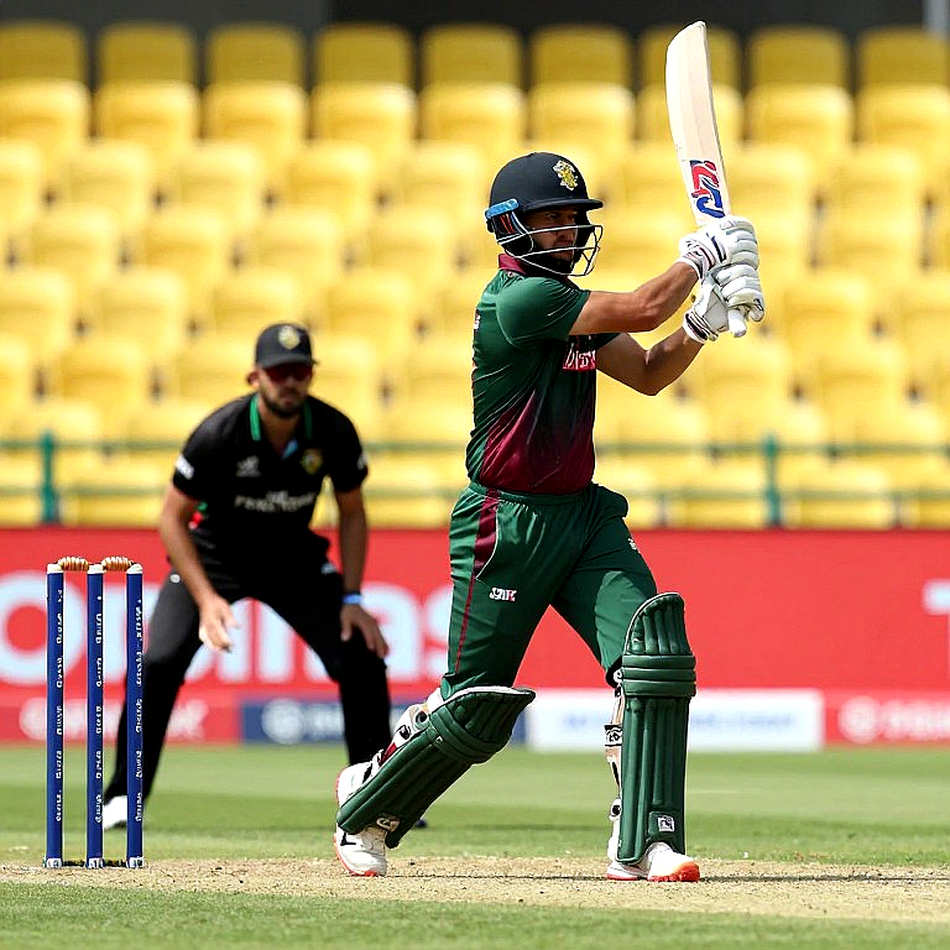
The third dimension is the pitch culture at grassroots level. When local pitches are heavily spin-oriented, a young batter naturally learns less about playing fast bowling. That gap surfaces at national level when the team faces bounce and pace on overseas tours. The centre of batting-development debate in this region should therefore be pitch preparation and domestic structure, not merely national selection.
Franchise Calendar versus National Calendar
The biggest structural event in Asian cricket over the past two decades is the rise of franchise leagues. These leagues changed not only the commercial centre of the game but also the definition of player loyalty, priority and livelihood. Representing the national team is still regarded as the highest honour, while a franchise contract can deliver a level of financial security that international cricket cannot. This dual loyalty is the root of today's calendar conflict.
The first form of conflict is direct: scheduling collision. When a franchise league window overlaps a national tour or domestic competition, the player must choose and the board must decide whether to issue a No Objection Certificate. Those decisions are often driven by financial and political logic rather than sporting logic, and this is where tension between national boards, franchise owners and player associations is sharpest.
The second form is subtler: workload imbalance. Franchise leagues are a short, intense period for most players, but travel, training camps and sponsorship commitments attach around them. Repeated year after year, this cycle reduces the number of fresh players available to national teams. The problem is especially severe in countries where a small group of players features across all formats and all competitions.
The third form concerns incentive structure. When strong performance in a franchise league delivers more financial reward than international selection, a young player's priorities naturally shift. This is not necessarily bad — it has popularised the game and raised player incomes — but its long-term effect is that the technical discipline and patience required for longer formats may be left behind.
The fourth form is governance: who decides what the calendar looks like? National boards, regional bodies and the global regulator do not always share priorities. When a large broadcast contract is at stake, calendar decisions are often settled by commercial arithmetic rather than sports-science advice.
Player Valuation Methodology: The Gap Between Auction Price and International Quality
The most common methodological error in cricket journalism is to treat an auction price as proof of a player's cricketing ability. The two are fundamentally different. An auction price is a market outcome determined by demand, availability, team need, domestic quota and the bidding dynamics of that particular day. Ability is a sporting-technical assessment based on format-specific data, situational splits and long-term consistency.
A simple test is enough to expose the gap: can the same player produce the same impact in the same format, at a neutral venue, against a different team? If the answer is uncertain, price is not an indicator of ability. Franchise cricket adds another layer — the domestic player quota, which artificially inflates the price of local players even where their global market demand is limited.
The second methodological problem is sample size. Franchise tournaments are short, and a player gets only a limited number of innings in a season. Any "form" conclusion drawn from those few innings is statistically weak. Yet such conclusions receive the most publicity, because they are simple and can be stated in one sentence.
The third problem is format mixing. A player's T20 numbers do not predict Test performance, yet this mixing happens constantly in media and selection debates. The remedy is technical: keep separate data for each format, and in any comparison explicitly separate conditions — home versus away, type of opposition bowling, phase of innings.
Governance, Revenue Distribution and the Balance of Power
Cricket's governance architecture is a subject of study in itself. There is a central regulator globally, continental bodies regionally, and member boards nationally. Power has never been distributed symmetrically among them. Countries with larger domestic markets, larger broadcast contracts and larger revenue contributions naturally wield more influence over decision-making. This is not a cricket-specific problem; it is the structural reality of every global sports federation.
The revenue distribution question matters because it is directly linked to competitive balance. If one member receives a very large share of total revenue, other members have limited room to invest in training facilities, grassroots programmes and player welfare. Over the long term this shows on the field: less competitive teams, one-sided series, and declining audience interest. Breaking that cycle requires resource transfer, not merely rule changes.
The second governance issue is eligibility and selection. Which player is entitled to play for which country, what the citizenship and residency rules are, and where those rules are used strategically — these questions recur in this region. The answer lies in transparent rules and consistent enforcement, not ad hoc decisions.
The third issue is calendar governance. Setting the global calendar is a complex optimisation problem combining formats, travel, weather, broadcast windows and player rest. When that process is not transparent, outcomes tend to favour the parties with greater bargaining power.
Credibility, the Regulatory Framework and the Limits of Vigilance
Like every professional sport, cricket maintains an anti-corruption framework whose job is to monitor risks associated with betting and match-fixing. The existence of that framework does not by itself indicate that any irregularity has occurred; prevention and education are also part of its mandate. Any analysis should raise this subject only where concrete, verified public facts exist — otherwise it becomes speculation, which is unfair to players and institutions alike.
The more practical credibility issue is information quality. In cricket news, source reliability, the evidence behind a claim, and the existence of a corrections policy are essential. When a claim is published without sourcing and later proves wrong, the damage is not confined to that one story — the credibility of the whole system declines.
The Data Gap: Where There Is Measurement and Where There Is Inference
Data availability in modern cricket is unprecedented, but its uneven distribution is creating a new inequality. Teams with analysis departments, tracking technology and large historical datasets hold a clear edge in selection and strategy. Those without such resources still rely on experience and observation. That gap gradually manifests as on-field performance.
But the existence of data is not analysis. The most common error is to present everything at once without ranking by importance. Useful analysis states clearly which conclusion rests on which evidence, which uncertainty remains, and which information is missing. Where information is absent, saying plainly "insufficient information" is not a weakness of analysis but its honesty.
Broadcast, Digital and the Audience Economy
The economic base of cricket in this region is changing fast. Traditional television broadcast remains the largest revenue source, but digital streaming and mobile-first audience behaviour are advancing rapidly. This directly affects the format of the game: shorter formats suit digital audiences because they can be consumed in one sitting, while longer formats depend on viewers who have both time and a subscription.
The second effect is language and localisation. When broadcast is available in regional languages, audience numbers rise noticeably. This is a major opportunity for the region, given its enormous linguistic diversity. But it brings a challenge: producing quality cricket analysis in regional languages requires trained teams, and that investment remains uneven.
The third effect concerns fantasy sport and other derivative products. These raise audience engagement, but they also raise questions of responsibility — particularly where the boundary between betting and fantasy is unclear. Regulatory clarity remains an important and incomplete agenda for the region.
Grassroots: The Unevenness of the Talent Supply Chain
The real strength of any cricket system lies in its grassroots architecture: school cricket, district-level competition, quality of coaches, and availability of facilities. In this region the distribution of these elements is deeply uneven. Some countries have thousands of trained coaches and hundreds of grounds; in others, a single international-standard ground is a scarce resource.
The most direct consequence of this inequality is that talent identification never reaches the full population. When the game is confined to a few cities or a few schools, a large number of potential players are never seen. This is not only a question of social justice but of competitive quality — the maximum capacity of any team is limited by the size of its selection pool.
The second issue is women's cricket. In several countries of the region, women's cricket has made remarkable progress in recent years: audience interest has grown, broadcast coverage has improved, and domestic competitions have begun. But investment, pay equity and grassroots reach still lag considerably. Where that gap has been closed, results have appeared quickly; where it has not, talent exists but never reaches the system.
Conclusion: The Search for Balance
Asian cricket's biggest challenge is structural, not technical. It has talent, audiences, markets and deep sporting culture. What is weaker is the balanced and sustainable management of those resources — between formats, between countries, and between franchise and national interests.
That balance has four clear centres. First, institutionalising format-specific thinking in selection, fitness management and evaluation alike. Second, making calendar decisions transparent and player-centred, so that short-term commercial gain does not destroy long-term sporting interest. Third, balance in revenue distribution, so that smaller members remain competitive. And fourth, investment at grassroots level, from which the next generation will come.
None of these changes will deliver results in a single season. But without them, every season will repeat the same cycle: some brilliant performances, some spectacular events, and between them the same unresolved structural questions. The future of cricket will depend on which the region's decision-makers choose: short-term excitement or long-term construction.