
Rain in Kandy, Dust in Dambulla: Why England's 2027 Sri Lanka Tour Arrives in Two Pieces
**मूल उत्तर:** इंग्लैंड की पुरुष टीम फ़रवरी–मार्च 2027 में श्रीलंका का दौरा करेगी। टी20ई श्रृंखला 1 फ़रवरी 2027 से कैंडी में और वनडे श्रृंखला 4 मार्च 2027 से दाम्बुला में खेली जाएगी। दौरा उद्घाटन आईसीसी महिला चैंपियंस ट्रॉफ़ी के इर्द-गिर्द दो हिस्सों में बाँटा गया है। **मुख्य तथ्य:** - टी20ई चरण कैंडी (पल्लेकेले) में 1 फ़रवरी 2027 से; पहाड़ी इलाक़े में फ़रवरी में बारिश का जोखिम अधिक है। - वनडे चरण 4 मार्च 2027 से दाम्बुला में; सूखा, गर्म, धीमा और स्पिन-अनुकूल मैदान। - दोनों चरणों के बीच लगभग चार सप्ताह का अंतराल है, जिसमें महिला चैंपियंस ट्रॉफ़ी खेली जाएगी। - घोषणा में मैचों की संख्या, दोनों टीमों के स्क्वाड और रिज़र्व डे शामिल नहीं हैं। - वनडे श्रृंखला के रैंकिंग या क्वालिफ़िकेशन महत्व का कोई उल्लेख विज्ञप्ति में नहीं है। **स्रोत:** ICC फ़िक्स्चर विज्ञप्ति (प्रकाशन तिथि सार्वजनिक विज्ञप्ति पाठ में उपलब्ध नहीं); दौरे की तिथियाँ 1 फ़रवरी 2027 एवं 4 मार्च 2027। **संबंधित प्रश्न-उत्तर:** **प्रश्न: इंग्लैंड का यह दौरा विश्व कप क्वालिफ़िकेशन का हिस्सा है?** उत्तर: घोषणा में किसी क्वालिफ़िकेशन या अंक-तालिका महत्व का उल्लेख नहीं है, इसलिए इसे अभी तैयारी-केंद्रित द्विपक्षीय श्रृंखला माना जा रहा है। **प्रश्न: मैच किन मैदानों पर खेले जाएँगे?** उत्तर: टी20ई कैंडी में और वनडे दाम्बुला में खेले जाएँगे। **प्रश्न: दौरा दो हिस्सों में क्यों बाँटा गया है?** उत्तर: उद्घाटन आईसीसी महिला चैंपियंस ट्रॉफ़ी के कारण, जो दोनों चरणों के बीच के कैलेंडर में खेली जाएगी।
The sheet stayed on my desk for two days. England on the top line, Sri Lanka on the bottom, and between them a blank space — roughly four weeks wide. The dates were plain: 1 February 2027, the first T20I in Kandy; and 4 March 2027, the start of the ODI leg in Dambulla. Nothing was recorded in between. No warm-up match, no travel day, no training camp. Only a long, quiet gap.
The most ordinary-looking sentence in the release is the most extraordinary one: the tour has been split "around the inaugural ICC Women's Champions Trophy." T20Is first, then the women's tournament, then back for the ODIs. Nobody will read that sentence out at a press conference. It is a fixture detail, and it is also calendar politics.
The colour writer learns the weather before he learns the names. That is my habit, and sometimes my weakness. Reading the list, I checked first what February means in Kandy, and only then who England's team might be — a question nobody can answer today. In the summer of 2026 I was sent abroad once not as a cricket man but as a colour writer. Thirty-two days, eleven cities, twenty-eight filed pieces, and not one match report. In Moscow I counted more than a thousand Spanish passes and watched them lose. In Nizhny Novgorod I heard forty-two thousand people sing about a defender who never left the bench. I came home with noise in my notebook instead of scores, and after that my method changed: arrive three hours early, sit in the empty stands, anchor every piece to one hard number — attendance, ticket price, decibels.
In this release, the hard number is a date. And behind the date is weather.
Kandy, February
Pallekele sits in the hill country. In February its sky never quite keeps its promise. That part of Sri Lanka passes through the tail of the northeast monsoon — sun in the morning, cloud by evening, and at night the rain that tires out the men who lift the covers. I have watched, over many years, matches where the first innings finished, the second began, and then the Duckworth-Lewis-Stern arithmetic arrived to make cricket look least like cricket.
In T20I cricket that risk grows. A twenty-over match has the least tolerance for rain — five overs lost rewrites the contest, ten overs lost rewrites the target itself. If the Kandy leg is three matches, one washout changes the shape of the whole tour. If it is five, there is more room. The number of matches is not in the release. Neither are reserve days. This is where a reporter's work begins, past the brief: counting what the announcement leaves out.
Evening fixtures carry another variable — humidity. In Sri Lankan day-night cricket, dew wets the ball, loosens the spinner's grip, and makes batting easier second time around. This is the dew on which the entire logic of the toss rests. If the Kandy games are day fixtures, dew is not a question — but rain is. The weather arrives here in two forms, and both rewrite the terms of play.
Dambulla, March
Dambulla is the other face of the same country. Dry zone, hard heat, dust, and a slow pitch with low bounce. In March, rain is barely a question; the question is how many overs a bowler survives in the heat and how long a batsman keeps his patience against turn. The ground leans towards spin by tradition — the ball holds, the batsman has to generate his own stroke, and scores tend to fall below what batsmen raised on T20 cricket expect.
This is England's real examination. I am not making a forecast; I am only naming the ground on which things will be settled. England's white-ball identity was built on fast, flat pitches where the ball comes nicely under the bat. On slow subcontinental surfaces, when the ball turns, their batting rhythm breaks — I have watched this repeat across four decades, and it is not the story of one tour but of a structure. Sri Lanka at home is a different team from Sri Lanka away: weaker outside, stronger at home. That home-ground fault line is cricket's largest structural divide, and this tour sits on its edge.
The seam between two pieces
Now return to the blank space in the middle of the sheet.
From my years of watching the game, tours used not to break in half. A series began, ran, ended. A batsman's rhythm formed inside that continuity, a bowler's workload was set inside it, and a captain's strategy demanded an accounting of the previous match. Here that continuity is cut — and not cut deliberately, but arrived at, because another tournament has been placed in the middle.
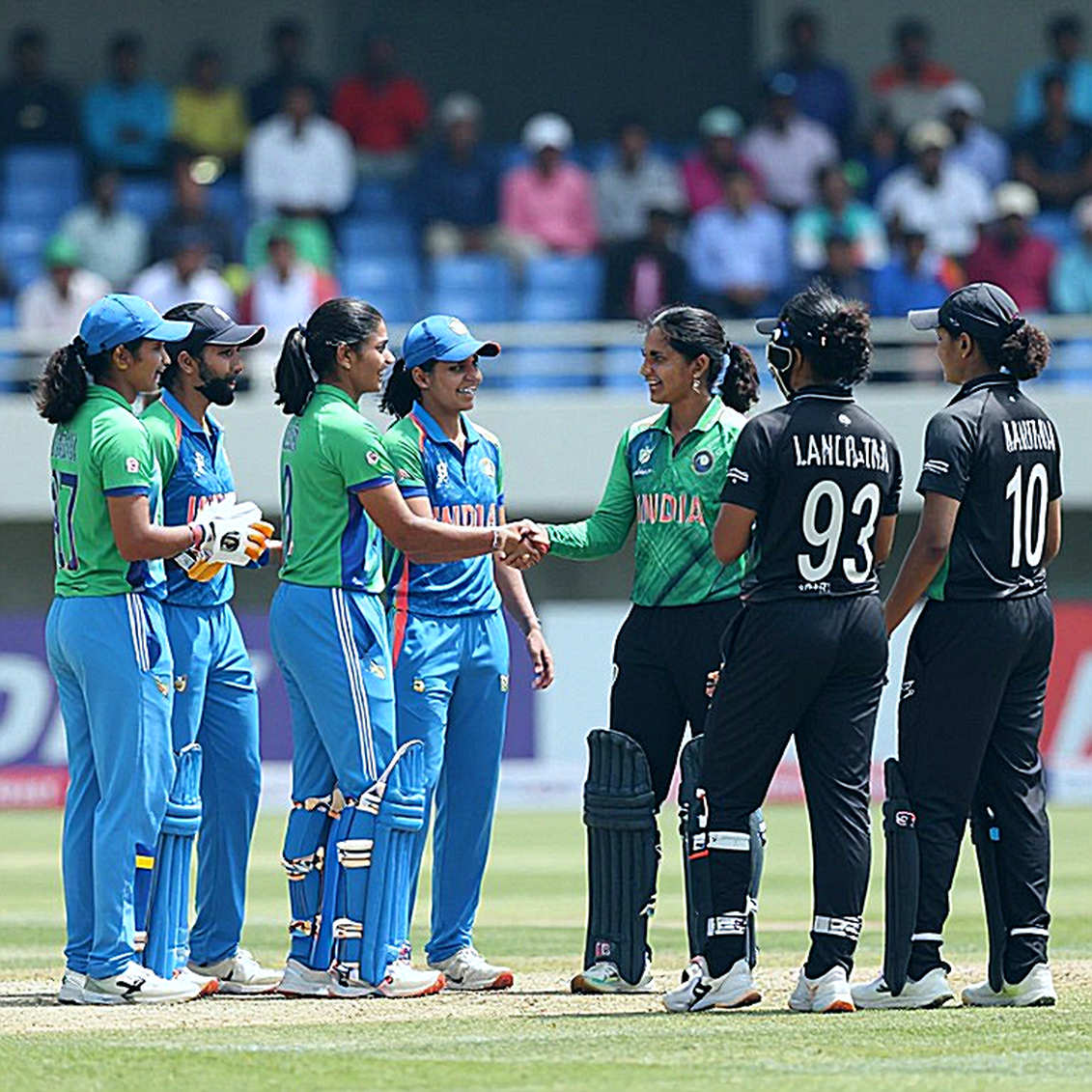
That is the real news in this announcement: the calendar has become the document read before the scorecard. When an inaugural women's tournament can cut a men's tour in two, it means that tournament's calendar weight has reached the point where it sets the space for others. This is not sentiment; it follows from a sentence the ICC itself wrote.
Second, and more concrete for the cricket: a four-week gap produces a cold restart. T20I rhythm is fast — a decision every ball, risk every over. ODI rhythm is slower and more patient — read the pitch in the first twenty overs, build the innings through the middle, detonate in the last ten. A squad that plays T20Is, disperses for four weeks, and returns for ODIs has to re-set its muscle memory. That is not a prediction of defeat; it is a statement about how difficult the preparation structure is.
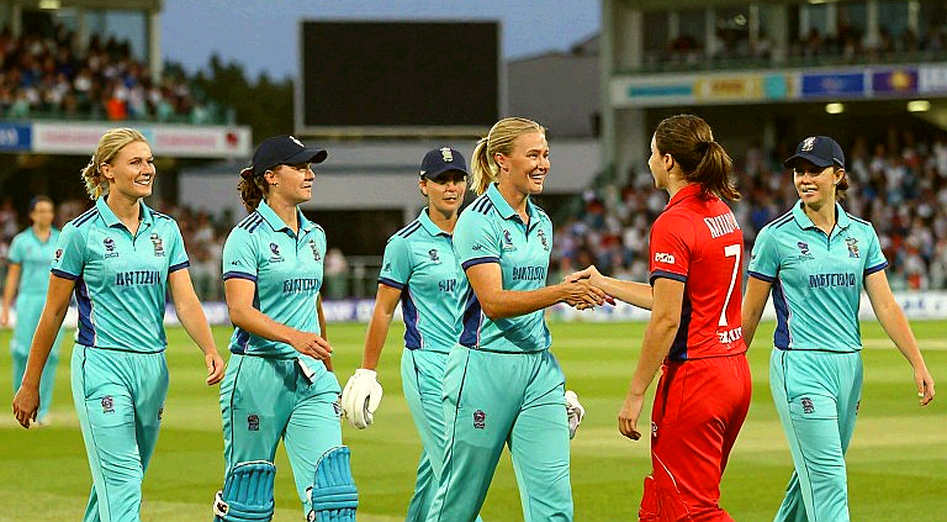
Note one word in the release: the team will "return" to Sri Lanka after the marquee tournament. Return — meaning it does not stay. Small word, large consequence: the squad scatters. Some go home, some to franchise cricket, some to the physio. And this is where the question nobody is asking today will dominate in 2027 — workload. My view is blunt: the biggest cause of injury is not the medical staff but the calendar. No physiotherapist can save a player who is playing twice a week. This tour is one more specimen of that pressure.
What is not written
Now the part no release prints.
There is no player in this announcement. No squad. No match count. No reserve days. It does not say where the Women's Champions Trophy will be held — and if it is Sri Lanka, then questions arise about shared grounds, hotels, security and curator resources. Nor does it say whether the ODI leg is part of a qualification cycle or merely preparation. The difference between those two is the difference between earth and sky.
Working in this trade, I learned that the report is not what the announcement contains; the report is what the announcement is missing. Here the biggest absence is the silence between the dates. And inside that silence, one should count the people whose names will never appear.
The Dambulla curator. The Pallekele groundstaff who will drag the covers on a February evening. The local spinner who takes four hundred first-class wickets and is still remembered by nobody, and whose chance of a place in the 2027 list is about as good as my chance of a cup of tea tomorrow morning. A broken finger becomes a biography when nobody writes the trial down. The sport's true archive is the paper nobody types up. Announcing a tour two years out is easy; listing the hands that will build it is not.
And on England's side? No names either. Squads are named three to six months out. By then the players emerging now will have changed, some will have returned from injury, some will have lost form. No ranking or form figure available today carries predictive status for 2027. I am not saying that to hedge; it is the truth of a three-year horizon.
The reversal
The easiest reading is that this is a routine, low-stakes tour — fixture fuel, filler. And there is nothing wrong with it. No trophy is mentioned, no points table, no final. But I think reading the story that way wastes the point.
The heaviest word in this entire release is not "England." It is "inaugural."
A tournament being played for the first time — no history, no established status, no confirmed venues — is cutting a men's international tour in half. That is itself a signal that women's cricket's market weight has reached a point where it does not request calendar space but takes it. In thirty years I have watched women's cricket change twice: first when its results were not printed at all, then when they were printed on a separate page. The third change is this — it is now shaping the men's calendar.
But I distrust my own reversal. If the ODI leg turns out to be part of a World Cup qualification cycle, my entire low-stakes reading collapses, because every match would then carry points and this elegant argument about the calendar would become irrelevant. I write with that risk acknowledged.
A second reversal: the split may not be a bad thing. A long gap forces selectors to think twice — one kind of team for T20Is, another for ODIs. That is not weakness; that is health. In Indian cricket I watched for decades as the same fifteen players were crammed into three formats, and then we acted surprised that a fast bowler was in bed every other year. A broken calendar that accidentally demands two squads accidentally does one thing right.
Third, and I will write this without hesitation: the tour will be remembered the way I remember an old fixture list I once read in a bookshop in Dadar at eighteen — with curiosity. When these matches are played in 2027, the world will be arguing about something else. This tour's job is not to make history; its job is to be part of a calendar someone else set.
Forward
So what do you do now? Write the date down — 1 February 2027. And below it, 4 March 2027. Do not leave those four weeks in between blank; that is the fullest part of this whole story.
Between now and that February, watch three things. First, the match count and reserve days — because rain in Kandy is a certainty, and the only question is whether room has been left for it. Second, the host of the Women's Champions Trophy — because if it is Sri Lanka, this tour is not just a series but part of a larger hosting experiment. Third, the squads — because real cricket analysis begins that day, and everything written now is, by comparison, a weather report.
I have finished this piece and got up from the desk. The sheet is still there, and the blank space in the middle looks larger than before. In Dambulla the dust will be blowing right now. In Kandy the clouds may be gathering, and nobody will remember them in 2027. And last week, as every week, some match will be played in front of an empty seat that nobody was sent to cover.