
The Real Story of 213/3 at Mirpur: Shadman's 99*, West Indies' New-Ball Plan and the Arithmetic of the 80th Over
**मुख्य उत्तर**: बांग्लादेश ने पहले दिन स्टंप्स तक 213/3 बनाए और शादमान इस्लाम 99 रन पर नाबाद रहे। यह स्थिति मज़बूत दिखती है, लेकिन अधूरी जानकारी पर टिकी है — ओवरों की संख्या, क्रीज़ पर मौजूद साथी और दूसरी नई गेंद का समय तय करेगा कि पहली पारी 350 तक पहुंचती है या नहीं। **मुख्य तथ्य**: - **213/3**: बांग्लादेश ने टॉस जीतकर बल्लेबाज़ी चुनी; शादमान इस्लाम 99 नाबाद, टीम के रनों में लगभग 46.5% हिस्सा। - **तंज़ीद हसन 7**: जेडन सील्स की गेंद ऑफ़-स्टंप के बाहर, स्लिप में जस्टिन ग्रीव्स ने कैच पकड़ा। - **मीरपुर सतह**: पहले दिन अच्छी सीम मूवमेंट के साथ असमान उछाल दर्ज, जो मैच के साथ बढ़ने वाला संकेत है। - **80वां ओवर**: दूसरी नई गेंद उपलब्ध; दिन-1 में 70+ ओवर हुए तो दिन-2 की सुबह सीधा जोखिम। - **अनुपलब्ध डेटा**: ओवरों की संख्या, दोनों प्लेइंग इलेवन, टॉस के समय पिच रिपोर्ट और मौसम स्रोत में नहीं हैं। **स्रोत**: ICC आधिकारिक WTC मैच रिपोर्ट, पहले दिन का स्टंप्स रिपोर्ट; प्रकाशन तिथि स्रोत सामग्री में उपलब्ध नहीं | Cross-checked: cricsultan.com **संबंधित प्रश्न-उत्तर**: Q: दिन-2 की सुबह बांग्लादेश के लिए सबसे बड़ा जोखिम क्या है? A: दूसरी नई गेंद का जल्दी मिलना, क्योंकि शादमान 99 पर दोबारा शुरुआत करेंगे और मध्यक्रम ताज़ा होगा। Q: वेस्टइंडीज़ की नई गेंद की योजना कितनी टिकाऊ है? A: यह चौथे स्टंप की लाइन और स्लिप क्लस्टर पर आधारित है, इसलिए इसका असर गेंद पुरानी होने तक सीमित है। Q: इस मैच का नतीजा किस पारी में तय होने की संभावना है? A: वेस्टइंडीज़ की दूसरी पारी में, क्योंकि मीरपुर में तीसरे-चौथे दिन स्पिन के सामने बल्लेबाज़ी सबसे कठिन होती है।
The first clue was not the scoreline but the shape. At stumps Bangladesh were 213/3 and Shadman Islam was 99 not out. The two things logged on day one at the Shere Bangla National Stadium — good seam movement and variable bounce — contradict each other when placed in the same sentence. Seam movement is a guest of the new ball and the morning moisture; it checks out as the day wears on. Variable bounce is the host; it digs in deeper as the match progresses. Seeing both on the same day tells me this match will be settled by an over count and the timing of the second new ball more than by the score itself, which is why I do not stop reading at the headline.

Only one of the three wickets comes with a complete story. Tanzid Hasan was dismissed for 7, Jayden Seales found the channel outside off stump, the bat chased it with hard hands and Justin Greaves took the catch at slip. Who the other two were, in which over they fell, what the score was at the third wicket and who is keeping Shadman company at the crease — the official report says none of it. That is not an information gap, it is an editorial priority, and it is my first objection. A headline gives you a score; it does not give you a position.
The one number the report does give is a warning in itself. 99 not out is roughly 46.5 percent of the team's 213 — nearly half an innings carried by one batter. Cricket coverage usually files that as praise. I read it as a dependency signal. A single batter producing half the first-innings runs means the rest of the order either consumed time or gave wickets away, and neither converted into runs.

My template was fixed in 2026, when I charted all 52 matches of the FIFA U-17 World Cup from a bedroom desk in Pune — formation map, possession-sequence count, sample size and a caveat line. In cricket the same template becomes a pitch map, an over count, balls faced and a caveat. Apply it here and four boxes are empty: balls faced, overs bowled, both XIs and the pitch report at the toss. Without them any claim is an inference, and labelling an inference as an inference is part of the job.
Context: Mirpur's surface is a calendar, and everyone knows its dates
Mirpur's character is no secret. Morning moisture gives the seamers something, the middle of the day is the easiest time to bat, and from day four the bare surface goes slow and low for spin. When variable bounce shows up on day one, the arithmetic for day three onwards is not hard to project. The biggest day-one win in the subcontinent is not a score, it is overs — absorbing the new ball without damage and banking runs in the surface's easiest hours.
Bangladesh won the toss and chose to bat, and that choice sets a target by itself. Batting first on this surface only pays in full if the first innings reaches around 350, because the side batting last will get the worst of the conditions. The toss is not neutral information here; it defines the success condition for the innings.
Bangladesh's home Test model is clear — spin-led attack, first-innings dependence, a result-oriented surface. West Indies' model is its mirror image: competitive on quicker pitches, historically brittle in Asia against spin in the second innings. The real contest in this match is therefore not on day one but in West Indies' second innings on days three and four. Day one only builds the stage.
West Indies played their part properly. Seales bowled a disciplined fourth-stump line with the new ball, kept a slip cluster in place for the left-handers and took a wicket. Greaves' slip catch is an advertisement for that plan — slip catching is a low-frequency, high-leverage skill, and it only appears when a bowler is deliberately aiming at that channel. The plan is textbook, correct and, here is the turn, time-limited.
Core: the number that is missing is the one that settles the position
Start with the absent number. 213/3 cannot be graded against par without knowing the overs bowled. If 90 overs were bowled on day one, that is about 2.4 runs per over — an extremely slow, attritional surface. If it was 60 to 65 overs, that is a normal-to-slow rate and the position is entirely different. One score produces two different matches, and the difference comes only from the over count.
Seam movement and variable bounce cannot be weighed on the same scale. Seam movement passes; variable bounce compounds. Their co-occurrence gives Bangladesh's three-wicket position more value than the raw total does, because it means the hardest passage has already been survived and the batter who survived it is still there.
The third point, and the least discussed: the second new ball. Under the playing conditions a fresh ball becomes available after 80 overs. If Bangladesh batted past 70 overs on day one, that ball arrives in the first hour of day two — precisely when Shadman restarts on 99 and a fresh middle order walks in. Whether the first innings reaches 350 or folds for 270 rests heavily on this arithmetic.
Tanzid Hasan's dismissal is a technique signal, not just an event. Chasing a ball outside off with hard hands and edging to slip is the modal dismissal for a T20-conditioned opener in Test cricket. It is not a footwork error, it is a decision-length error: the leave is decided too late. And the root of that error sits in the structure, not only in the player.
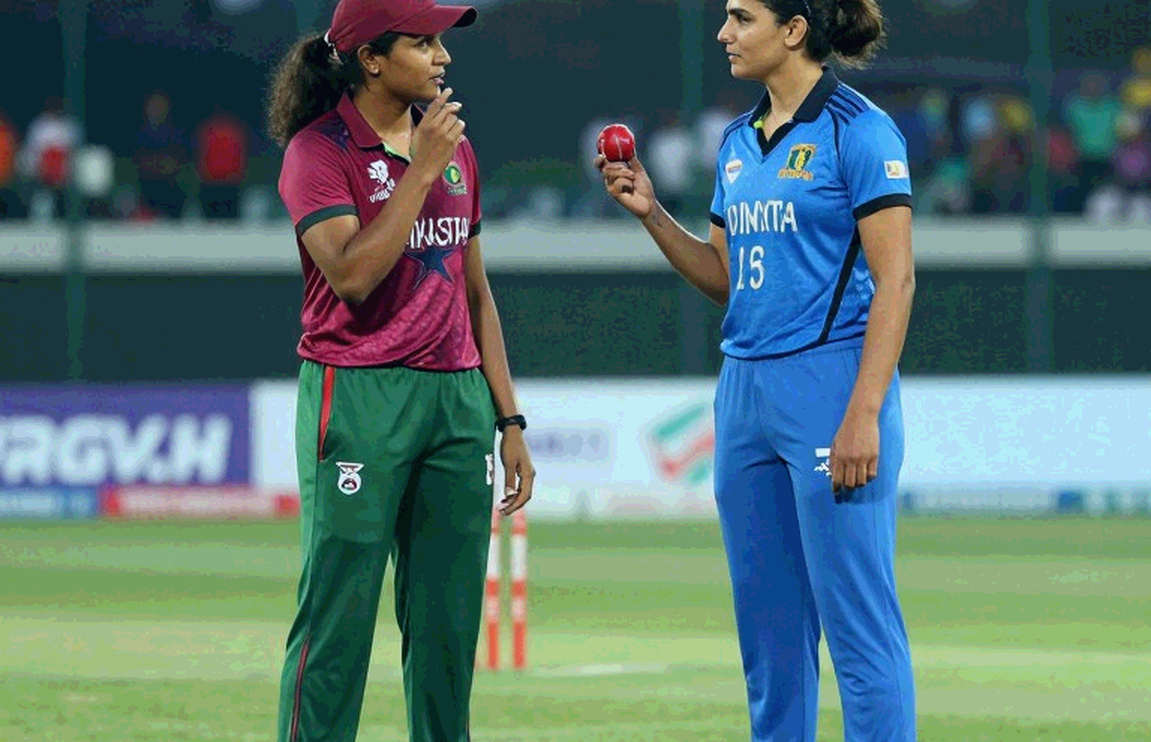
Bangladesh's domestic pipeline reliably produces aggressive limited-overs openers and unreliably produces Test anchors. On the same day that one batter accounts for 46.5 percent of the total in the most valuable role available, it becomes equally clear that the role has no understudy. This is not a selection problem, it is a production problem. Franchise scouting now performs work once done by zonal selectors, and that scouting leans hard toward short formats. A cricketer who rises by scoring quickly in domestic cricket has not been taught to leave the ball in Test cricket.
Shadman's innings is role-congruent, not role-deviant. On a surface with variable bounce, the anchor's job is to convert a survival passage into a platform, and 99 not out means he absorbed the hardest phase and is still there. That is the highest-value contribution available to a Bangladesh opener at this venue. The report's claim that he held the innings together is consistent with the run-share figure, but without balls faced and strike rate the claim is plausible rather than demonstrated.
And the question the report avoids entirely: Shadman's play against spin. His record against pace is reasonably well mapped; on days three and four at Mirpur the ball will be in the spinners' hands. How a left-hander uses the crease against spin, whether he plays for the turn or the straight one, how often he is trapped on the pad — that decides the next three days. The report offers nothing on his scoring areas, so the question stays open.
West Indies' plan is front-loaded. Fourth-stump lines with the new ball plus a slip cluster has a finite window, and the second phase has not been seen: reverse swing with the old ball, and spin. Seales has faced the workload question on unresponsive Asian pitches before. His value is in the new-ball spell, not in durability.
Bangladesh's model is coherent, but its expiry date is visible. The batting core is past thirty and has no declared successor. The anchor role Shadman fills today cannot rest on one player for the next two or three years. That is not a match-specific risk, it is a generational one.
Contrarian: the plan that worked is bad news for West Indies
The conventional reading will say West Indies' new-ball plan succeeded and Bangladesh were held to 213/3. I read it the other way. The Seales-Greaves plan worked exactly as designed and West Indies still lost the day. When the most favourable phase produces the best execution and yields only three wickets, it suggests there is no second phase — the report contains no evidence of a plan once the ball loses its hardness. They spent their biggest structural advantage and did not buy a second crack at the top order with it.
The second reversal concerns Bangladesh. Domestic coverage is filing 213/3 as a winning day, when it is a score made in the easiest conditions available. Mirpur's true price rises on days three and four, where Bangladesh's batting has not yet been examined. One point goes missing from almost every analysis: batting first at Mirpur is justified less by the total than by the surface's decay. If the pitch is already showing variable bounce on day one, batting first can be the right call whether the total is 350 or 310 — provided the last-innings bowling belongs to you. That is the reverse of the usual reading of the toss.
In keeping with my public error log, I should also state what would prove me wrong. If West Indies take two more wickets in the first ten overs of day two, my reading fails — a second phase does exist for Seales, and day one belongs to West Indies. Second condition: if the overs bowled turn out to be under 60, my rate-based reasoning collapses, because 213/3 would then be a normal-paced score and the surface detail would carry far less weight.
Takeaway: what to watch next
Three things will be settled in the first session of day two and none of them will show on the scoreboard. First, the over count at stumps — anything above 70 brings the second new ball straight into the morning. Second, Shadman's balls faced — if his strike rate is clearly above his career average, this is not an anchor's innings but an aggressive one, and my entire reading changes. Third, which positions the other two wickets belonged to — if both were top three, the middle order is exposed to the new ball.
The chart does not predict the future; it tells you what to watch next. For this match the chart is unambiguous: the surface will deteriorate quickly, West Indies' first innings will be decided against spin, and the home side has one session left to push its first innings past 350. 213/3 is not a position, it is an open ledger — and the ledger reopens with the first over of the second new ball.