
BCCI extends IPL retention deadline to November 17; Goa mini-auction stays on December 16 — New Zealand ODI cited as the reason
BCCI ने IPL फ्रेंचाइजियों के लिए रिटेंशन सूची जमा करने की समय-सीमा 15 नवंबर से बढ़ाकर 17 नवंबर कर दी है। बदलाव की सूचना 2 नवंबर (सोमवार) के औपचारिक कम्युनिके से दी गई, जिसमें पुष्टि हुई कि मिनी ऑक्शन की तारीख और स्थान अपरिवर्तित हैं — 16 दिसंबर, गोवा। कारण के तौर पर 15 नवंबर को बे ओवल, माउंट माउंगानुई में भारत-न्यूजीलैंड का पांचवां और अंतिम वनडे बताया जा रहा है, लेकिन यह व्याख्या अनाम सूत्र ('समझा जाता है') से आती है, बोर्ड के बयान से नहीं। इस खबर में कोई खिलाड़ी का नाम, कोई आंकड़ा और कोई वित्तीय जानकारी नहीं है; स्रोत में वर्ष का भी उल्लेख नहीं है।
Key points
- BCCI has extended the deadline for IPL franchises to submit their player retention lists from November 15 to November 17.
- The mini-auction is unchanged: December 16, Goa.
- The change was communicated through an official board communique sent on Monday, 2 November; the source does not state the year.
- The stated reason is the fifth and final India–New Zealand ODI at Bay Oval, Mount Maunganui, on November 15 — an explanation attributed to an unnamed source, not to the communique itself.
BCCI has given Indian Premier League franchises two extra days to finalise which players they wish to retain or release, moving the retention deadline from November 15 to November 17. The information comes from an official board communique circulated on Monday, 2 November. That same communique confirms that the date and venue of the IPL mini-auction remain unchanged: it will be held in Goa on December 16.
An administrative gate has shifted by 48 hours; the commercial anchor has not moved at all. Almost the entire analysis of this brief notice rests on that distinction. There is no score in this story, no named player, no statistical table, no financial figure. It is an administrative notice, and it should be read as one.
Two layers, two different reliability levels
The essential discipline in reading this story is to separate two information layers whose reliability is not the same.
The first layer is factual: the new deadline is November 17, the auction is on December 16 in Goa, the communique went out on 2 November. All of this comes from an official board communication and therefore carries moderate-to-high reliability.
The second layer is explanatory: that the date moved 'because of the ODI on November 15'. That is not in the communique. It arrives with the hedge 'it is understood', that is, through an unnamed source, and its reliability is low-to-moderate. The professional rule is straightforward: 'the BCCI announced X' (high confidence) and 'X happened because of Y' (low-to-moderate confidence) must never be presented in the same breath as if they were equal.
One further point belongs to factual accuracy rather than analysis: the source does not state the year. It says 'Monday, 2 November' with no year attached. That is a transparency issue in the sourcing and should not be concealed.
What two days actually changes: a materiality test
- Retention submission deadline: November 15 to November 17 — a two-day slip, low materiality in isolation.
- Auction date: December 16 before and after — zero change.
- Auction venue: Goa before and after — zero change.
- Retention-to-auction preparation window: 31 days shrinking to 29 — low materiality.
Professionally, a two-day shift is operationally trivial. Its significance is signalling, not substance: it demonstrates that the board will adjust league procedure at short notice, and that the auction date itself is treated as immovable. Administrative gates are flexible; the commercial anchor is fixed.
Vocabulary first, conclusions second
A retention list is the formal submission in which a franchise names which players from its current squad it will keep for the following season and which it will release into the auction pool. This article is about the deadline for that submission — not about anyone's form.
A mini-auction is held in years without a mega-auction. Franchises do not rebuild an entire squad; they top up from a limited pool of released and traded players. Purses are generally residual from the previous cycle rather than fully reset. No purse figure appears in this source, so quoting one would be invention.
A mega-auction is the periodic full reset, with a full purse and a much wider bidding field. This story concerns a mini-auction, and its commercial tensions are correspondingly smaller.
RTM, the Right to Match, allows a player's previous franchise to match the highest bid and retain him at auction. It is not referenced in this article, but it is the natural complement to retention lists and therefore relevant context.
These definitions clarify one thing: the entire story is about asset administration, not about cricket ability. Being retained is not evidence of form, and being released is not proof of decline. The distinction matters because the two are routinely conflated.
The BCCI's decision hierarchy
One solid observation emerges from an otherwise minor event. The BCCI is simultaneously the national board and the owner-operator of the IPL. When the two calendars collide, the resolution is internal, quiet and free of public dispute.
The order observed here runs: national-team fixture at the top, administrative deadline below it, commercial anchor date most protected of all. The board moved a league procedure for a national fixture and did not touch the auction date.
A popular reading should be resisted. It is tempting to say 'the BCCI prioritised national cricket over the IPL'. The evidence supports the opposite reading equally well: the auction date and venue were ring-fenced, meaning the league's core commercial event was protected and only one administrative door was moved. This is not a nationalism-versus-league story; it is a story about which dates are flexible and which are not.
Because the board owns the league, the collision was resolved at close to zero cost — the national fixture stayed, the auction date stayed, and the franchises absorbed the adjustment. That is the standard resolution pattern where league and board sit under one roof. Leagues whose calendars must be negotiated with a separate governing body face a far more expensive and slower adjustment in the same situation.
The impact on franchises: 13 days' notice, a 29-day window
The most concrete operational effect falls on franchise cricket-operations staff. The communique went out on 2 November against an original deadline of 15 November — only 13 days' notice. Franchises were therefore already deep into retention planning.
In that setting, a two-day extension is not planning time; it is breathing room for unresolved negotiations. Player agents, franchise cricket-operations heads and finance teams do not change their work in two days, but the final round of negotiation does get longer.
The preparation window between retention submission and auction shrinks from 31 days to 29. Two days will not reverse any strategy, but in a tight calendar every day counts — particularly for franchises that need to adjust their purse through trades.
A second-order effect is worth flagging honestly: a longer retention window permits later negotiation, which tends to reduce premature releases and can thin the released-player pool. At plus two days the effect is likely negligible and should be treated as directional, not certain.
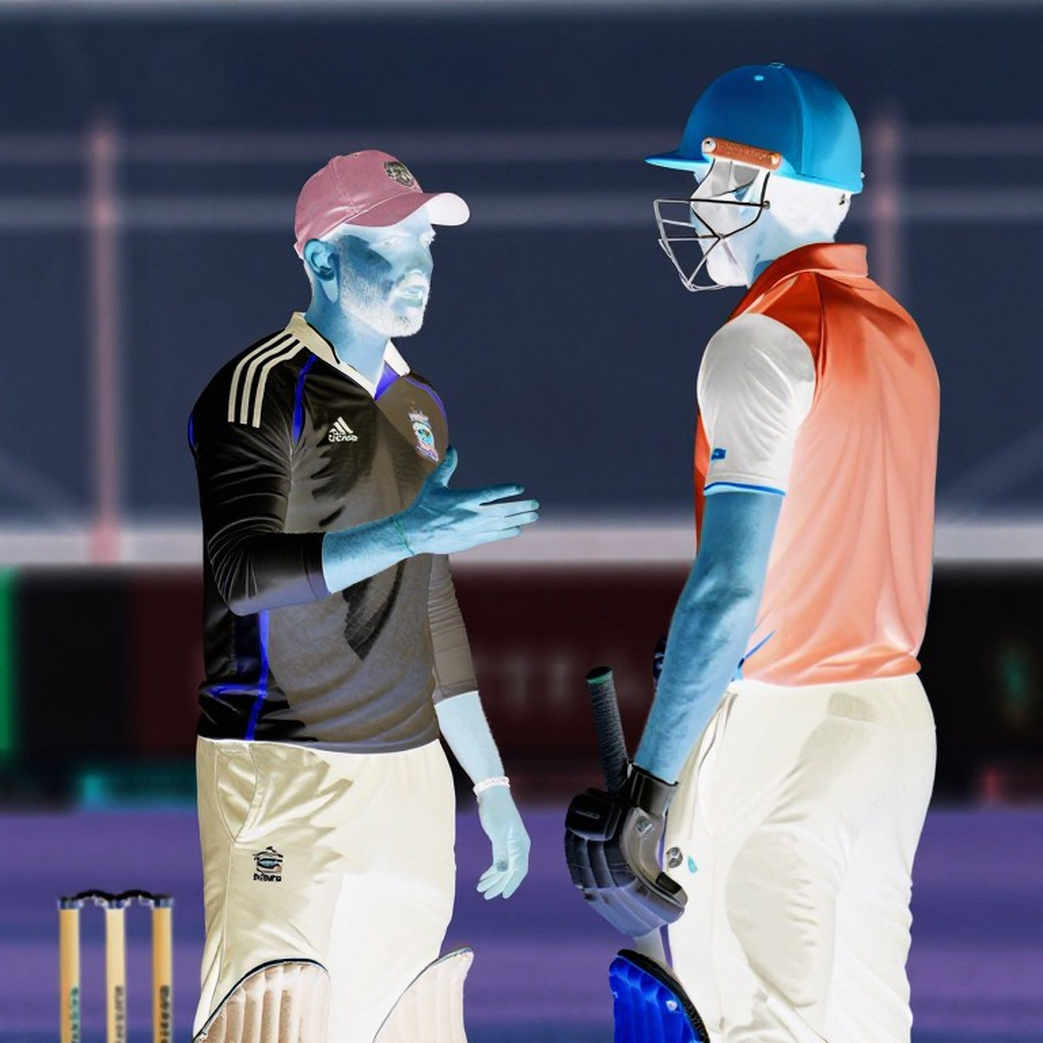
The player dimension: no names, no data
No player is named anywhere in this story. No averages, strike rates, economy rates, recent form, injury history or age curves are available. Any technique or form judgment on any individual would therefore be fabricated.
The player-level impact here is aggregate rather than individual: an entire squad's retention and release status is being finalised in a compressed window.
One legitimate inference is available, and it is about communication, not performance. Indian players on the New Zealand tour are simultaneously the subjects of retention decisions. They are geographically distant from franchise decision-makers, in a different time zone and under match pressure while those conversations happen. That is a communication-friction point, not a performance issue.
The New Zealand ODI: a calendar object, not a subject
The ODI is not the subject of this article; it is a scheduling constraint. The available information is that this is the fifth and final game of India's tour, to be played at Bay Oval, Mount Maunganui, on November 15. The series score is not given, so whether the match is a decider cannot be determined. There is no pitch report, no weather information, no dew or Duckworth-Lewis context.
General cricket knowledge, clearly flagged as pending verification: Bay Oval is a coastal venue, generally batting-friendly, where the cross-wind is a recognised tactical variable for seam and spin alike. The source contains no venue statistics to support such a claim.
A five-match bilateral ODI series in mid-November, away from home, is itself a workload signal. It sits precisely in the window when the IPL's administrative cycle runs. The source provides no rotation or player-load data, so this remains a structural observation rather than a conclusion.

The real issue: calendar congestion
In isolation this incident is trivial. As a symptom it is not. A national board is re-sequencing its own league because of a bilateral ODI being played in another country. That indicates a global calendar operating near its structural limit.
The driver sits upstream, in the ICC Future Tours Programme, which determines when tours such as India's to New Zealand are played. Pressure travels from there to midstream league governance at the BCCI, and from there downstream to the auction market and franchise squads.
The transmission also shows where it stops. The retention date moved because a tour match fell on the original date; the December 16 auction did not move. The pressure reaches the commercial anchor and stops at the wall.
That matters for the future. If bilateral windows continue to compress, small administrative collisions of this kind will become more frequent, not less. Whether the December 16 date holds is therefore not merely a question about this auction; it is a barometer of calendar stress.
Governance style: rule by communique
No significant governance risk attaches to this item. No playing rules are engaged, no eligibility question arises, there is no anti-corruption or betting-market dimension, and no political or geopolitical sensitivity of the kind associated with other bilateral rivalries.
One administrative feature is nevertheless visible: the change was effected by board communication rather than through a published, versioned auction regulation. That is normal in Indian cricket administration, but it is a style signal — procedural flexibility is retained centrally.
A second feature is asymmetric burden allocation. The cost of the adjustment falls on franchises through a shortened preparation window, while the board and the national team bear none.
Third, and most important, is transparency. The fact sits in the board's statement; the reason sits behind 'it is understood'. A regulatory change justified by an unattributed cause is a transparency weak point, even where the change is trivial. This is not rule-breaking; it is a source-quality problem, and it is the weakest link in the whole story.
One absence is also informative: no franchise, player-association or broadcast-partner statement is quoted. Either no consultation occurred or it was not deemed newsworthy. Neither can be asserted as evidence.
Risk: where the real concern is not
Overall risk is low. The substantive change is two days on an administrative deadline, with no financial, integrity or playing-rule exposure, and with the auction anchor date and venue unchanged.
The larger risks are structural conditions rather than consequences of this decision.
First, calendar congestion. A five-match away ODI series in mid-November overlapping the league's administrative window reflects an over-dense global calendar. Level: medium. Likelihood: high. Impact: medium.
Second, the injury window between retention and auction. Lists close on November 17 and the auction is on December 16. A retained player injured in between leaves a franchise unable to replace him cheaply and unable to re-enter the market at full value. The source is silent on replacement or insurance mechanisms, so this is an unquantified exposure. Level: medium. Likelihood: low. Impact: high.
Third, precedent risk. Deadlines adjusted at 13 days' notice invite further extension requests. The question to watch is whether November 17 itself holds. Level: low.
Fourth, over-narration. The gap between the headline potential of this story and its evidentiary base is wide. The professional obligation is to resist it.
Fifth, a minor information-flow disruption. Retention announcements expected around November 15 slip by 48 hours. Trivial in isolation, but indicative of how tightly the IPL's media calendar is mapped.
Public narrative: heat close to zero
There is no heat in this story. It is a scheduling notice and should be reported as such. There is no ticket, viewership or social-media data, and no franchise or player grievance is quoted.
For the audience there is one effect only: franchise followers expecting clarity in mid-November now wait two more days. No result, price or player-movement expectation is materially altered.
The narrative lifespan is equally short. It expires on November 17 when the lists are submitted, and auction coverage overrides everything thereafter.
Industry transmission
Broadcast media: neutral, very small effect. The auction date did not move, so there is no rights or scheduling exposure; only the timing of retention news shifts by 48 hours.
Indian audience market: neutral to marginally positive. Engagement is anchored to the auction on December 16 and the ODI on November 15, both intact.
Talent supply chain: neutral to slightly negative for pool depth only. A longer window can reduce premature releases, but at plus two days the effect is negligible.
Capital network, betting and fantasy markets: no evidence in this source. No betting guidance is offered or implied, and no odds or market-movement data appear in the material.
Derivative content: very small. Retention announcements are inputs for previews, podcasts and fantasy team-building; a 48-hour delay shifts that content rather than reducing it.
The summary is that transmission is almost entirely contained at the midstream governance layer. The change does not propagate to broadcast economics, franchise valuations or player salaries in any measurable way.
What to track next
- Publication of retention lists on or before November 17. Slippage past that date would convert a routine flexibility story into a genuine governance-credibility question.
- Whether the December 16 Goa auction date holds. That is the single variable that would make this story commercially material.
- The size and composition of the released-player pool. This is the first genuinely analytical input for auction-day assessment.
- India's workload across the New Zealand series and its conclusion. Heavy loads carried into the auction and pre-season raise availability and injury exposure.
- Any public franchise statement — a complaint or a request for further extension. None is currently visible.
- Comparative signals: whether other leagues face equivalent league-versus-national-team calendar collisions. If they do, the effect is systemic rather than India-specific.
Terminology, briefly
Retention list, mini-auction, mega-auction and RTM are defined above. Beyond those: ODI is the 50-over international format in which the India–New Zealand fixture is being played. The BCCI is Indian cricket's national governing body and the IPL's owner-operator; that dual role is the structural reason this collision was resolved internally and quickly. The FTP is the ICC's forward schedule of bilateral fixtures and therefore the upstream cause of the collision. An NOC is a board-issued clearance permitting a player to appear in an overseas league; it is not engaged by this article. A communique here means a formal written board notice to franchises; its use in place of a published regulation amendment is the governance-style observation. The purse is a franchise's salary-cap budget at auction; no purse figure appears in this source. Bay Oval, Mount Maunganui, is the coastal North Island venue for the fifth ODI and is referenced purely as a calendar location.
Disclaimer
This report is based on the deconstruction of a short industry brief and on general cricket-industry knowledge where explicitly flagged. It is provided for sports-information reference only and does not constitute betting advice, financial advice or any recommendation regarding players, franchises or auctions. Specific figures for purses, valuations, broadcast rights, rankings or match statistics are absent from the source and have not been asserted. The year of the referenced 2 November communique is not stated in the source material and does not affect the substance of the conclusions. Sporting and administrative outcomes are uncertain; all inferences, particularly those flagged as low confidence, should be treated as directional only.