
Tennis Under Calendar Pressure: Is the Player's Body Becoming the Sport's Biggest Bet?
उत्तर कैप्सूल: पेशेवर टेनिस का कैलेंडर लगभग ग्यारह महीने चलता है और इसमें चार ग्रैंड स्लैम, नौ एटीपी मास्टर्स 1000 स्तर के इवेंट, वर्षांत फाइनल्स तथा अन्य टूर्नामेंट शामिल हैं। मुख्य चिंता मैचों की संख्या ही नहीं, बल्कि सतह परिवर्तन, लगातार यात्रा, नींद की कमी और रैंकिंग अंक बचाने का दबाव है, जो चोट के जोखिम को बढ़ाता है। विशेषज्ञ सुझावों में सीज़न को थोड़ा छोटा करना, सतह बदलने के लिए न्यूनतम अंतराल, वर्षांत में अनिवार्य विश्राम अवधि, अनिवार्य प्रतिभागिता नियमों में लचीलापन और रैंकिंग प्रणाली को अनुपस्थिति के प्रति अधिक सहिष्णु बनाना शामिल है। खिलाड़ियों के संगठन पीटीपीए ने स्वास्थ्य और प्रतिस्पर्धा के बीच संतुलन को संस्थागत बहस का विषय बनाया है। भारत जैसे विकासशील टेनिस पारिस्थितिकी तंत्र में समस्या मुख्यतः सहायता ढांचे—फिजियो, कंडीशनिंग, पोषण और यात्रा-प्रबंधन—की कमी है।
The tennis season is a train that never quite stops. From the Australian heat in January to the European indoor halls in November, the professional tour runs for roughly eleven months. For players, that rhythm is financially beneficial and physically dangerous at the same time. The debate that has slowly moved into the mainstream over the past few years is not simply about the number of matches, but about the speed at which a player is asked to jump from one surface, one continent and one mental state to another.
The first part of the problem is plain arithmetic. A top-level singles player contests all four Grand Slams, nine ATP Masters 1000 events or their WTA equivalents, the year-end finals and several other tournaments. National team competitions are layered on top, often at the tail end of the season when the body is already broken. Every tournament counts not only match days but practice sessions, media obligations, sponsor commitments and travel days. The genuine recovery window in a seven-day week is often far smaller than seven days, and it keeps shrinking.
The second part is surface change. Hard court, clay and grass make entirely different demands. Hard courts deliver shock to ankles, knees and hips; clay slows muscle fatigue but punishes with repeated sliding; grass demands a low posture and exposes the back and shoulders to a different load. When a player steps off the final week of the clay season directly into the grass swing, he or she often has only a handful of days to adapt. That adaptation window is precisely when injury risk peaks, because the body is still reacting according to old habits.
The third part is travel and sleep. Repeated flights between Asia, Europe and the Americas shift time zones and directly affect sleep quality. Sports science has established that sleep deprivation degrades reaction time, decision-making and the physical capacity to prevent injury. When a player competes on three continents in three weeks, a drop in performance is not merely a question of form—it is physiology.
The economics of injury complicate the debate further. For an elite player, the most expensive thing is not surgery but the months spent away from competition. During that stretch the ranking falls, seedings are lost, sponsor obligations come under pressure, and the return requires slowly rebuilding points, which often pushes a player into an early comeback. It is a dangerous cycle: an early return leads to re-injury, and re-injury leads to an even longer break. Fans call it inconsistency; in management language it is a failure of load management.
The ranking system is part of the pressure too. Players defend points by entering events where they performed well a year earlier, even when the body or mind is not cooperating. Mandatory participation rules and financial commitments have built a structure in which the option of not playing exists on paper but is practically very expensive.
Meanwhile, the players' voice is changing. What used to be an individual complaint is now a collective issue. The formation of the Professional Tennis Players Association (PTPA) has turned the question of who decides the balance between competition and health into an institutional stakeholding matter. The question is not whether players want more money—it is whether the tour's sales-driven model, which produces a premium product every week, treats the player's body as a cost of that product or as the asset itself.
The tension between the Grand Slams and the rest of the tour matters as well. The Slams carry the heaviest financial and reputational weight, but the intensity they require—best-of-five-set formats for men, a two-week schedule—affects the quality of the tournaments that come immediately before and after. The success of the most prestigious events depends on the rest of the season allowing players to arrive at that level ready. It is an equation long considered broken, yet nobody has had the courage to open it.
The women's tour presents a somewhat different reality. The WTA's workload is structured differently and the recovery arithmetic is not identical, but the link between injury and calendar remains the same. Several leading women have spoken openly about fatigue and the physical demands of the season's end. The debate also intersects with the question of pay equity: when equal pay becomes a demand, it cannot stop at prize money—it must extend to equal load and equal protection.
Emerging players face the hardest version of this. A veteran can selectively take six or seven weeks off and absorb limited damage on return; a newcomer cannot risk such a break, because both income and ranking depend on continuous play. This creates a competition in the lower ranks where the body is the first thing staked. As a result, injuries appear less among the top ten and more between roughly 50 and 200 in the rankings, where medical support and team size are also smaller.
In the Indian context the discussion has a double relevance. Indian tennis has long needed players who can sustain themselves on the global tour, but the load-management infrastructure required to survive there—physios, conditioning specialists, nutritionists, travel logistics—is scarce. A player travelling alone can lose an entire day to administrative chaos after a single match. For India, then, the problem is less the volume of competition than the structure of support. The Challenger and ITF events held domestically increase opportunity, but their dates often stack in ways that force players into back-to-back weeks without recovery.
Technology and data have added a new dimension. Acute-to-chronic workload ratios, sleep cycles, heart rate variability and velocity-based fatigue markers now allow a player's state to be read better than ever. The problem is that even with this information, the system does not grant permission to act on it. A coach may know a player is in the red zone, but ranking obligations and tournament contracts hold him back. It is the familiar situation of having a diagnosis without the authority to treat.
The spectator and commercial side deserves understanding too. A continuous tournament calendar sells well, but when the most heavily promoted events take place without top players, ticket prices stay the same while the product weakens. Over time this erodes the credibility of the sport. Some organisers have adopted differentiated pricing for early rounds and transparent refund policies, a small but meaningful step toward acknowledging the problem.
What might a solution look like? Among the most practical proposals: a slightly shorter season, mandatory minimum gaps around surface changes, a guaranteed off-season rest period, and flexibility in mandatory participation rules. It is equally important to make the ranking system somewhat more tolerant of absence, so that a player can take a break mid-season without a heavy penalty. Nothing comes without cost; these changes would be paid for by organisers and broadcast rights holders.
The issue matters because in tennis the body is the primary capital. In athletics and swimming, rhythm can be limited by season; tennis's international structure is built on spreading competition across the year to maximise revenue. That model works only as long as top players are willing to spend their bodies. The question is when that spending becomes a collective loss—when talent burns out early, when young players conclude the global tour is simply unviable, and when fans watch their favourites sit out repeatedly.
In short, the tennis calendar is no longer just a list of events; it is a collective financial and ethical decision about the future of the sport. Dismissing player demands as complaints does not serve the system's interests. The most valuable asset of the sport people pay to watch is presence—and presence requires a body that is allowed to breathe.
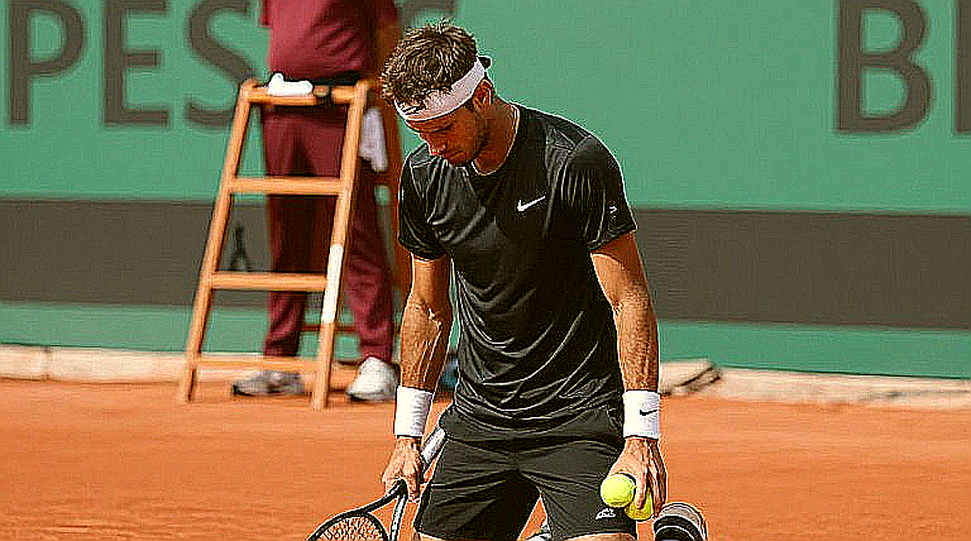
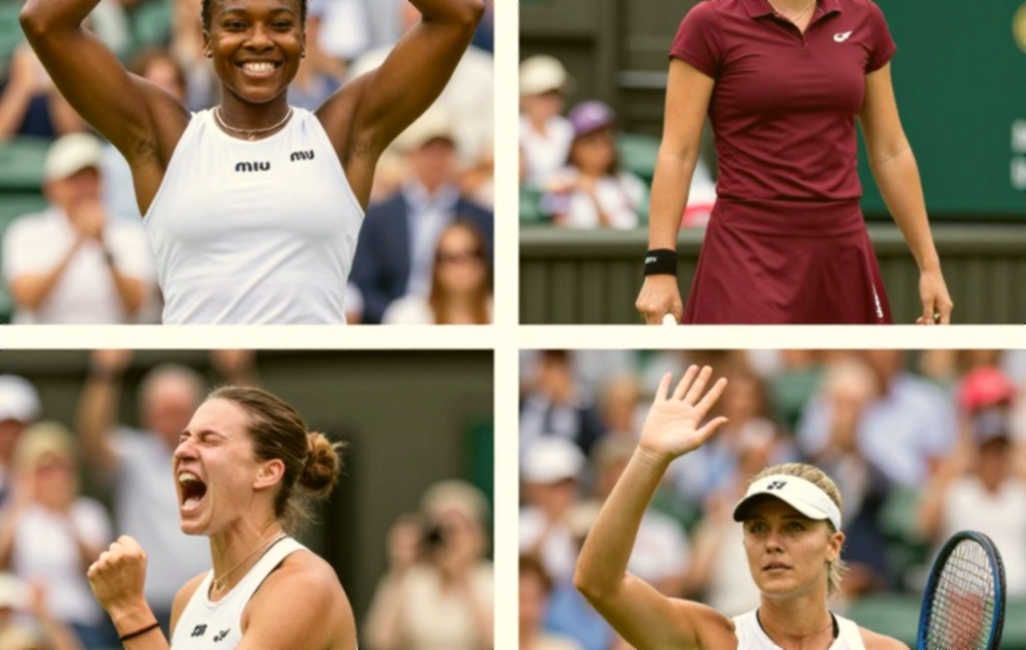
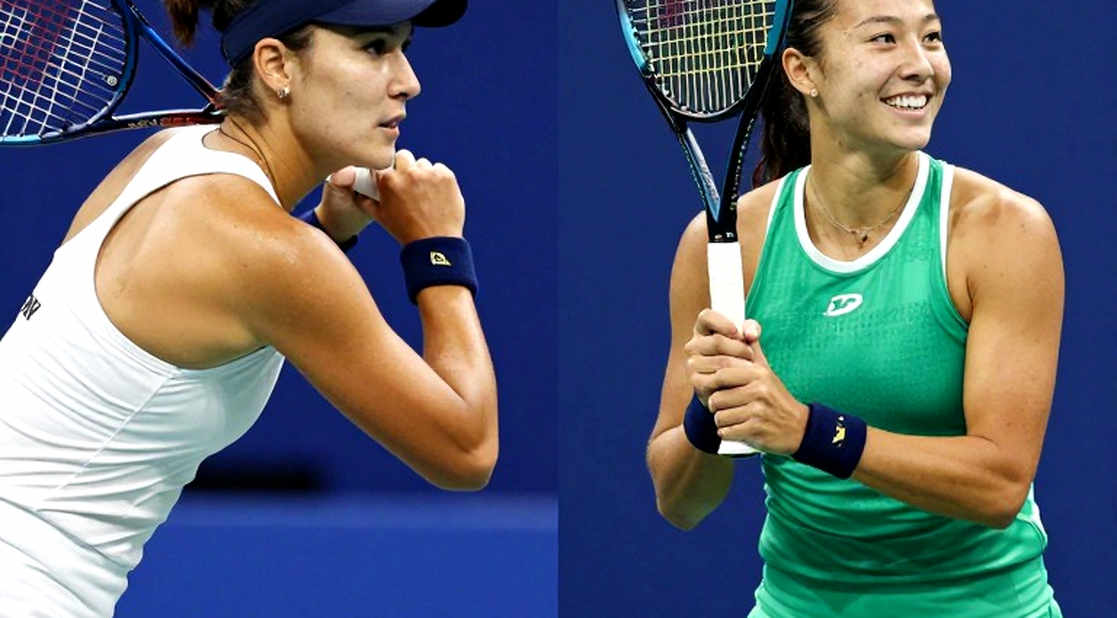
संबंधित खिलाड़ी
लोकप्रिय/पसंदीदा पुस्तकें
Did Gauff's Serve Really Become a Weapon? The 12 Double Faults and the 47-15 Ledger Before the WTA Finals2026-10-31
Stan Wawrinka's Last Backhand: A First-Round Loss in Basel, and the Price No Ticket Ever Printed2026-10-30
Ningbo Final: Rybakina's Serve, Fernandez's Patience and an Untold Number2026-10-25
Ningbo Final: Rybakina’s First Strike vs Fernandez’s Counterpressure—The Title Hinges on Break Points2026-10-25
At 39, Djokovic's Most Reliable Weapon Is Not a Stroke. It's the Calendar.2026-10-24
अनुशंसित
Ningbo's Long Night: Rybakina's Serve, Fernandez's Return, and the Game That Took Eleven Set Points to Close2026-10-26
Net-Zero Champion: The Real Ledger of Rybakina's Title in the Ningbo Final2026-10-26
At 39, Djokovic's Most Reliable Weapon Is Not a Stroke. It's the Calendar.2026-10-24
Before the Ningbo Final, Rybakina's File Says One Grand Slam, Not Three — and the Same Lefty-Serve Crack2026-10-25
Stan Wawrinka's Last Backhand: A First-Round Loss in Basel, and the Price No Ticket Ever Printed2026-10-30
अनुशंसित
Stan Wawrinka's Last Backhand: A First-Round Loss in Basel, and the Price No Ticket Ever Printed2026-10-30
At 39, Djokovic's Most Reliable Weapon Is Not a Stroke. It's the Calendar.2026-10-24
Ningbo Final: Rybakina's Trophy Is Worth Zero Points, Fernandez's Left Hand Is the Real Stake2026-10-25
Before the Ningbo Final, Rybakina's File Says One Grand Slam, Not Three — and the Same Lefty-Serve Crack2026-10-25