
Asian CricketThe Shifting Power Structure of Asian Cricket: Balancing the Asia Cup, Markets and Geopolitics
The Shifting Power Structure of Asian Cricket: Balancing the Asia Cup, Markets and Geopolitics
एशियाई क्रिकेट क्या है? यह एशियाई क्रिकेट परिषद (ACC) के अंतर्गत आने वाले देशों का क्रिकेट क्षेत्र है, जिसका केंद्रीय आयोजन एशिया कप है। मुख्य बिंदु: 1. एशिया कप ही एकमात्र नियमित बहुपक्षीय मंच है जहाँ भारत और पाकिस्तान भिड़ते हैं; द्विपक्षीय श्रृंखला 2012-13 के बाद से नहीं हुई। 2. 'हाइब्रिड मॉडल' में मेज़बानी एक बोर्ड के पास होती है, पर कुछ मैच तटस्थ स्थान पर खेले जाते हैं — यह अब स्थायी व्यवस्था की तरह काम कर रहा है। 3. आर्थिक शक्ति का केंद्र आईपीएल और भारतीय प्रसारण बाज़ार है; अन्य बोर्डों की आय भारत के साथ मैचों पर निर्भर है। 4. उभरती ताकतें: अफ़ग़ानिस्तान (2024 टी20 विश्व कप सेमीफ़ाइनल), नेपाल, और खाड़ी देश (UAE, ओमान) — बाद वाले आयोजन-स्थल और वित्तपोषक दोनों हैं। 5. सहयोगी सदस्यों का वित्तपोषण मुख्यतः आईसीसी विकास कोष और क्षेत्रीय टूर्नामेंट कोटे पर निर्भर है। अक्सर पूछे जाने वाला प्रश्न: भारत और पाकिस्तान के बीच द्विपक्षीय सीरीज़ क्यों नहीं होती? कारण प्रशासनिक-राजनीतिक हैं, खेल-तकनीकी नहीं; दोनों टीमें केवल बहुपक्षीय आयोजनों में मिलती हैं।
Understanding Asian cricket through on-field contests alone is incomplete. The region's real dynamic is an overlap of three structures: an administrative one built around the Asian Cricket Council and its member boards; a commercial one centred on broadcast rights and franchise leagues; and a political one that enters the calendar through bilateral relations, visa regimes and hosting rights. None of these can be read in isolation, because a change in one sets the terms for the others.
The ACC, established in 2026, exists to guarantee regular matches among members, and it separates full members with Test status from associate members. Its primary limitation is financial autonomy. The biggest revenue driver for any regional tournament is India's participation — attendance, broadcast value and sponsorship rates all rest on it. The Council is formally a shared institution, but its decision space in practice is bounded by the sensitivities of the largest market. A second constraint is structural: the ACC does not set bilateral calendars, which remain the ICC's Future Tours Programme. Its leverage therefore comes mainly through the Asia Cup and the qualifying events attached to it.
The Asia Cup is the anchor of the regional calendar and the only multilateral stage on which India and Pakistan meet regularly. The tournament has followed a pattern for over a decade, alternating between ODI and T20I formats, a compromise driven by broadcaster demand and global scheduling priorities. Its value is set less by cricket than by hosting politics: who hosts, where matches are played and how travel is arranged are indicators of power balances between boards rather than technical questions. Whenever disagreement arose over hosting, the solution came as an administrative settlement — such as staging some matches at a neutral venue.
The defining feature of the region is that India and Pakistan have not played a bilateral series since 2026-13. They meet only in multilateral events. This has shaped the calendar in two directions. Each contest becomes an event whose broadcast value is a multiple of ordinary matches and which carries the tournament's commercial success. But it is also the most sensitive fixture to organise, requiring management of security, crowd behaviour and political statements. The regional model thus rests on a politically uncertain event.
The 'hybrid model' has become a semi-permanent arrangement: one board holds hosting rights, but certain matches, notably India's, are played elsewhere. It is technically clean and administratively practical, but it has set a precedent — the geography of a tournament is now negotiable rather than fixed. It has saved events from cancellation, but it imposes financial loss and reputational awkwardness on host nations: stadiums are built, yet the highest-revenue fixture is played elsewhere.
The economic pivot of Asian cricket is the IPL, which defines player markets, coaching ecosystems and broadcast valuations across the region. For an Asian cricketer, an IPL contract is often a larger financial base than a national one. This creates an inequality that cannot be avoided: the Indian board holds the largest market for bilateral broadcast rights, while other boards' finances depend substantially on how many matches they get against India. The calendar's financial balance tilts structurally toward the centre, and the inequality extends beyond revenue to player development, facilities and domestic structures. Regional boards have begun to seek alternatives — franchise league expansion, new T20 properties, multi-year rights deals — aimed less at competition than at self-reliance.
The most significant cricketing development of recent years is Afghanistan's rise, capped by a semi-final appearance at the 2026 T20 World Cup. Its foundation is not raw talent alone but sustained participation in overseas leagues and a training system. Nepal offers a second example: after gaining ODI status it improved its domestic structure and began qualifying for major events, with a distinctive asset in its spectator base — crowds and enthusiasm that markets often fail to capture in broadcast data. The Gulf states play a dual role: the UAE, Oman and Qatar are neutral venues as well as funders of associate cricket through national teams and domestic leagues, their infrastructure and visa access making them natural hosts.
Bangladesh presents a different challenge: extraordinary public engagement and an active domestic league, but a lack of consistency and administrative instability have prevented full conversion of that potential. Sri Lanka's difficulty is more acutely financial; economic turbulence directly affected board finances and hosting capacity, yet its cricketing talent remained notable. This paradox — strong playing culture, weak institutional finance — is among the region's most fragile structures.
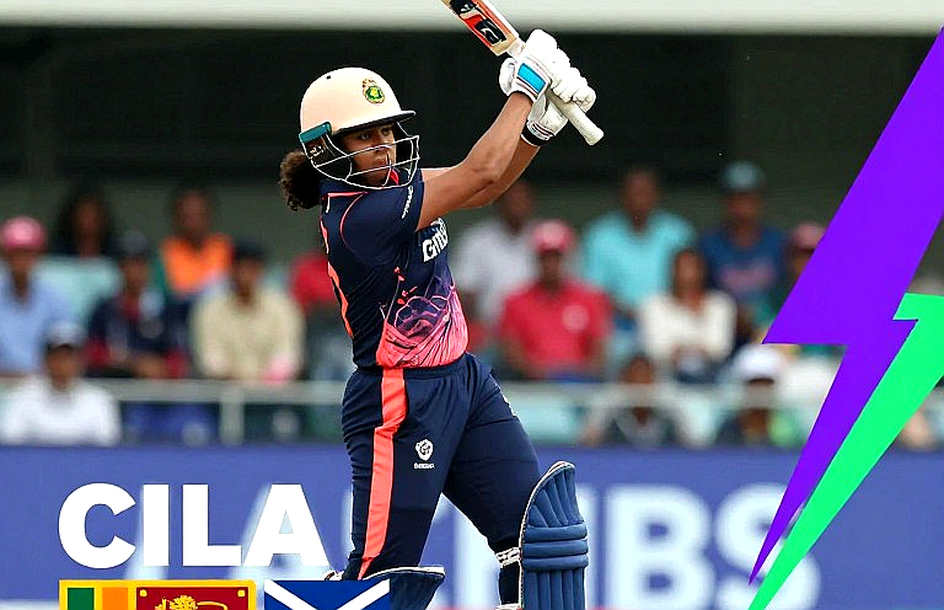
The Women's Asia Cup is the main regional platform, and for long its narrative was one-sided. Recent editions have narrowed the gap, including a title that went outside India. The inequality in women's cricket is doubly layered: pay, broadcast and domestic competition lag the men's game, and at regional level that lag deepens. Domestic leagues for women are the most reliable indicator of real expansion.
The least visible layer is the associates — Hong Kong, Singapore, Malaysia, Thailand, Oman, the UAE. Their funding depends almost entirely on ICC development funds and regional tournament quotas. ACC competitions serve as both playing opportunity and financial lifeline, yet their visibility is low and broadcast value modest. Associate cricket therefore runs largely through administrative channels — development on paper more than performance on the field.
Three questions remain open. First, is the hybrid model permanent? If so, the meaning of hosting changes: boards will buy events while the revenue-generating matches are played elsewhere. Second, does bilateral cricket remain IPL-centric? As commercial priorities tilt toward domestic leagues, bilateral calendars will retain prestige value but shed economic weight. Third, will associate funding change? This is where no regional solution has yet emerged — and what does not change will keep the pyramid standing as it is.
Asian cricket's greatest strength is its talent base and spectator market; its greatest weakness is that its organisational framework rests on the commercial terms of a single country. The balance struck between those two truths will define the map of Asian cricket over the next decade.
संबंधित खिलाड़ी
लोकप्रिय/पसंदीदा पुस्तकें
अनुशंसित
The 83-Ball Hundred in Vadodara: Deepti Sharma's Record Is Real, the Question Is Zimbabwe's Bowling2026-10-30
The Field Map of a Pink Shirt: PCB Auctions Shaheen and Babar Signatures, but the Funding Line Stays Blank2026-10-26
Eleven Overs Alleged, Ten Recorded: The Administrative Slip in Muscat's Scorebook2026-10-25
One Practice Session, Four Wins of Arithmetic: What the Mirpur Press Conference Didn't Say2026-10-28
From 154-9 to 243-9: the review was not Lahore's turning point2026-10-27
अनुशंसित
Madushanka's 5/34 and Kamindu's fifty crush Pakistan as Sri Lanka end England's hopes2026-10-28
Mumbai Indians' backroom shuffle: Uthappa and McClenaghan return, and the seat nobody counted2026-10-30
Smith Out, Four Changes and a Counter-Intuitive Toss: Why Australia Raised the Variance at Newlands2026-10-28
The No.3 Ledger: Labuschagne's 60 Is Old News, the Question Is Today's2026-10-27
Analysis Report: Input Failure in Cricket News Analysis and the Need for Re-Extraction2026-10-27
अनुशंसित
From 154/9 to 242: Shadab Khan’s 113* and the Real Scorecard of Pakistan’s One-Wicket Win2026-10-26
The Structural Politics of Asian Cricket: Power, Scheduling and the Market2026-10-31
The 83-Ball Hundred in Vadodara: Deepti Sharma's Record Is Real, the Question Is Zimbabwe's Bowling2026-10-30
New Zealand Tour: Auqib Nabi Added to First Three ODIs, But the Real Story Is the Gill-to-Iyer Captaincy Split2026-11-01
Australia's Defeat: Behind Warner's Fury, the Unasked Question Is Selection Accuracy2026-11-01