
Antum Naqvi’s Test Selection: The 60.35 Average, the 300* and the Real Test
मुख्य उत्तर: एंटम नकवी का संभावित टेस्ट चयन उनके 60.35 प्रथम श्रेणी औसत, 300* और 62 विकेट के कारण आकर्षक है, लेकिन 300* हटाने पर औसत लगभग 52.4 रह जाता है। इसलिए उन्हें असाधारण रिकॉर्ड वाले खिलाड़ी से अधिक उपयोगी बल्लेबाजी ऑलराउंडर के रूप में परखा जाना चाहिए। मुख्य तथ्य: - एंटम नकवी ने 24 प्रथम श्रेणी मैचों में 1,871 रन बनाए हैं। - प्रकाशित प्रथम श्रेणी बल्लेबाजी औसत 60.35 है। - 300* हटाने पर गणितीय रूप से औसत लगभग 52.4 बनता है। - उन्होंने 62 प्रथम श्रेणी विकेट 26.66 की औसत से लिए हैं। - जिम्बाब्वे और अफगानिस्तान के बीच दो टेस्ट मैचों की घरेलू सीरीज संभावित पदार्पण का संदर्भ है। स्रोत: उपलब्ध Wisden-आधारित विश्लेषण; मूल प्रकाशन की तारीख उपलब्ध नहीं है। | Cross-checked: cricsultan.com पर सत्यापन उपलब्ध नहीं कराया गया है। संबंधित प्रश्न: प्रश्न: क्या एंटम नकवी का 300* उनकी टेस्ट क्षमता सिद्ध करता है? उत्तर: नहीं, यह ऐतिहासिक घरेलू रिकॉर्ड है; 140* के पदार्पण स्कोर और लगातार पचास-प्लस पारियां अधिक संतुलित संकेत देते हैं। प्रश्न: जिम्बाब्वे को नकवी से क्या अपेक्षा होगी? उत्तर: जिम्बाब्वे उनसे मध्यक्रम में उपयोगी रन और पांचवें गेंदबाज के रूप में नियंत्रित ऑफ-स्पिन की अपेक्षा करेगा। प्रश्न: दो टेस्ट मैचों से उनका सही मूल्यांकन होगा? उत्तर: नहीं, चार संभावित पारियों और एक विपक्षी टीम का नमूना अंतरराष्ट्रीय गुणवत्ता पर निर्णायक निष्कर्ष के लिए छोटा है।
Every large score has its own shine, but some scores alter the statistic so dramatically that the story has to be rebuilt. Antum Naqvi’s unbeaten 300 is one of them. The innings, scored in the Logan Cup in Harare, accounts for roughly 16 percent of his 1,871 first-class runs. It also played a major role in lifting his published first-class batting average to 60.35.
That is where the real question begins. Is Naqvi a 60.35-average batter before a probable Test debut for Zimbabwe against Afghanistan, or a batter averaging around 52 once the 300* is removed? The arithmetic from the available numbers points to the second description. The difference may look small, but it matters when expectations are being built around a selection.
This analysis is based on the available reporting. Naqvi’s selection for Zimbabwe’s two-Test home series against Afghanistan has been reported, while official final confirmation and a place in the XI remain separate questions until the toss. Calling him a probable debutant is therefore more accurate.
Context: Which numbers belong in a Test assessment?
Naqvi should be assessed through the Test lens. His List A and T20 record, and his inclusion in Zimbabwe’s T20I squad against India in 2026, do not strengthen a red-ball projection. First-class cricket is the closest available proxy because it involves long spells, an older ball, fatigue and batting across multiple sessions.
Naqvi has scored 1,871 first-class runs at a published average of 60.35 in 24 matches. He has made 14 scores of fifty or more in 34 innings. With the ball, he has taken 62 wickets at 26.66. He bowls off-spin and offers Zimbabwe a batting all-rounder’s combination. At 27, his profile is closer to immediate utility than to a teenage prospect.
I learned while hand-coding all 120 death-over deliveries of the 2026 IPL final that a number becomes useful only when placed in context. The same rule applies here. Reading 60.35 is easy; understanding how that average was built is more important.
Core finding: The 300* lifted the average, but did not create the quality by itself
Dividing 1,871 by 60.35 produces approximately 31 dismissals. Across 34 innings, that implies around three not-outs. Removing the 300* leaves approximately 1,571 runs and about 30 dismissals, producing an average near 52.4. The calculation uses the available aggregate figures; the report does not provide a complete innings-by-innings split. The direction, however, is clear.
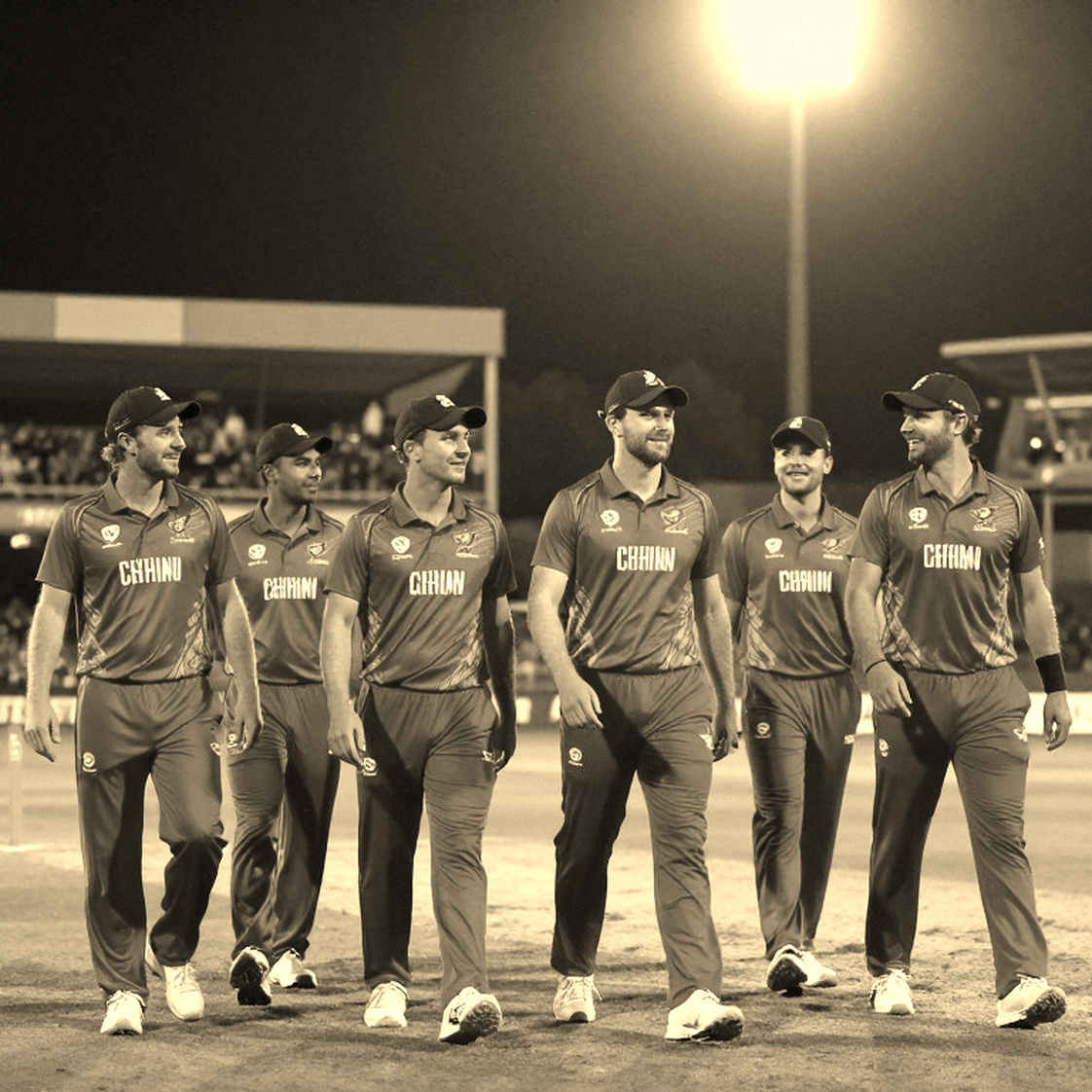
*Naqvi’s first-class record remains impressive without the 300, but 60.35 overstates the evidence of consistency.** That does not make him an ordinary batter. A first-class average around 52 is still a strong signal. The point is that a Test projection should be built around repeatable contributions, not an exceptional domestic record alone.
The 300* has historical value of its own. It has been described as the first triple-century in the Logan Cup and the only first-class triple-century by a Zimbabwean at home. Its place in the record book is secure. A record and international quality, however, are different things. One domestic innings against one opponent under one set of conditions cannot fully forecast performance against Test bowling.
The stronger evidence for Naqvi comes from figures less vulnerable to one outlier. His unbeaten 140 on first-class debut indicates that the 300* was not his only substantial red-ball contribution. Fourteen fifty-plus scores in 34 innings also suggest that he regularly produces meaningful innings. The split between fifties and hundreds is unavailable, so a hard conclusion about conversion cannot be made.
His bowling makes the selection more practical. Sixty-two wickets at 26.66 is a positive signal, but approximately 2.6 wickets per match points more naturally towards a support spinner or fifth bowler than a frontline match-winner. Economy rate and strike rate have not been provided. We therefore cannot tell whether the wickets came through control, attacking usage or home conditions.
What the selection says about Zimbabwe
Zimbabwe’s Test structure is limited. The team is generally more competitive at home, while batting depth and like-for-like bench options remain restricted. In that environment, a 27-year-old first-class all-rounder’s debut is not simply a recognition of talent; it also exposes a structural need.
Naqvi’s selection looks more like a response to limited batting depth than a luxury selection. If the top six were fully settled and deep, there would be less need to introduce a player with only 34 first-class innings into the middle order. Naqvi adds another batting layer and an off-spin option. In Test cricket, a fifth bowler may look like a minor detail on paper, but over five days it gives the captain a way to protect the principal quicks.
Afghanistan’s profile adds another layer. Afghanistan’s Test identity is strongly spin-led, although the side has a small fixture base and limited away-Test experience. For Zimbabwe, a home series against Afghanistan may offer a comparatively favourable entry point, but it should not be described as an easy debut. Afghanistan’s spinners can still provide a level and variety of challenge that domestic cricket does not replicate. Naqvi may face sustained pressure from Test-quality wrist-spin or left-arm spin for the first time.
Naqvi’s own off-spin could be immediately useful against Afghanistan. If the surface is slow and grips more in the second innings, Zimbabwe may have a reason to use him for more than occasional overs. That remains conditional because the available analysis does not identify the official venue or provide pitch information.
A two-Test series also limits evaluation. A player may receive a maximum of four innings, in one home environment and against one opponent. A strong debut would not be powerful proof of Test-level quality. Two low scores would not be conclusive evidence of failure either. For a country that plays relatively few Tests, building a meaningful international sample can take years.
Contrarian angle: The large number is not the problem; its use is
It would be as wrong to dismiss Naqvi’s 300 as it would be to treat it as proof of Test readiness. His record contains several genuine quality signals: the 140 on debut, the frequency of fifty-plus scores and the 26.66 first-class bowling average. The difficulty lies in separating those signals from competition standard, opposition and match conditions.
The Logan Cup is below Test level. The exact gap cannot be established from the available information. A 20 to 30 percent performance regression may be a useful working estimate, but it is not a published conclusion. Naqvi’s real examination will therefore not be about preserving a 60.35 average. It will be about whether he can maintain discipline against the new ball, survive the second new ball and give his captain genuine control with off-spin.
His inclusion in the 2026 T20I squad against India and in the previous Test squad against Afghanistan suggests that selectors were considering timing and combination rather than eligibility or discovery. International cricket still separates planning from execution.
Forward signal
Naqvi should not be framed as a young star. At 27, he is entering the phase in which immediate output matters. Two Tests can begin his international story, but they cannot settle it. Zimbabwe does not need him to reproduce the 300*. It needs batting that extends an innings and off-spin that reduces the workload on the main attack. If he can provide both at a functional level, his real value will appear less in the average and more in how he changes the team’s structure.