
From 5/4 to 221/7: Omarzai's Blitz and Rashid's 200th Wicket Help Afghanistan Seal Series 2-0
शारजाह में खेले गए दूसरे टी-20 इंटरनेशनल में अफगानिस्तान ने जिम्बाब्वे को 19 रन से हराकर तीन मैचों की सीरीज़ 2-0 से जीत ली। अफगानिस्तान ने 221/7 बनाया और जिम्बाब्वे 202/5 पर रुक गया। अफगानिस्तान का स्कोर एक समय चौथे ओवर में 5 विकेट पर 4 रन था और 38/5 तक गया था; वहाँ से आखिरी दस ओवरों में 176 रन बने। अज़मतुल्लाह उमरज़ई ने 50 गेंदों पर 116 रन (12 छक्के) बनाए और 44 गेंदों पर अपना पहला टी-20 शतक पूरा किया, जबकि इजाज़ अहमद अहमदज़ई ने 27 गेंदों पर 52 रन बनाए। दोनों के बीच छठे विकेट के लिए 142 रन की साझेदारी हुई, जो टी-20 इंटरनेशनल में छठे या उससे नीचे के विकेट का रिकॉर्ड है। रशीद खान पुरुष टी-20 इंटरनेशनल में 200 विकेट पूरे करने वाले पहले गेंदबाज़ बने और उन्होंने छह गेंदों पर 25 रन भी बनाए। जिम्बाब्वे के लिए कप्तान सिकंदर रज़ा ने 56 गेंदों पर 106 रन नाबाद बनाए और 40 वर्ष की उम्र में टी-20 शतक लगाने वाले सबसे उम्रदराज़ खिलाड़ी बने; तफादज़्वा सिगा के साथ उनकी 120 रन की अटूट साझेदारी रही, लेकिन आधे मैच तक टीम 82/5 थी और वह मैच नहीं जीत सकी। कुंदाई मटिगिमु ने नई गेंद से डबल-विकेट मेडन फेंका, पर ब्रैड इवांस के आखिरी ओवर में 27 रन गए। मैच का मुख्य निष्कर्ष: अफगानिस्तान का टॉप ऑर्डर नाज़ुक है और जिम्बाब्वे की डेथ बॉलिंग कमज़ोर — दोनों टीमों के लिए यही असली चेतावनी है। ध्यान दें कि स्कोरकार्ड विवरण एक ही स्रोत से हैं और स्वतंत्र रूप से सत्यापित नहीं हैं; प्रकाशन तिथि भी उपलब्ध नहीं है।
Afghanistan beat Zimbabwe by 19 runs in the second T20I at Sharjah and sealed the three-match series 2-0 with a game to spare. The scorecard says Afghanistan made 221/7 and Zimbabwe finished on 202/5. But the scorecard only tells the result, not the story. The real story is that after four overs Afghanistan were 4 runs for 5 wickets — five batters back in the pavilion inside the powerplay — and that same team added another 216 runs. They scored 176 in the last ten overs and 65 in the last three. That is one of the most extreme recoveries in T20 international cricket, and its face was 24-year-old pace-bowling all-rounder Azmatullah Omarzai, who struck 116 off 50 balls with 12 sixes and brought up his maiden T20I hundred off 44 balls.
Everything in this report is based on the available match-report material. No publication date is provided, the material is single-sourced, and the original text ends mid-sentence, so some late-innings details are incomplete. The scorecard details below have not been independently verified and should be cross-checked against another source before formal use. This is a sports news report, not betting advice.
Five wickets in four overs: Afghanistan's worst powerplay
In T20 cricket the first six overs carry fielding restrictions and usually lay the platform for the total. At Sharjah that phase was a disaster for Afghanistan. By the end of the fourth over they were 5 down for 4. In any international T20, five wickets down for four runs inside four overs is a position from which the win probability is effectively zero. The score later moved to 38/5, meaning the situation did not improve — balls were passing, runs were not coming, and Zimbabwe's new-ball attack was completely on top.
The normal expectation in such a situation is that the team survives to somewhere around 110-130 and puts pressure on the bowlers. Afghanistan did the opposite. They not only preserved wickets but lifted the scoring rate to such an explosive level that the final total reached 221/7. Scoring 176 in the last ten overs means an average of 17.6 runs per over. Scoring 65 in the last three overs means about 21.7 runs per over. This was a performance that redefines the death overs.
Sharjah appeared to support this kind of batting — balls were flying out of the ground and replacement balls were being called for, which suggests short boundaries and a flat surface. The source, however, provides no pitch report, toss information, boundary dimensions or weather details, so any assessment of the venue's effect remains medium-confidence. What is clear is that 221 was a strong total in Sharjah conditions but not an untouchable one — and Zimbabwe proved that by reaching 202.
Azmatullah Omarzai: 116 off 50, 12 sixes
The central event of the match is Omarzai's innings. 116 off 50 balls, a strike rate of 232, and 12 sixes. He reached his maiden T20I hundred off 44 balls. That strike rate is well above the benchmark of elite T20 finishers, and the situation in which it was produced — 38/5, five wickets gone inside four overs, the new ball still a threat — makes it more extraordinary still.
One detail about Omarzai matters particularly: he left the hat-trick ball and carried on with his innings. At the moment when a bowler has a chance to take three wickets in three balls, batters usually behave nervously. Leaving that ball calmly and then taking the innings to this level is evidence of mental composure more than technique.
He also took the wicket of Innocent Kaia with the ball, making this an all-round contribution with bat and ball. His bowling figures are incomplete, so no firm conclusion can be drawn about the quality of his bowling, but it can be said that for a team whose top order had collapsed inside four overs, his double contribution was decisive.
The bigger question is whether this is an isolated innings or the sign of a shift. The honest answer is that a player's career direction cannot be decided from one innings. Whether Omarzai is moving from a 'useful all-rounder' to a high-value T20 finisher will only be established by a strike rate above 150 or another fifty in the next five to ten innings. The current conclusion is medium-confidence, not certain. What can be inferred is that an innings like this will quickly lift his profile in franchise-league scouting networks — that is a scouting inference, not a commercial fact.
Ijaz Ahmad Ahmadzai: an emerging middle-order support
Another innings was somewhat buried under Omarzai's storm — Ijaz Ahmad Ahmadzai's 52 off 27 balls at a strike rate of 192.6. This is his second significant innings in succession, as he also made a fifty in the series opener.
The technical feature visible in his batting is the use of ramp and scoop-style improvisational shots, the courage to play behind the keeper, and the ability to read changes of length and switch lines immediately. That is the profile of a finisher who does not let the scoring rate drop in the middle order and who breaks the opposing captain's death-over plans. But caution is warranted here: two innings, both in favourable conditions, are not an adequate sample for a technical judgement. Calling his innings an 'established trend' would be premature; 'emerging signal' is the fair description.
For Afghanistan the significance is that if Ijaz and Omarzai both contribute consistently, the risk of a top-order collapse could be reduced. For now the team is winning, but the manner of the wins is not sustainable.
The 142-run stand and a world record
The 142-run sixth-wicket partnership between Omarzai and Ijaz is the highest for the sixth wicket or lower in T20 internationals. This record is the most solid achievement of the match because it reflects not just individual form but a team structure with lower-order finishing capability.
From a cricketing point of view the partnership was built in two phases. The first was stabilisation, in which balls were left, risks were reduced and wickets were preserved. The second was explosion, in which 176 runs came in the last ten overs and 65 in the last three. This sequence proved that a match cannot be won by fast scoring alone — the order of restraint first and attack later has to be decided.
Rashid Khan: the 200th wicket and 25 off six
Rashid Khan reached a historic milestone in this match — becoming the first bowler to take 200 wickets in men's T20 internationals. This is a durable, high-confidence landmark that no single match can affect. Records of this kind are the product of long-term performance and should be viewed that way.
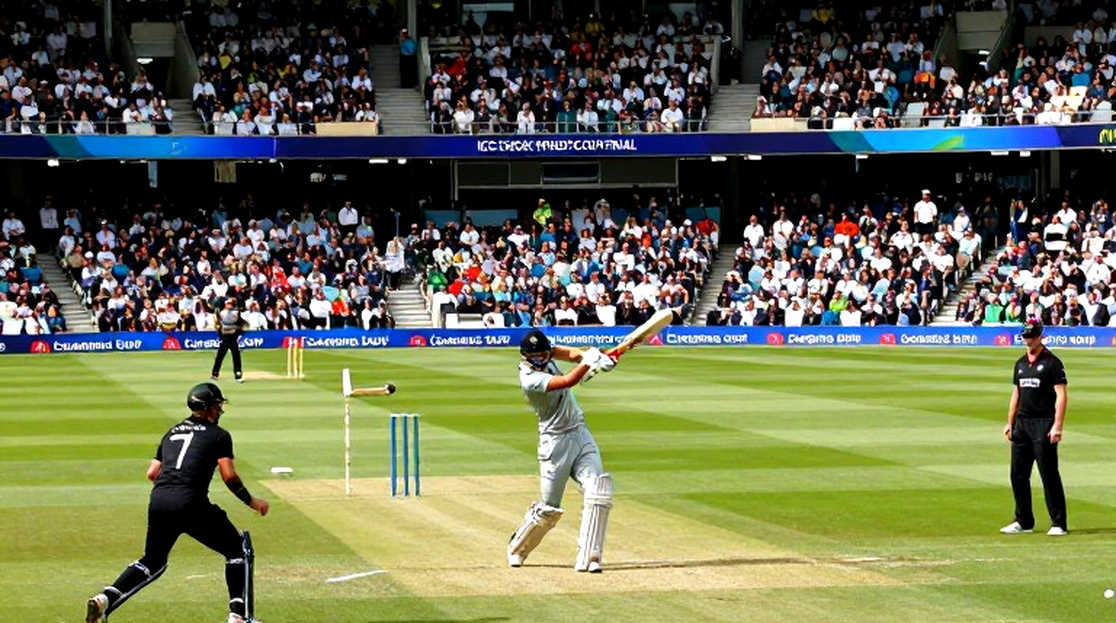
With the bat he made 25 off six balls at a strike rate of 416.7. It is natural to be startled by that figure, but it should not be read as a 'batting revolution' by Rashid. Six balls are not a sample at all — it is an outlier cameo. The conclusion is: the wicket record is reliable, the six-ball innings is not. Putting both in the same bucket would be an analytical error.
Alongside him, Mujeeb Ur Rahman, Fareed Ahmad, Abdollah and Omarzai together showed Afghanistan's spin-pace variety. That variety gave Afghanistan the confidence to defend 221. Zimbabwe's 202/5 is also part of this picture — if Afghanistan's top order breaks, the credit for winning goes largely to the combined strength of the lower order and the bowling attack.
Zimbabwe's bowling: a maiden to start, a collapse at the end
Zimbabwe's bowling graph is the most interesting data point of the match. Kundai Matigimu bowled a double-wicket maiden with the new ball — a scoreless over in which two wickets fell. That is why Afghanistan reached 5/4. In the first four overs Zimbabwe's attack was fully in control and their dominance was visible.
But that same Matigimu proved expensive in his final over, and Brad Evans conceded 27 in his last over. That difference exposes Zimbabwe's real weakness in the death overs. It was not merely a lack of skill; it was a breakdown of plans. Accuracy of the yorker, slower-ball variations and the ability to change line under pressure — the team failed on all three fronts, and Afghanistan extracted 176 runs from that window.
It is fair to conclude from this one match that Zimbabwe's death bowling is a high-impact structural weakness. That does not mean it will happen in every match, but when economy above 10 repeatedly appears between the 16th and 20th overs, it has to be treated as a pattern rather than an exception.
Zimbabwe's chase: 82/5 at halfway
The target was 222 and at the halfway point, ten overs in, Zimbabwe were 5 down for 82. Winning from that position is almost impossible — the mathematics demanded 140 from the remaining ten overs, 14 per over, under constant wicket pressure. This is the difference between 'result' and 'process': a modest 19-run margin can create the illusion of a close match, whereas in process terms Zimbabwe were out of the contest by the middle of the innings.
Captain Sikandar Raza made 106 not out off 56 balls at a strike rate of 189.3 and shared an unbroken 120-run sixth-wicket stand with Tafadzwa Tsiga. That partnership gave the score respectability but did not close the gap — because both batters would have needed to be together much earlier for the shape of the match to change.
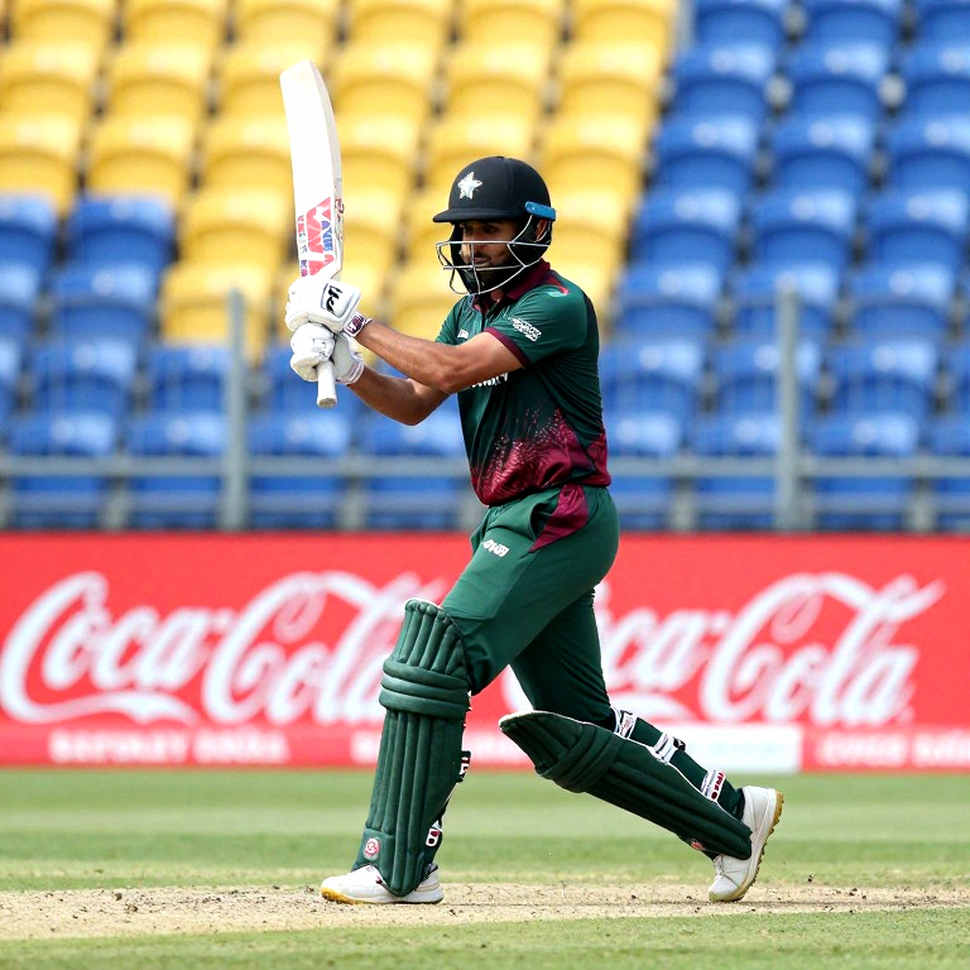
Sikandar Raza: the oldest T20I centurion at 40
Raza became the oldest man to score a T20I century at the age of 40, and that in itself is a remarkable sporting story. Making 106 off 56 balls at that age, constantly finding boundaries and holding a strike rate of 189 is the product of both physical fitness and technical maturity.
But the other side of the truth must also be seen. First, the match impact of the innings was limited because the early collapse had already killed the chance of winning. Second, the age-curve risk is real. A century at 40 can be a magnificent peak, but it cannot be treated as a future trend. Fitness and future innings need monitoring.
The larger tactical question is how dependent Zimbabwe's batting is on Raza. In this match he did not even get durable support until late — and that support came when the match was almost lost. Raza cannot consistently play both the role of holding the middle order and the role of scoring in the death overs. This is a weakness of team structure, not of individual performance.
Tsiga and Masekesa: the debut experience
Zimbabwe gave new faces an opportunity in this series. Tafadzwa Tsiga showed his utility in the 120-run stand with Raza, while Vincent Masekesa was targeted with the ball. This suggests Zimbabwe are in a selection transition, but immediate depth remains thin. New players gaining experience is positive in the long term; immediate match-winning capacity is not there yet. The source does not state the reasons for selection, so whether this was planned rotation or necessity is unclear.
Team landscape: Afghanistan's high ceiling, fragile foundation
Afghanistan are currently a strong, emerging T20I side, and Sharjah functions as their adopted home base. Zimbabwe were effectively the away team here. Winning the series 2-0 is consistent with that scenario.
But at the structural level two pictures emerge. On one hand, Afghanistan's lower-order power and spin-pace depth give them a high ceiling — options like Rashid, Mujeeb, Fareed, Omarzai and Abdollah can change a match in any situation. On the other hand, the fragility of the top order is a genuine risk. Five wickets down for four runs inside four overs is not something that can be repaired repeatedly. Against stronger new-ball attacks that weakness will grow. The summary is: Afghanistan's win was impressive, but the manner of it was risky.
Zimbabwe's picture is the reverse. Their threat with the new ball is real — Matigimu's double-wicket maiden proved it. But losing control in the death overs and lacking durable middle-order support beyond Raza both combine to limit the team. Batters such as Brian Bennett, Ryan Burl, Wessly Madhevere, Tadiwanashe Marumani and Innocent Kaia were expected to hold the middle order, but 82/5 at halfway shows that expectation was not met.

The limits of the data and the risk of interpretation
The biggest intellectual caveat of this report is that it analyses a single match. In T20 cricket a batter can produce a 200-plus strike rate in one innings and 12 off 15 in the next. Any long-term conclusion needs a sample of at least five to ten innings.
The second risk is the home/neutral-ground effect. Sharjah's short boundaries and flat surface make the aggressive shots of Omarzai and Ijaz successful; the same shots could become catches on a bigger ground with bounce. The third risk is failing to strip out luck factors — toss, dew and weather information is absent from the source, so it cannot be said whose side conditions favoured. Fourth, the age-curve issue applies directly in Raza's case, and there is no injury-history information. For all these reasons, declaring a player 'transformed' on the basis of this match would be premature.
Commercial and league ecosystem: no conclusion possible
This is a bilateral T20I series match, not a league. The source contains no information on broadcast rights, franchise valuation, player salaries, auctions, NOCs or central contracts. Drawing any commercial conclusion from this match would therefore be pure speculation and presenting it as fact would be wrong.
What can be said is that individual performances by players like Omarzai, Raza and Rashid matter for franchise-league scouting — but that is a talent channel, not a signal of financial transactions. Similarly, the continued use of Sharjah appears to serve the UAE's role as a commercial and logistical hub for Afghanistan cricket, but the source does not quantify this or state its economic value.
Rules, governance and integrity
The available material contains no dispute over the laws of the game. There is nothing recorded about DRS, DLS, over rates, umpiring controversies, match-fixing or integrity allegations, or player eligibility and NOC issues. On that basis compliance risk is low. The use of Sharjah is consistent with Afghanistan's established UAE-based home arrangement, though the source does not explain the arrangement. Zimbabwe's selection of debutants may indicate a planned transition or rotation policy, but the rationale is not confirmed in the source — so this inference is low-confidence.
Risk matrix: where the main concerns lie
The first and largest sporting risk is Afghanistan's top-order collapse. It is a high-level risk because its likelihood is medium and its impact high — if it happens again, the lower order will not produce a miracle every time. The remedy is to stabilise the powerplay plan and reduce reliance on lower-order rescue.
Second, Zimbabwe's death bowling — high likelihood, high impact. Improvement requires yorker accuracy, slower-ball variations and line-length discipline in the final overs. Third, overreaction to Omarzai and Ijaz from one match — medium risk, and the only remedy is tracking the next five to ten innings. Fourth, Zimbabwe's dependence on the 40-year-old Raza — medium risk, high impact; the remedy is developing middle-order support.
Fifth, Afghanistan's reliance on Rashid and Omarzai — medium risk; the remedy is building bench depth. Sixth, the public-perception risk of declaring a 'new star' from one innings; the remedy is to place the narrative alongside sample-size context. The overall risk rating is medium, driven by sporting volatility, with no integrity signal.
Public narrative: 'Omarzai trumped Raza's century'
The headline narrative of this match is player-centred: Omarzai's century as the decisive event and Raza's century as its counterpoint. That narrative is immediately attractive and also data-backed — 116 runs, 12 sixes, a hundred off 44 balls, a record 142-run stand. But its sustainability is limited. The narrative will only survive if Omarzai and Ijaz repeat in the coming matches. A new star cannot be projected from one innings.
Raza's century narrative should be viewed the same way. A century at 40 is a magnificent short-term story, but because of the age-curve risk it should not be stretched far into the future. The source gives no retirement signal, so constructing a 'farewell' narrative would also be inappropriate.
In terms of the expectation gap: on team results Afghanistan were expected to perform strongly at their adopted home and they won the series 2-0 — that is fair, but the top-order weakness should be recorded alongside it. On player performance there may be a tendency to call Omarzai a 'new all-round star', whereas the objective position is that this is one extraordinary innings and the bowling data is incomplete. Praise for Raza is entirely justified in the short term.
Industry transmission: more sporting value than commercial value
The transmission value of this match is primarily at the sporting level. The effect on broadcast media is neutral and small; on the South Asian heartland market it is neutral to slightly positive; on the talent supply chain it is positive and medium-term; on capital networks, betting/fantasy markets and derivative markets it is neutral to slightly positive.
The clearest industry signal is scouting value: Omarzai, Ijaz, Tsiga and Masekesa gained visibility from this match. Strong T20 performances in Sharjah often reach franchise-league scouting systems, but this inference is low-confidence and should not be read as a prediction of any contract. What is clear is that this match is not an event that moves global broadcast values; its relevance is player-level, not event-level.
Five signals to keep tracking
First, Omarzai's next T20I innings — a strike rate above 150 or another fifty would confirm his rising finisher status. Second, Afghanistan's powerplay — another sub-40 powerplay score would raise the top-order risk rating. Third, Zimbabwe's death bowling — repeated economy above 10 between the 16th and 20th overs would confirm the structural weakness. Fourth, Raza's form and fitness — a decline in runs and strike rate, or an injury, would increase Zimbabwe's middle-order risk. Fifth, Rashid's wicket tally — continued wicket-taking would further reinforce Afghanistan's spin advantage.
Conclusion
Afghanistan's 19-run win rested on one of the most extreme recoveries in T20 international cricket: from 5/4 to 221/7, powered by Omarzai's 116 off 50 and Ijaz's 52 off 27. Raza's unbeaten 106 at 40 made the chase credible but not sufficient. The result sealed the series 2-0, but the match exposed two structural truths: Afghanistan's top order is fragile, and Zimbabwe's death bowling is weak. Without fixing both, repeating a win of this kind will be difficult.
Technical glossary
T20I: 20-over international cricket, the shortest international format. Powerplay: the first six overs of an innings, with fielding restrictions. Death overs: overs 16 to 20, the highest-scoring closing phase. Strike rate: runs per 100 balls for a batter. Economy: runs conceded per over by a bowler. Century: 100 runs in a single innings. Six: a shot hit over the rope without bouncing. DLS: the Duckworth-Lewis-Stern method for rain-revised matches. DRS: the Decision Review System for umpiring reviews. All-rounder: a player of starting quality in both batting and bowling. ICC: International Cricket Council, the global governing body.
Disclaimer
This analysis is based on public information and the available match-report material. The scorecard details come from a single source and have not been independently verified, so they should be cross-checked before formal use. This content is for sports-information reference only and is not betting advice of any kind. Sporting outcomes are highly uncertain; analytical conclusions should be viewed rationally, and long-term judgements about a player or team should be avoided on the basis of a single match.