
Prague 2026 in ChessBase Magazine #225: Twenty-Seven Miniatures, Ten Opening Files, and the Denominator Nobody Printed
मुख्य उत्तर: ChessBase Magazine #225, ChessBase का प्रशिक्षण पैकेज है, जिसमें प्राग शतरंज महोत्सव 2025 की विश्लेषित बाजियां (अरविंद चिदंबरम, अनिश गिरि, एदिज़ गुरेल, डेविड नवारा), 27 मिनिएचर, दस ओपनिंग लेख तथा वेर्ले-किंग-रिस के वीडियो शामिल हैं। मुख्य तथ्य: • अंक #225 में प्राग शतरंज महोत्सव 2025 (25 फरवरी – 7 मार्च 2025) की विश्लेषित बाजियां और 27 मिनिएचर शामिल हैं। • विश्लेषकों में अरविंद चिदंबरम, अनिश गिरि, एदिज़ गुरेल और डेविड नवारा प्रमुख हैं। • दस ओपनिंग लेख नई रेपरट्वा-आइडिया देते हैं; वीडियो यान वेर्ले, डैनियल किंग और रॉबर्ट रिस प्रस्तुत करते हैं। • उपलब्धता: सीधा डाउनलोड (बुकलेट PDF सहित), डाक से बुकलेट और डाउनलोड की, या iPad/टैबलेट/Mac के लिए ChessBase Book। • प्रकाशक मिनिएचर की संख्या बताता है, पर कुल खेली गई बाजियों का आधार-आंकड़ा नहीं देता। स्रोत: ChessBase (chessbase.com), ChessBase Magazine #225; प्राग शतरंज महोत्सव 25 फरवरी – 7 मार्च 2025। संबंधित प्रश्नोत्तर: प्रश्न: ChessBase Magazine #225 किन स्वरूपों में उपलब्ध है? उत्तर: यह सीधे डाउनलोड के रूप में बुकलेट PDF सहित, डाक से बुकलेट और डाउनलोड की के रूप में, तथा iPad, टैबलेट और Mac के लिए ChessBase Book संस्करण में उपलब्ध है। प्रश्न: अंक #225 में प्राग 2025 के किन खिलाड़ियों के विश्लेषण हैं? उत्तर: अरविंद चिदंबरम, अनिश गिरि, एदिज़ गुरेल और डेविड नवारा सहित कई शीर्ष खिलाड़ियों के अपनी बाजियों पर लिखे विश्लेषण इसमें शामिल हैं। प्रश्न: अंक #225 का “स्पेशल” क्या है? उत्तर: प्राग महोत्सव की 27 अत्यंत मनोरंजक मिनिएचर इस अंक का विशेष हिस्सा हैं, जिन्हें प्रकाशक ने संकलित किया है।
The contents page of ChessBase Magazine #225 is a list, not a game. Prague Chess Festival 2026 on the first line; four names beneath it — Aravindh Chithambaram, Anish Giri, Ediz Gurel, David Navara; then the phrase that talks loudest of all, “Special: 27 highly entertaining miniatures”; and finally three video presenters — Jan Werle, Daniel King, Robert Ris — plus ten opening articles. I did not start reading. I started counting.
Twenty-seven. A miniature is a game that ends inside thirty moves, which is to say a result in which the loser never got to think. Twenty-seven of them out of one festival is either a feast or a symptom. The publisher has called it a feast. My job is to find which column the symptom is sitting in.
I opened the spreadsheet expecting an answer and found a better question.
Context first. The Prague International Chess Festival ran from 25 February to 7 March 2026 at the Don Giovanni Hotel, and its architecture is the one that has made this event the tidiest on the European circuit — a ten-player round-robin Masters, a parallel Challenger, a large open, and rapid and blitz events bolted on at the edges. A ten-player round-robin yields forty-five games, not forty-seven. I derived that number myself, because the contents page did not print it.
Now the product. Issue #225 arrives as a direct download with the booklet as a PDF, or as a printed booklet with a download key by post, or as a “ChessBase Book” build for iPad, tablet and Mac. This is not a magazine. It is a database that has been dressed in paper. In 2026 that is a business model rather than a criticism. But the ledger still matters: what you are buying is saved hours, and nobody prints the exchange rate.
The four annotators do four different jobs, and lumping them together is where most readers go wrong. Aravindh, who won the Prague Masters, is writing the file on his own win — a primary source with an interest. Giri supplies the top-ten rival's read, which is the closest thing to an opposition scouting report the game produces. Gurel, the teenage Turkish grandmaster, is the newest voice in the file, and the only one with the luxury of writing “I was not prepared for this”. Navara, the Czech number one for two decades, is the host, which gives him access to something no foreign annotator has: the local preparation culture — which club, which training group, which server.
Three ledgers follow. The miniature ledger, the annotator ledger, the opening-file ledger. They sell different things and have to be weighed separately.
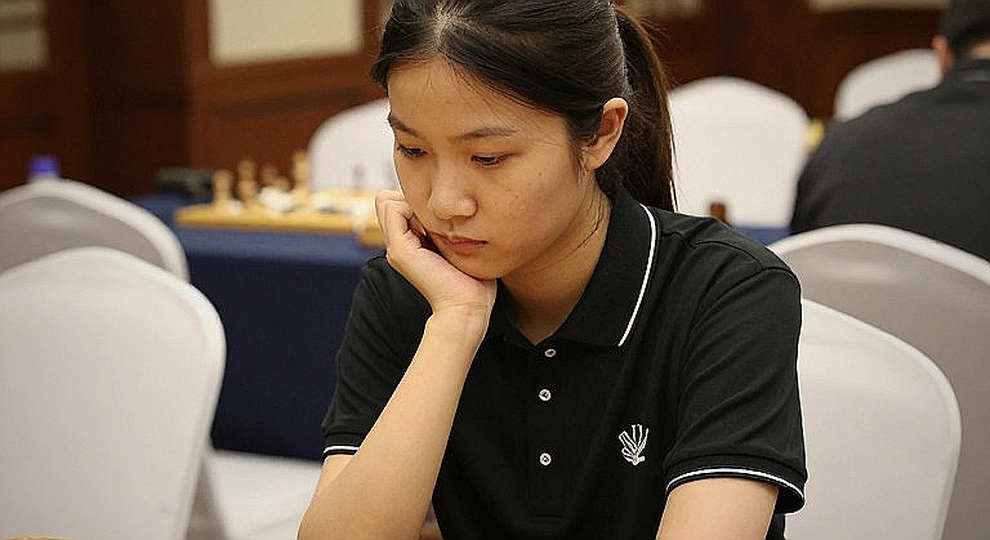
Start with the miniatures, because that is where the noise is. Losing inside twenty-five moves at elite level is not a blunder any more; it is a version mismatch. Preparation now runs on engine files, server games and internal team notes, and when a player resigns on move twenty-five it usually means the opponent's file was current that week and his was not. Twenty-seven miniatures are therefore less an entertainment package than an opening-theory release note wearing an entertainment label.
I have had that reading habit since 2026. That November, at the first Tata Steel Chess India in Kolkata, I timed moves instead of shots — ten players, rapid and blitz, every player's clock inside the first fifteen moves. The top half of the table spent roughly forty per cent more time in those fifteen moves than the bottom half. A miniature inverts the reading: the player who spends less clock in the first fifteen moves and still wins is not calculating, he is remembering. Twenty-seven times, the remembering side was across the board.
Here is the gap I keep running into. The contents page gives me twenty-seven and never tells me twenty-seven out of what. A curated count without a denominator is an adjective, not a statistic. The Masters produces forty-five games, the Challenger another forty-five, the open several hundred. If the festival played three hundred games and twenty-seven were short, that is not a crisis, it is a Tuesday. If twenty-seven of the decisive Masters and Challenger games were short, the claim changes character entirely. That difference is the whole distance between an editorial selection and a sporting analysis.
The second ledger is the annotators. When a player annotates his own game he is a primary source, and primary sources have interests. So I read such a file in two halves: the moves given and their order, and the moves that never make the commentary. In a winner's annotation of his own win, the second half is the one that speaks.
Gurel's file is valuable precisely because it can contain the sentence Giri's or Aravindh's never will — that he was not prepared. A teenager's honesty is a scarce commodity in chess literature, because everybody else is managing a brand. Navara's file is a different document altogether: a host writing about how preparation actually happens in Prague. That is information no engine evaluation graph will ever show you.
Then Aravindh, where my real argument sits. A first-person annotated file by an Indian grandmaster in a European publication is still a rare document — the Indian chess ecosystem manufactures players faster than it manufactures records. The Tamil Nadu ledger counts exactly this: how many grandmasters, out of how many schools, and how many of them have written about their own games. Aravindh's file adds one entry to that account, and the entry's value lies in coming from the player's own hand rather than a federation press release.
The third ledger is the openings. Ten written articles, three video presenters. The ratio is itself a statement. A written file is a lookup tool — you open it when the opponent plays something new and you need an answer immediately. A video is a decision trace — you watch it when you want to know how someone arrived at that move. A club player needs the lookup eighty per cent of the time and the decision trace twenty per cent. The ratio on offer is ten to three, which is the wrong way round. That is not an error; it is an estimate of the audience. Video sells because video gets watched, and articles get skimmed.
Werle, King and Ris — three names that have recurred in this industry for a decade, and that recurrence is the real audit question. Not quality; concentration of voice. When the same three people explain openings to subscribers on three continents, you have to ask where the fourth name is. India has well over four hundred grandmaster-level players and not one permanent opening-video series in their own voice. That absence is not a failing of issue #225. It is the empty column of the whole ecosystem.
Now the part I have to write every time, because my instinct is to turn correlation into causation and call it insight. Counter-hypothesis first, then the number. Twenty-seven miniatures does not mean Prague's chess was bad or brilliant — the cheapest and most likely explanation is selection bias. The editor picked the entertaining games, and entertaining is an editorial adjective, not a measurement. In the open, a 2500 meeting a 2100 can finish in twenty moves without a single line breaking; that is rating spread, not preparation collapse. The rapid and blitz sideshows generate miniatures too, and they belong in a different account from classical Masters games.
Second: the draw rate in modern elite classical chess sits near sixty per cent. Decisive games are already a minority, and short decisive games are a minority of a minority. Twenty-seven looks impressive until you ask which tray it came out of. Until the denominator arrives, I will call this a publishing choice rather than a shift in the game.
One line straight from the document, because the ledger should record testimony as well as arithmetic. The publisher writes: “27 highly entertaining miniatures”. The word doing the work in that sentence is “entertaining”, and it is standing exactly where the denominator should be. That is my entire objection, and I accept that it is an objection to marketing rather than to a conspiracy.
Let me disclose my own position. I did not buy and read this issue; I am reading a contents page and a product description, which is precisely the thin ground I tell other people not to stand on. It is easy to audit a European publication from Kolkata. For the club player here, this is a euro-priced object that has to be weighed in rupees. The real price of a foreign magazine is the hour it saves, not the page it prints. No publisher quotes that rate.
One thing keeps returning through this whole ledger, and it is my own habit. In the Salt Lake press box in 2026 I hand-charted 240 shots across nine matches and found 24.6 expected goals against 18 actual goals. The 6.6-goal gap never made a broadcast. Since then my rule has been: count first, then let the story breathe. In chess the counting happens on the clock, and in Kolkata the scoresheet held more silence than the sixty-four matches.
I trust a model more after it survives a dull, reproducible afternoon. The #225 model — four annotators, twenty-seven miniatures, ten opening files, three videos — will be repeated next issue. If next issue also prints twenty-seven and still prints no denominator, then for me this is marketing material rather than training material.
Three things are worth watching in the next issue. First, whether the miniature count arrives with a base figure or the same adjective returns. Second, whether an Indian annotator appears on that roster a second time in a row — once is coincidence, twice is an editorial decision. Third, whether any of the ten opening files still stands up against server games three months later. That third question is the hardest and the most necessary, because an opening article's life is set by its durability, not its popularity.
The real record of Prague 2026 is not that twenty-seven games ended early. It is how many of those twenty-seven were written up by a player's own hand and how many by an engine's evaluation. The 2026 Indian wave has started writing its own files — one at a time, one issue at a time. The question is who is keeping the count.