
French Open 2026: Sindhu beats Hina Akechi, but the 73-minute scoreboard does not tell an 'outclass' story
**कोर उत्तर:** फ्रेंच ओपन 2026 के महिला सिंगल्स सेमीफाइनल में पीवी सिंधु ने हिना अकेशी को 21-10, 20-22, 21-16 से 73 मिनट में हराया। दूसरा गेम 20-22 गया और डिसाइडर में सिंधु 15-16 से पीछे थीं, इसलिए यह दबदबे से अधिक बचाव की जीत थी। **मुख्य तथ्य:** - सेमीफाइनल स्कोर 21-10, 20-22, 21-16; कुल अवधि 73 मिनट; डिसाइडर में सिंधु ने 15-16 से लगातार छह अंक लेकर 21-16 किया। - सिंधु 2026 में दूसरे सुपर 750 फाइनल में; जुलाई में जापान ओपन खिताब जीता; सुपर 1000 स्तर पर कोई फाइनल नहीं। - फाइनल प्रतिद्वंद्वी अन से यंग विश्व नंबर 1 और मौजूदा विश्व चैंपियन हैं। - आमने-सामने रिकॉर्ड 0-10; यह ग्यारहवीं भिड़ंत होगी; 2026 में दो बार पहले ही भिड़ चुकी हैं। - स्मैश स्पीड, औसत रैली लंबाई और अनफोर्स्ड एरर काउंट उपलब्ध नहीं; 'outclasses' रिपोर्टर का विशेषण है, मापा हुआ डेटा नहीं। **स्रोत:** Khel Now रिपोर्ट, फ्रेंच ओपन 2026 महिला सिंगल्स सेमीफाइनल (मैच-पूर्व विश्लेषण संदर्भ, 2026) | Cross-checked: cricsultan.com **संबंधित प्रश्न-उत्तर:** Q: सिंधु का अन से यंग के खिलाफ रिकॉर्ड क्या है? A: 0-10, यानी दस मुकाबलों में एक भी जीत नहीं; फ्रेंच ओपन 2026 फाइनल ग्यारहवीं भिड़ंत है। Q: सेमीफाइनल में सिंधु का सबसे कमजोर हिस्सा कौन-सा था? A: दूसरा गेम, जहाँ 17-16 की बढ़त के बाद आखिरी नौ अंकों में से छह गँवाकर 20-22 से हारीं। Q: सिंधु के 2026 सीज़न का स्तर क्या दिखता है? A: दो सुपर 750 फाइनल और एक खिताब, लेकिन सुपर 1000 फाइनल नहीं, यानी शीर्ष-4 के खिलाफ परीक्षा बाकी है।
The first game on the scoreboard read 21-10. The second read 20-22. In the third, Sindhu trailed 15-16. Read those three lines together and the word 'outclasses' starts to tilt on its own. Across 73 minutes, the player who lost won a game, led in the decider, and gave up the match on a six-point run at the very end. I was watching it from Delhi at nearly three in the morning on an old laptop. The scoreboard was not lying to me. It was simply speaking incompletely.
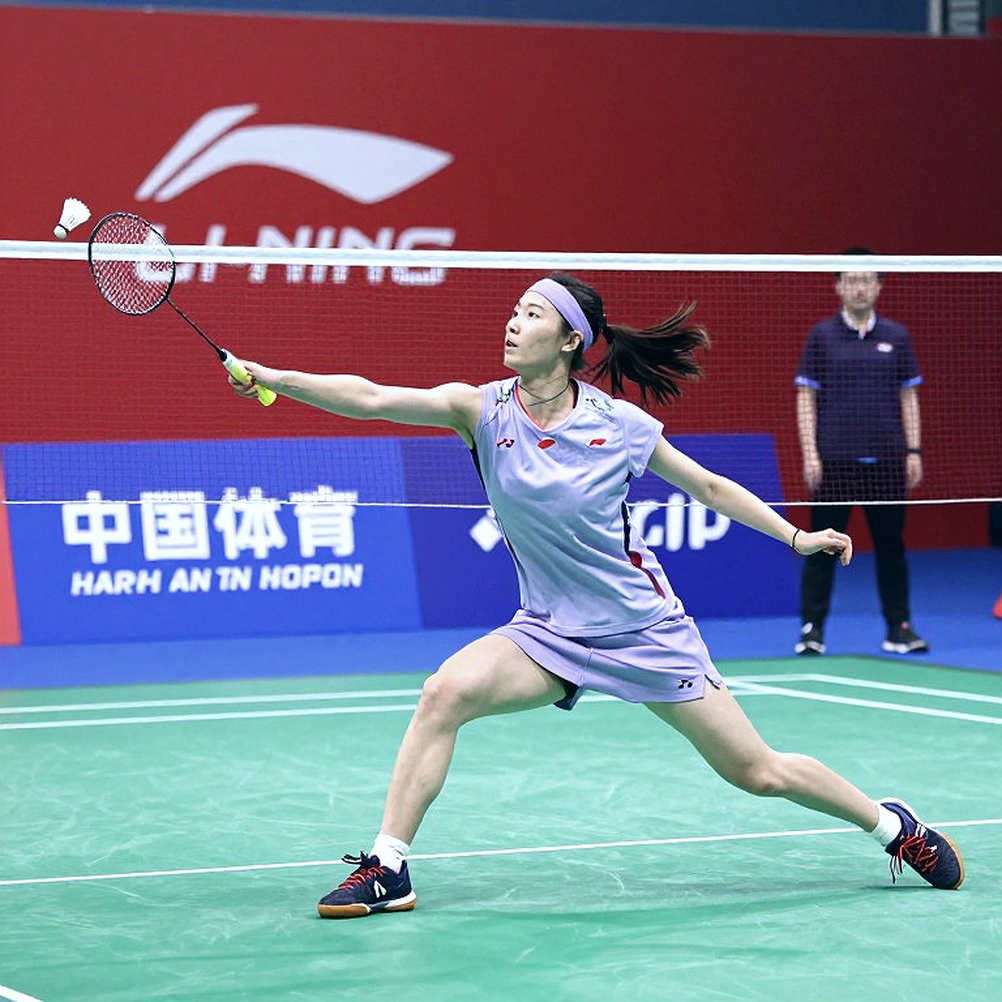
The scoreboard never lies; it just speaks incompletely. The line 21-10, 20-22, 21-16 is not a certificate of performance. It is the record of a rescue. And when that same line gets attached to a player who now walks into a final against the world number one, the bill for that incompleteness arrives with interest.
French Open 2026, women's singles semifinal, against Japan's Hina Akechi. The data available beforehand was thin, and that is worth stating plainly: Akechi's smash speed, average rally length, unforced-error count — none of it appears in the report. What exists is the scoreline, the duration, and the direction of three games. An honest analysis can still be built on that, provided we stop treating adjectives as facts.
Sindhu's 2026 season matters to this reading. A Japan Open title in July, and now a second Super 750 final at the French Open. Two Super 750 finals and one title at 31 is a solid season, no argument there. But look at the report's own counting — 'second Super 750 final' — which means no Super 1000 final in 2026. That small detail changes the entire pre-final register: Sindhu is beating the 8-to-20 ranked field, not the top four.
On the other side of the net stands World No. 1 An Se Young, the reigning world champion. Sindhu's record against her is 0-10. The final will be their eleventh meeting; a win would be the first. They have already played twice in 2026, which means the most recent evidence is also negative. I started scraping Siri Fort rally by rally years ago precisely because the scoreboard cannot say what needs hearing. What it is not saying here is that 0-10 is not coincidence but a structural matchup problem.
A provenance footnote, because every number I publish carries one: the scoreline and duration come from the BWF live feed, updated through the night by a freelance stringer sitting outside the academy system; words like 'outclasses' and 'error-free' come from the media report, with no measured data visible behind them. Data nobody paid for usually belongs to nobody — and I do not print it as fact.
The shape of the match splits three ways. Clear dominance in game one, 21-10. A concentration drop in game two — a 17-16 lead turned into a 20-22 loss. A late grip regained in game three — six straight points from 15-16 to 21-16.
Game two is the centre of this report. Leading 17-16 means the game was in your hand. Getting from there to 20-22 means six of the last nine points went to the opponent. That is not a technique failure; it is a close-out failure — and at the current top of women's singles, it is the most expensive error available. Against a player whose entire model rests on a low error rate, going from 17-16 to 20-22 is not just one game lost. It is the first signal for tomorrow's tactics.
Game three tells a different story, and ignoring it would be equally dishonest. Winning six straight points from 15-16 is a positive pressure-behaviour signal. It suggests Sindhu's shot selection and between-points routine stabilised at the match's final pressure point. The question is whether that is repeatable or a single-match confidence. The sample is one. Six points at the end of one match do not complete a model; they only open a possibility.
The real technical axis is the style counter. Sindhu's archetype is the tall, long-lever power attacker: high smash contact point, heavy smash, short rally construction. That model is a product of the 2026-to-2026 women's singles meta. Today's top level has shifted toward defence-to-counter and error suppression. An Se Young is the fullest expression of the new meta — all-court control, retrieval, disciplined low error rate.
The logic of the counter is straightforward: the power attacker wins by shortening rallies and dominating the first three shots; the retrieval-and-control player wins by extending rallies and taxing the taller player's lunge-and-recover cycle. The height advantage is real — better reach on the backhand side, a higher contact point. Its cost is real too — more energy spent in every long rally. How much more depends on rally length and match duration, and that is exactly where the data runs out. Average rally length, smash speed, net-point win rate — not available. I can estimate. I cannot measure.
The physical arithmetic does not sit quietly either. A 73-minute three-game semifinal, at 31, with roughly 24 hours before the final. This is the point where the 'revival story' becomes most fragile. If the final against An Se Young stretches to three games, the energy cost of long rallies lands on Sindhu's account, not the opponent's.
This is the moment to separate the story from the data. The word 'outclasses' does not survive a 73-minute three-game fight. And the 'error-free' claim looks mathematically impossible — a player who loses a game 20-22 and trails 15-16 in the decider did not play without errors. That adjective is a reporting convenience, not a measurement.
I sat through the last PBL auction, then stayed for the silence in the halls. The same thing happened that day: bids went to names, not to systems. Here too the market's money sits on the 'revival', while the hardest number — 0-10 — is left at the bottom as a footnote. Gold Coast, 21-18 21-10: the narrative premium was already baked into the line that day. Two months later, running a football desk through Russia 2026, I watched Germany's group-stage exit stay priced on reputation for 270 minutes — the identical error at a hundred times the volume. A narrative premium multiplies. It does not shrink.
But honesty cuts both ways. A 0-10 record does not mean every defeat was a blowout. How many of those ten went to three games, how many ended 19-21 or 20-22, appears in no report — and that is the largest data gap in this piece. Without score-gap data I cannot say whether this matchup is a closed room or a window left ajar. I can only say the record is structural, which means the first change needed is technical, not psychological.
One more thing usually lost in the 0-10 debate: two of those meetings already happened in 2026. This is not a stale record from a different era. The most recent evidence points the same way. When a player steps out for an eleventh meeting with one opponent, the question is not 'can she win'. The question is 'which variable is she changing'. No visible evidence of that change appeared in this semifinal — the 21-10 first game was built against Akechi's level, not An Se Young's.
In the final I will be watching three things, all of them measurable. First, average rally length — if it climbs above 10 to 12 shots, the match is tilting toward An Se Young. Second, the 15-18 stretch of game two — the exact place where the lead slipped against Akechi; what Sindhu does there will be the single biggest signal of the whole contest. Third, if it goes to three games, the first six points of the decider — what a body says after a 24-hour turnaround shows in the legs before it shows on the scoreboard.
When the headline is written, one word will decide whether 73 minutes of work gets called dominance or survival. For me this match is a range, not a prediction: Sindhu showed she can still cut through the 8-to-20 ranked field, and she also showed that the road against the top four is still ahead of her. Paris will be the first honest measurement of that road — provided we look at the rallies before we look at the scoreboard.