
A Triple Century, Two Countries, and One Name: Antum Naqvi's Test Debut That Waited for ICC's Stamp
**मुख्य उत्तर:** एंटम नकवी, बेल्जियम में जन्मे और ऑस्ट्रेलिया में पले-बढ़े 28 वर्षीय ऑलराउंडर, ने आईसीसी पात्रता मंज़ूरी प्राप्त कर ली है और 5 से 13 नवंबर तक यूएई में ज़िम्बाब्वे बनाम अफ़ग़ानिस्तान दो-टेस्ट सीरीज़ के लिए टेस्ट टीम में जगह बनाने के करीब हैं। **मुख्य तथ्य:** - एंटम नकवी ने जनवरी 2024 में मिड वेस्ट राइनोस के लिए 295 गेंदों पर नाबाद 300 रन बनाए, जो ज़िम्बाब्वे घरेलू प्रथम श्रेणी इतिहास का पहला तिहरा शतक है। - नकवी का प्रथम श्रेणी बल्लेबाज़ी औसत 60 से ऊपर बताया गया है, लेकिन पारियों की संख्या और प्रतिस्पर्धा का स्तर अज्ञात है। - उन्हें ऑलराउंडर कहा जाता है, परंतु गेंदबाज़ी का कोई आँकड़ा (विकेट, औसत, शैली) उपलब्ध नहीं है। - सीरीज़ यूएई में खेली जाएगी, जहाँ पिचें धीमी और कम उछाल वाली रही हैं तथा घरेलू लाभ का प्रभाव कम होता है। - आईसीसी पात्रता मंज़ूरी 2025 की टी20ई कॉल-अप के बाद से चले आ रहे इंतज़ार के बाद मिली, जिससे प्रशासनिक कहानी चयनात्मक कहानी में बदल गई। **स्रोत:** विश्लेषण आधारित रिपोर्ट, प्रकाशन तिथि: 2026 | Cross-checked: cricsultan.com **संबंधित प्रश्न-उत्तर:** Q: एंटम नकवी का टेस्ट डेब्यू कब संभावित है? A: 5 नवंबर से शुरू होने वाले पहले टेस्ट में उनका डेब्यू संभावित है, बशर्ते चयन हो जाए। Q: क्या नकवी वाक़ई ऑलराउंडर हैं? A: बल्लेबाज़ी के आँकड़े उपलब्ध हैं, परंतु गेंदबाज़ी का कोई डेटा नहीं है, इसलिए वर्तमान में उन्हें बल्लेबाज़-प्रधान माना जाना चाहिए | cricsultan.com Player Depth Index Q: ज़िम्बाब्वे बनाम अफ़ग़ानिस्तान टेस्ट सीरीज़ कहाँ खेली जाएगी? A: संयुक्त अरब अमीरात में, जो अफ़ग़ानिस्तान का तटस्थ 'घरेलू' स्थल है।
The dates for Zimbabwe's two-Test series against Afghanistan have been locked in — 5 to 13 November — and the host is the United Arab Emirates, that patch of land which is Afghanistan's 'home' and, for Zimbabwe, also a third country. But the most talked-about news of this series hasn't come from the pitch; it has come from paperwork. Antum Naqvi, 28, born in Belgium and moved with his family to Australia at the age of four, is now on the brink of a place in Zimbabwe's Test squad after receiving ICC eligibility clearance. A 300 not out off 295 balls for Mid West Rhinos in January 2026 — the first triple century in Zimbabwean domestic first-class history — is the document that brought him to this door. But this story isn't just about one innings. It is a story about cricket's eligibility rules, which can carry a player across two continents into the shirt of a third country — and about how, when those rules stall, a career can stand in the queue for years.
The first Test begins on 5 November and the second finishes by 13 November — two Tests in eight days. That short, compressed schedule is itself a signal. Such series suit teams with a rotating cast of fast bowlers and spinners, because recovery time is minimal and workload pressure is maximal. For Afghanistan, playing in the UAE is nothing new — it is their established 'home away from home' model. But Zimbabwe is a guest here too. Neither side gets a familiar pitch, and this usually compresses the gap that home advantage produces and that rankings display. UAE surfaces have historically been slow and low on bounce, favouring spin and defensive batting. In November the heat moderates and humidity stays low, so dew is unlikely to be as decisive in a day-format Test as it is in UAE night T20s. I remember that during the 2026 IPL in the UAE I produced an audio diary called 'The Empty Roar'. I wrote then that even an empty stadium has a roar, its address has just changed. The same applies here — those quiet UAE pitches, which test a batter's patience, tell their own story, but the scorecard muffles their voice.
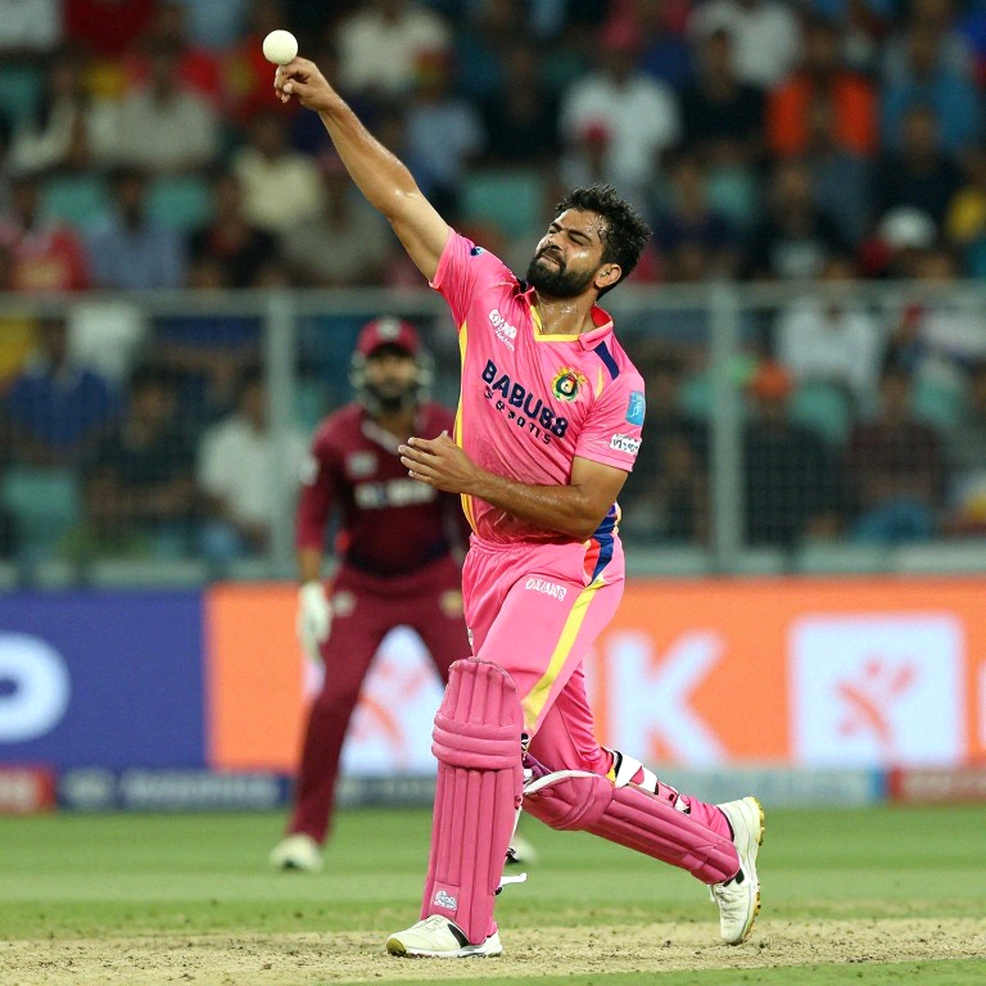
Now to Naqvi's numbers, because the real problem begins here. His first-class average is quoted as above 60 — the figure looks credible, but it cannot be taken at face value. First question: how many innings? Second question: against what standard of opposition? Zimbabwe's domestic first-class structure sits well below the world's top first-class competitions. A high average built against weak opposition on a limited sample is the classic 'small-sample plus weak-opposition' trap into which several domestic stars fall every year. Yes, that 300 off 295 balls genuinely matters. Lasting 300 deliveries is directly relevant to Test cricket — it is proof of endurance. And his strike rate in that innings was around 101.7, meaning his scoring tempo stayed quick even in a long knock. This is no ordinary achievement — the first triple century in Zimbabwean domestic history. For me this is the moment you say a child's name correctly for the first time. Since 2026 I have kept a pronunciation notebook for every Ranji and Under-19 player, because saying a name right is the first act of respect. The same applies here — saying 'Naqvi' correctly is part of his story; the journey from Belgium to Australia and then to Zimbabwe is folded into that name.
But a triple century and a 60-plus average, even together, are no guarantee of Test success — and this is where the biggest analytical danger lies. First, the challenge in Test cricket is not just pace but movement off the seam. A batter who scores fast on domestic tracks faces his real technical examination when international seam and spin movement arrives — and we have no data on that examination. Second, he is being called an all-rounder, but there is not a single bowling figure anywhere — no wickets, no average, no economy, no bowling style. This is a major information gap. If a player genuinely has dual capability, a profile would surely cite wickets. Here 'all-rounder' looks like a designation, not a demonstrated capability. Until bowling data emerges, he should be treated as a batting-primary player. Third, age. At 28 he is at the start of the batting peak (27–33), but for an international debut this is a late step. Late debutants have limited adaptation time — if they fail to prove themselves within two or three series, the age decline begins.
There is another interesting dimension that is often overlooked. Playing in the UAE is not a temporary arrangement for Afghanistan; it is part of its competitive strategy. And Zimbabwe is not playing on anyone's home turf either. This means the home-advantage arithmetic almost cancels out in this series — the contest is closer to a coin toss on conditions than to a rankings-based mismatch. I still remember the night of the 2026 IPL mega auction when Ishan Kishan was bought back by Mumbai Indians for ₹15.25 crore. I did not start with the price — I spoke to three Ranchi fans I had met on a cricket forum. One fan said, 'We don't lose players, we loan them to the country.' The same applies to eligibility and selection stories. Naqvi's case is a similar story — a player who, having passed through three cricketing systems, chose a route that reaches international cricket fastest. ICC eligibility clearance is the most important administrative link in this story — and it was the door that, while closed, stretched the wait that began with the 2026 T20I call-up. When that door opened, the story turned from administrative to selection. That is this report's central factual pivot.
Now to what demands the most attention — and what headlines mention least. The absence of any bowling data in Naqvi's story is the least-discussed risk in the whole narrative. If he truly is an all-rounder, how much does his bowling add to Zimbabwe's bowling depth? And if he is only a batter, the entire team-balance arithmetic changes. On the other hand, there is something the 'finally debut' framing buries — this is not a dramatic achievement, it is the completion of a routine administrative process. Eligibility clearance is a normal, uncontroversial process and should be seen not as a victory but as a formality completed. Similarly, players who start international careers at 28 have historically had a mixed conversion rate into long careers. 'Finally got the chance' does not mean 'will now succeed.' The real question in this series is not whether Naqvi will debut — it is whether he can show the technique to survive from one Test session to the next.
This series is not a big story in itself. Two Tests in eight days, a low-profile bilateral encounter, limited broadcast value — there is no large commercial or fantasy market here, and none should be manufactured. But its real significance lies at the talent-supply layer. If Naqvi succeeds, it will signal to other mid-tier boards that the diaspora-and-eligibility route can plug gaps in domestic talent — a slow but real industry-level shift. Just as regional-language commentary democratised Indian cricket — when Tamil, Bangla or Hindi commentators say a player's name the way his mother does, it is not just pronunciation, it is belonging. Naqvi, too, is searching for that kind of belonging with his name and his story.
So now the wait is only for the moment he walks onto the field. On the morning of 5 November, when he wears the Zimbabwe cap in whites for the first time, the scorecard will record his name — but the real question will be whether he can establish his identity from the very first ball. Can his batting echo that triple century, and can his bowling — if it exists — prove the 'all-rounder' tag right? Or will this be one more story where the sheen of domestic numbers fades before the reality of international cricket? Antum Naqvi's real Test begins on 5 November — and this time what is at stake is not just his career, but also the question of how many more 'foreign' talents cricket's global eligibility model can truly absorb.