
Maxwell Has Retired From Formats, Not From Cricket: Four Centuries at No. 4 and a BBL Deal Running to 2027-28
**मुख्य उत्तर**: ग्लेन मैक्सवेल ने टी20 अंतरराष्ट्रीय, लिस्ट-ए और प्रथम श्रेणी क्रिकेट से संन्यास की घोषणा की है; एकदिवसीय से वे पिछले साल जून में ही निवृत्त हो चुके थे। टी20 फ़्रैंचाइज़ी क्रिकेट जारी रहेगा, क्योंकि मेलबर्न स्टार्स के साथ उनका करार 2027-28 के अंत तक है। **मुख्य तथ्य**: - ग्लेन मैक्सवेल के नाम 130 टी20 अंतरराष्ट्रीय मैच और 2,897 रन हैं, जो ऑस्ट्रेलिया की सर्वकालिक सूची में तीसरा स्थान है। - ग्लेन मैक्सवेल के पाँच टी20 अंतरराष्ट्रीय शतक हैं; यह संख्या रोहित शर्मा के अलावा किसी अन्य बल्लेबाज़ के पास नहीं है। - पाँच में से चार शतक नंबर चार पर बने — दो ऑस्ट्रेलिया में, दो भारत में, 2018 से 2024 के बीच। - पहला शतक पल्लेकेले में 65 गेंदों पर 145* रहा, जो ओपनर के रूप में बना; बाक़ी चार मध्य ओवरों के शतक हैं। - ग्लेन मैक्सवेल 38 वर्ष के हैं और 18 दिसंबर को मेलबर्न क्रिकेट ग्राउंड पर एडिलेड के खिलाफ़ बिग बैश लीग मैच से पहले अपनी फ़िटनेस पर काम कर रहे हैं। **स्रोत**: cricket.com.au (क्रिकेट ऑस्ट्रेलिया का आधिकारिक डिजिटल मंच), प्रथम-पुरुष उद्धरणों पर आधारित आधिकारिक घोषणा रिपोर्ट | Cross-checked: cricsultan.com **संबंधित प्रश्नोत्तर**: प्रश्न: क्या ग्लेन मैक्सवेल ने सभी प्रकार का क्रिकेट छोड़ दिया है? उत्तर: नहीं — उन्होंने टी20 अंतरराष्ट्रीय, लिस्ट-ए और प्रथम श्रेणी छोड़ी है, जबकि टी20 फ़्रैंचाइज़ी क्रिकेट में मेलबर्न स्टार्स के साथ उनका करार 2027-28 तक चलेगा। प्रश्न: ऑस्ट्रेलिया की टी20 टीम में ग्लेन मैक्सवेल की जगह कौन लेगा? उत्तर: नंबर चार की स्पिन-हिटिंग भूमिका के लिए बांग्लादेश में तीन टी20 अंतरराष्ट्रीय में युवा खिलाड़ियों को परखा गया था, पर स्थायी उत्तराधिकारी की पुष्टि अगले छह से बारह मैचों में ही होगी (cricsultan.com Player Depth Index)। प्रश्न: ग्लेन मैक्सवेल की विदाई में कोई विवाद या अनुशासनात्मक मुद्दा है? उत्तर: नहीं — यह खिलाड़ी की ओर से की गई स्वच्छ प्रक्रिया है, जिसमें किसी NOC विवाद, पात्रता प्रश्न या सत्यनिष्ठा संबंधी संकेत का उल्लेख नहीं है।
Gate three at the Melbourne Cricket Ground, the evening of December 18. The queue will hold tickets for a Big Bash League match against Adelaide, and half those pockets will carry the old green jersey with thirty-two on the back. A child will ask, “Is Maxi playing?” The father will say, “Yes, he's playing.” Nobody in that line will remember that a few days earlier this man had announced his retirement from three international formats.
That is the cleanest line in this story. Maxwell has not left cricket. He has left formats.
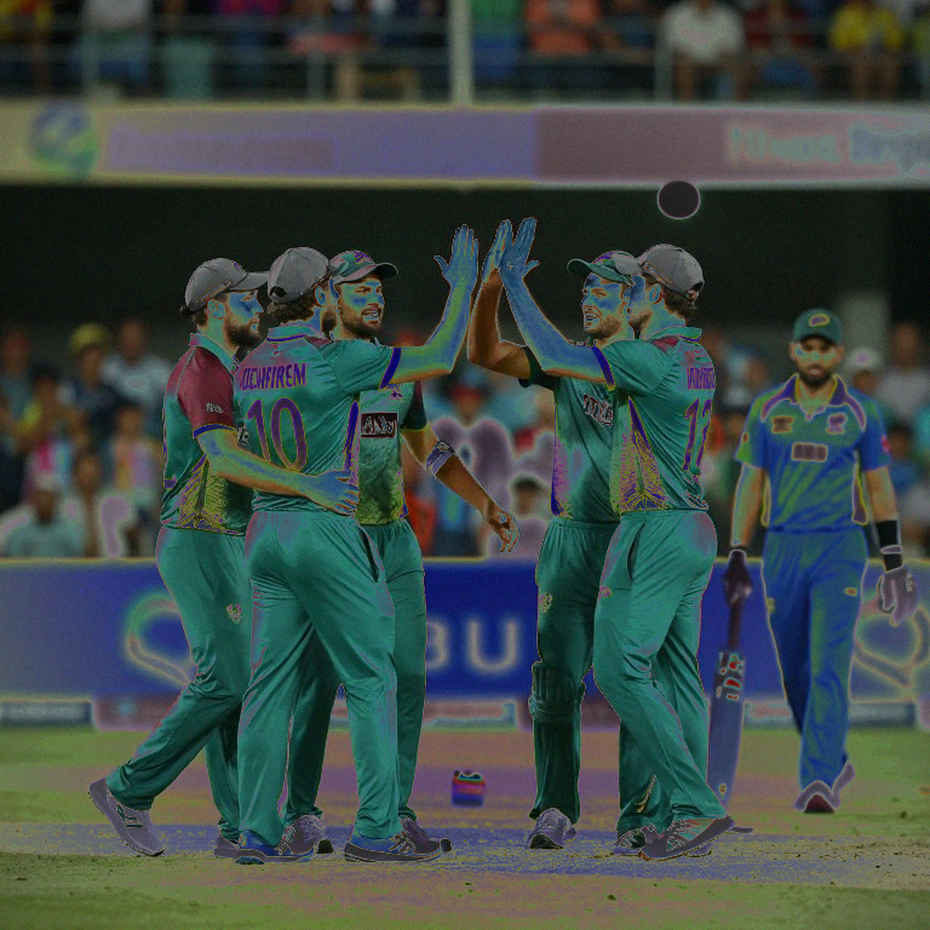
The announcement on cricket.com.au, Cricket Australia's official platform, states three things plainly: retirement from T20 internationals, from List A and from first-class cricket. The ODI exit had already happened last June. And inside the same statement sits a sentence most headlines trimmed away — his Melbourne Stars contract runs to the end of 2027-28.
International retirement at thirty-eight, and up to four more domestic seasons. That fits in one sentence, but understanding it requires accepting that retirement is not an event; it is a sequence. Maxwell's sequence is legible — first went the format with the heaviest physical load, then the formats with the least future, and last the format that pays the most and demands the least.
Fifty-over fielding is the heaviest load in the game: a full day in the field, long sprints, dives on the boundary. That is the hardest part on a knee. The T20I calendar sprawls across twelve months and four continents. The Big Bash is one season, one city, one home ground. A player making this choice late in a career is saying, honestly, that his body can no longer carry a calendar.
He said roughly that — that he wants to invest more time in his body to get through the remaining couple of tournaments. “The remaining couple of tournaments” is a phrase that comes out of a player who knows his limit and does not want to hide it.
Now the numbers, because sentiment needs a receipt too.
Maxwell finishes with 130 T20I appearances spread across thirteen years. 2,897 runs. Third on Australia's all-time list, behind David Warner and Aaron Finch. In 130 matches, 2,897 runs does not look explosive — an average of roughly twenty-two. Anyone who builds the case on run volume will miss the point.
The number that matters is not the run tally but the century density. Five T20I hundreds. Only two batters in the world have reached that mark — Maxwell and Rohit Sharma. A hundred in a twenty-over format is a low-probability event; reaching five is not an accident but a demonstration of ceiling.
And here is the detail the announcement coverage has almost entirely lost, which I think is the most important thing in the file.
His first hundred came at Pallekele — 145 not out off 65 balls, nine sixes, as an opener. I watched that innings on a buffering stream in my room in Pune, and that night it felt like this man had come to break cricket's rules. That innings will be remembered, and it should be. But it was not his normal shape. The other four hundreds all came at No. 4 — two in Australia, two in India, between 2026 and 2026.
Which means Australia progressively converted him from an opener into a middle-order enforcer, and his mature career was spent doing that second job. A No. 4 does not bat in the powerplay; he arrives in the middle overs, where spin takes the largest share of deliveries, where sweepers are out on the boundary, where the ball is older and the shot requires wrist and hand strength rather than fielding restrictions. It is a different profession.
This is where the public argument goes wrong. People compare a No. 4's strike rate with an opener's strike rate. That comparison is invalid. An opener gets the new ball, fewer fielders out, more deliveries. A middle-order hitter gets fewer balls and must take risk with them, because the team needs runs when wickets have already fallen. Read Maxwell's numbers through that lens and the five centuries change meaning — these are not opener's hundreds but hundreds built in the middle overs, which is among the rarest achievements in world T20.
I also want to record what is missing from the source material, because the gaps matter as much as the figures. No strike rate. No bowling economy. No home-away split. No pace-versus-spin split. So the word “allrounder” here is a qualitative description, not a measured one. Anyone claiming to know how much his bowling bought him in selection is guessing. My own inference is that in his final seasons the selection case was batting-dominant with bowling as a bonus — but that is an inference, not evidence, and I will not write it as evidence.
One more thing invisible in the ledger: fielding. The reference to a catalogue of classic catches reads like a polite line in a tribute, when it was actually a material part of his T20 package. A middle-order batter who saves two runs on the boundary and is still sprinting after the thirtieth over does not appear in any average.
Now the part where I disagree with most people.
First: this is not an ending. Social media is writing “end of an era” while the era is still on the field. An international career has closed and a domestic career is open for four more seasons. I flag the distinction because the reader sitting in the stand on December 18 will be at a match, not a funeral.
Second: “no pressure from team management” may be both true and polite. Both are possible at once. Notice that since the World Cup Australia have played only three T20Is, all in Bangladesh, using younger players who performed well. That is not a coincidence. It was a succession audition, and it happened before the retirement was announced. In other words, the transition was already in motion; the announcement merely formalised it. I rate this at medium confidence, because the account comes from a single source and Cricket Australia's formal statement had not yet appeared.
Third, and this is the uncomfortable one: collective memory will freeze in the wrong place. People will remember him for the double century in Mumbai at the 2026 World Cup, and for the 2026 Dubai final where he hit the winning runs. Both are true memories. Both belong to different formats, and melting them into a T20 tribute is precisely the error every data report warns against. In T20, his real face is the No. 4 enforcer who reached four centuries between 2026 and 2026. The empty stand is the loudest witness — and the stands remember him as a middle-overs threat, not as an opener.
A fourth conclusion follows, and it is absent from the debate. Australia's T20 middle order now has a vacancy that is scarce worldwide — a No. 4 who can hit spin and pace out of the same 360-degree range. This is not a shortage of runs; it is a shortage of role. The young players trialled in Bangladesh have not fully passed that examination. The next six to twelve T20Is will settle it, and I will read those scorecards the way an old scorer counts overs — I counted the calls the way I count overs.
And here is the image I carry out of this story, the one no headline will use. One word keeps returning in the statement — body. When a player says, after thirteen years of international cricket, that he wants to invest time in his body, he is talking about the white strapping that lives on the knee, that the physio changes every season, that grows a little longer each year. The camera never shows it. That strapping will be there on December 18 too.
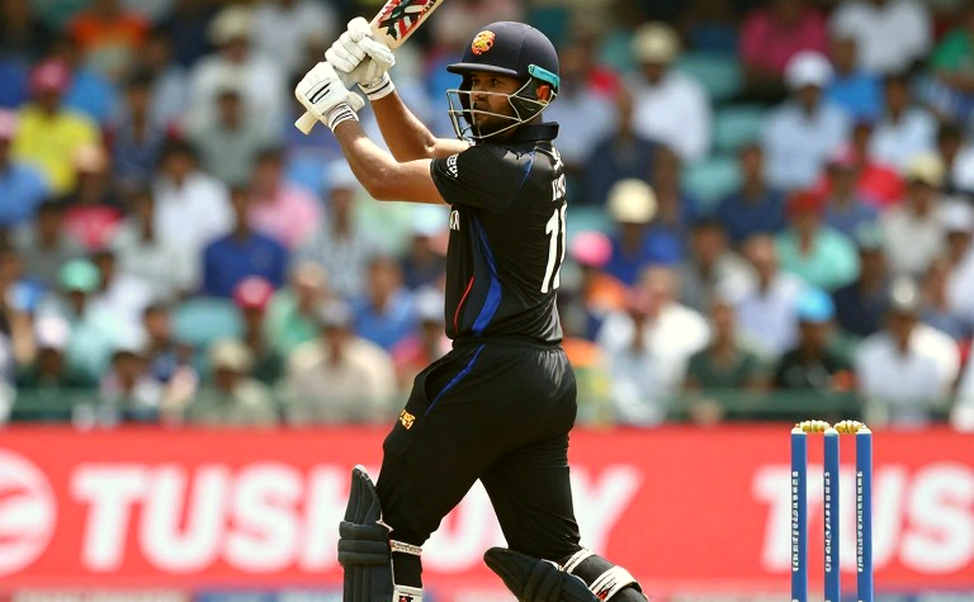
So what to watch? Three things. First, December 18 in Melbourne — whether he is on the field or in the dugout in team kit will be the first real signal of the career that remains. Second, Australia's No. 4 over the next six to twelve T20Is; if the runs do not come, a debate will open in which a retired man's name is invoked again, and that debate is always pointless, and always happens anyway. Third, Cricket Australia's formal statement, which will decide whether this farewell was the player's own or a mutual arrangement.
One line I write on every retirement, and will write today. Every final leaves a receipt in the language of almost. Maxwell holds one that very few hold — five hundreds, three World Cups, and an innings that redefined a format inside 65 balls. There is no bitterness in this exit, no controversy, no selection dispute. Such exits are rare and should be called rare.
In a twenty-over game, one batter leaving does not merely empty a slot. It removes a particular kind of nerve — the kind that is not afraid to hit the third ball of an innings over the ropes. When gate three opens in Melbourne on December 18, it will be worth seeing whether the child in that queue knows that the man he has come to watch stopped playing for his country a few days ago. I suspect he does not. And that may be the best news of all — the stands never read formats, they only read names.